
Whole Melt Dual Chamber: Button vs Slider Selectors—Which Survives Transit Better?
Audience: Wholesale buyers, sourcing teams, and QA leads evaluating dual-chamber disposable hardware for long-distance fulfillment.
Scope note: This article focuses on device hardware (selector mechanisms, packaging, and transit testing). It does not provide instructions for filling, formulating, or producing any regulated consumables.
Dual-chamber disposables win on merchandising—two chambers, two experiences, clearer SKU stories. But transit is where the platform gets expensive. A selector that feels “fine” on a desk can become a returns generator after weeks of parcel vibration, corner drops, temperature swings in trailers, and compression on pallets. If you’re building a reliable Whole Melt-aligned dual-chamber program, the selector choice (button vs slider) is one of the highest-leverage decisions you can make.
What “Transit Survival” Really Means for a Selector
In practice, “survives transit” means the selector still works and the device arrives in a sellable state. For buyers, there are four measurable outcomes: (1) no cracked housings around the selector cutout, (2) no selector jamming or intermittent contact, (3) no unintended chamber switching that confuses end users, and (4) no accidental activation that drains batteries in the box. These are not theoretical—selector failures often show up as “dead on arrival,” “wrong mode,” or “A/B won’t switch” tickets.
Transit hazards to design for
- Random vibration: micro-impacts that loosen poorly-supported switch housings, especially on long routes.
- Drop & corner shock: concentrated stress that cracks thin plastic walls around switch openings.
- Compression: master cases that flex can side-load sliders or press buttons through the carton.
- Contamination: paper dust, foam crumbs, or loose shrink film that can migrate into open switch tracks.
Button Selectors: Why They Often Ship Better
A “button selector” is typically a small secondary pushbutton (or multi-function micro-button) that changes chamber modes. When built well, the button approach tends to be more transit-friendly because the control can be recessed, sealed, and supported directly above the PCB—meaning fewer exposed rails and fewer snag points. In other words: fewer ways for the shipping environment to interact with the mechanism.
Where buttons win in transit
- Lower snag risk: a recessed button rarely catches on inner trays or sleeves during vibration.
- Better contamination tolerance: sealed or membrane-style pushbuttons keep dust out of the contact area.
- Cleaner structural load path: the force goes straight down into the PCB support, not sideways into thin housing walls.
- Smaller cutouts: less plastic removed = fewer stress risers and fewer cracks after corner drops.
Button failure modes to watch
Buttons are not automatically “safe.” The two most common failure patterns are (1) the button cap breaking because the housing around it is too thin, and (2) accidental presses during pack-out or compression that toggle the device into the wrong mode—or worse, wakes the device and drains the cell. Your acceptance criteria should include a “no auto-activation during handling” requirement, and your QC should verify it. For a practical benchmark on the QC points buyers standardize (activation behavior, port stability, traceability, and pack-out discipline), see the Wholemelt V8 dual chamber QC guide.
Slider Selectors: Great UX, Higher Transit Exposure
Sliders are popular because the state is visible—left chamber, right chamber, or sometimes a middle blend position. From a user-experience perspective, that’s excellent. From a transit perspective, sliders are more exposed: they introduce a track, a larger opening, and a part that can be side-loaded. The result is simple: sliders can ship well, but they demand more mechanical discipline and better packaging.
Where sliders struggle in shipping lanes
- Side-load and shear: carton flex or tray friction can push the slider laterally, bending rails or cracking the track walls.
- Debris in the track: even small particles can make the slider feel gritty or get stuck between positions.
- State drift: if detents are weak, vibration can walk the slider toward a different position.
- Large cutouts: bigger openings can weaken the shell and amplify crack risk in drop events.
When sliders ship fine
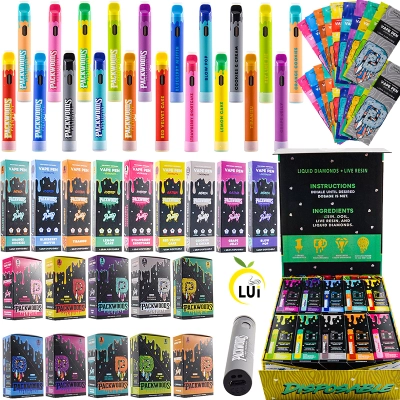
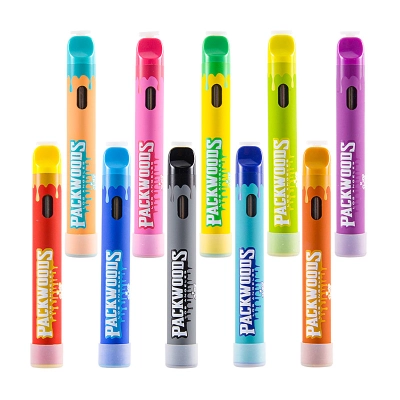
Sliders perform well when they have strong detents (clear “click” positions), a short throw, and a protective geometry—think raised rails, recessed tracks, and an inner tray that physically blocks movement. If you’re evaluating slider-based platforms already used in the market, the Packwoods dual chamber hardware guide is useful for aligning expectations around QC checklists and how sellers structure SKUs to reduce “wrong mode” complaints.
The Engineering Knobs That Predict Survival
“Button vs slider” is only half the story. Survival is mostly driven by a few measurable design knobs that your supplier can disclose and you can audit. Ask for them early, attach them to a revision number, and treat changes as engineering changes (ECO), not “minor tweaks.”
For button selectors
- Recess depth: Deeper recess reduces press-through during compression, but must remain usable with gloves.
- Actuation force window: Too light increases accidental presses; too heavy encourages users to “mash,” stressing the cap and housing.
- Seal strategy: Membrane or gasket designs are more tolerant to dust; open caps tend to ingest debris over time.
For slider selectors
- Detent strength and stop definition: You want unambiguous positions that don’t “float” between states under vibration.
- Track protection: Raised rails, recessed tracks, and minimal side clearance reduce snagging and grit ingress.
- Tray constraint: A tray rib or pocket that blocks travel often matters more than the slider part itself.
So…Which Survives Transit Better?
If you force a single answer for “average” parcel shipping, the button selector usually has the edge—mainly because it’s easier to protect mechanically. But the more correct answer is conditional:
- Choose a button selector if you ship long distances via small-parcel carriers, run minimal inner packaging, or need maximum resistance to debris and snagging.
- Choose a slider selector if your brand requires visible A/B state, you can afford a better inner tray, and your supplier can prove detent strength + track protection.
How to Decide Like a QA Team (Not Like a Listing)
The fastest way to reduce selector-related RMAs is to stop debating “button vs slider” as a preference and treat it as a test plan. Start by defining your shipping reality: parcel-only, mixed parcel + pallet, or palletized freight. Then use standard distribution simulations to reproduce that environment consistently and compare revisions apples-to-apples.
Transit tests to reference in your RFQ
- Parcel simulation: ISTA 3A-style testing to cover vibration, drops, and compression profiles typical of courier networks.
- Distribution cycles: ASTM D4169-style sequences to align hazards to your distribution path (drop, vibration, compression, etc.).
- Component stress: IEC 60068 shock/vibration methods to document mechanical robustness at the component level.
Selector-specific acceptance criteria (copy/paste)
- No movement under vibration: Slider detent must not drift; button must not actuate from vibration alone.
- No crack propagation: No new cracks around selector cutouts after a defined drop schedule.
- No jamming: Selector must complete 50 switching cycles post-test with consistent feel and no intermittent response.
- No unintended activation: Device must not wake / turn on during pack-out, vibration, or compression.
- Mode clarity: Selector position must match the indicator state (no mismatch between “physical” and “logical” selection).
Packaging Is the Multiplier (Good or Bad)
The same selector can behave totally differently depending on the inner pack. A slider with weak packaging is a complaint magnet; a slider with a tray that blocks movement can outperform a button in the field. Treat packaging as part of the mechanism.
Three packaging moves that reduce selector failures
- Mechanical blocking: Design the inner tray so it physically prevents slider travel or button press. Even a small rib can stop most transit drift.
- Dust control: Add a clean sleeve or bag step to reduce paper dust and foam debris migrating into tracks and ports.
- Compression control: Specify master-case strength and a repeatable pallet wrap standard to prevent case flex that side-loads controls.
Battery Shipping Reality: Don’t Ignore the Cell
Even for empty disposable hardware, the lithium cell changes what “transit-ready” means. You should expect forwarders to ask for documentation demonstrating transport compliance (for example, UN 38.3-related evidence and battery test summaries). Operationally, this matters because transit damage that triggers wake events or contact issues can turn into delays, claims, or forced repacking at ports. Bake documentation readiness into your sourcing workflow, not as an afterthought.
Procurement Checklist: Button vs Slider in One Page
Use this to align sourcing, QC, and packaging teams before you place a PO—especially when you’re building a Whole Melt-aligned assortment. Start with the category pages your buyers will actually browse, then lock your spec and test plan from day one: wholemelt, wholemelt disposable, and the broader dual chamber disposable category for cross-brand benchmarks.
| Decision Factor | Button Selector | Slider Selector |
|---|---|---|
| Parcel transit (small packages) | Usually stronger (recessed, less exposed) | Needs strong detents + tray blocking |
| Debris / dust tolerance | Better if sealed or membrane-style | Track can trap particles |
| Mode visibility for users | Lower (relies on screen/indicator) | High (physical position shows state) |
| Risk of accidental actuation | Press-through risk if not recessed | State drift if detents are weak |
| Packaging dependency | Moderate | High |
Bottom Line
Buttons tend to be the safer default for transit because they’re easier to recess, seal, and structurally support. Sliders can absolutely survive—and can feel more intuitive for end users—when detents are strong, tracks are protected, and inner packaging blocks movement. The winning approach is to make the selector part of your distribution test plan, not just a line item on a spec sheet.
If you want to standardize this across SKUs, add a “selector durability” section to your RFQ and QC SOP, require revision control, and insist that every change passes the same transit simulation before you scale production.
References & Standards Mentioned
- Google Search Central: Title links in Search results
- Google Search Central Blog: More information about how Google generates titles
- ISTA: Test procedures (including Procedure 3A)
- ASTM D4169 overview (distribution simulation hazards)
- PHMSA: Lithium battery test summaries (UN 38.3 context)
- IATA: Lithium Battery Guidance Document (transport compliance)
0 Comments