
Packwoods Dual Chamber — 2025 B2B Empty Disposable Vape Hardware Guide
In 2025, dual chamber disposable vape hardware has moved from “experimental” to a mainstream choice for cannabis brands that want flavor switching, precise SKUs, and reliable empty shells for their oil portfolio. For buyers who already work with Packwoods style devices and other 2g platforms, dual chamber hardware adds a new layer of SKU control without changing your filling or compliance workflow.
This guide is written for B2B teams only—distributors, brand owners, and procurement managers who need to evaluate Packwoods-inspired dual chamber empty devices as hardware, not as finished THC or CBD products. We will focus on chassis design, capacity, QC requirements, and sourcing workflows based on current 2024–2025 hardware trends in the dual tank category.
Why Dual Chamber Disposables Are Trending in 2025
Dual chamber and dual tank disposable vape designs have become one of the most visible hardware trends in the cannabis sector. Hardware manufacturers now offer 1ml+1ml and 2g total capacity devices that let brands switch between two flavors or two formulations in a single chassis, often via a side selector or airflow switch. These designs are promoted not only by boutique factories but also by established hardware brands that ship Opus-style dual tank systems and compact dual chamber AIO vapes to global B2B buyers.
From a B2B perspective, dual chamber disposables work best where product strategy is already segmented by mood, terpene profile, or cannabinoid category. Instead of launching two separate 1g SKUs with two different packages, brands can deploy a single 2g dual chamber device that combines two core profiles. For licensed processors, this reduces the number of printed boxes, batch codes, and barcodes, while still offering variety at the shelf.
At the same time, regulators have tightened expectations around labeling, testing, and packaging. Hardware-only sourcing allows you to keep the focus on the shell: resistance, inlet size, tank material, and integrated protections—leaving all dosage and claim-related compliance to your licensed filling partners and state frameworks. Guides for disposable vape distributors now consistently highlight compliance, lab testing, and packaging as non-negotiable pillars.
Where Packwoods Dual Chamber Fits in the Market
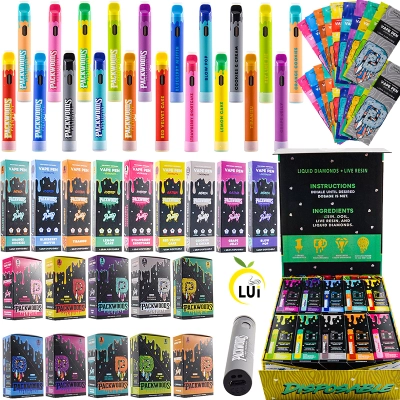
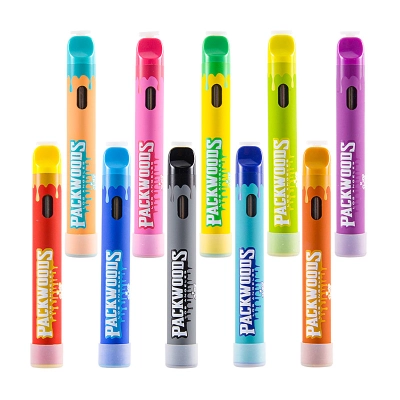
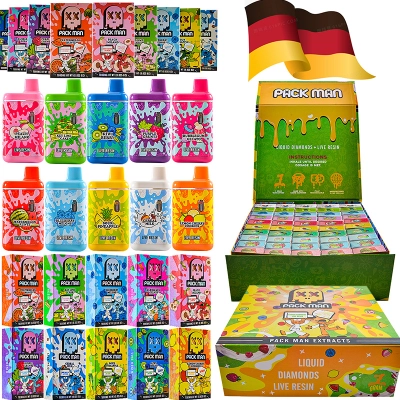
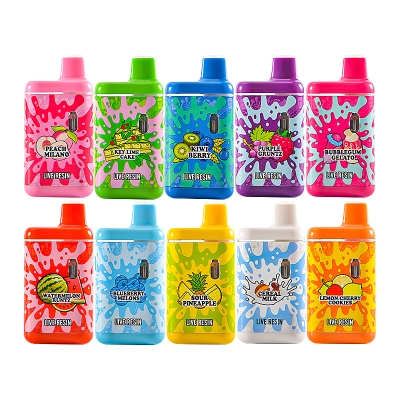
Packwoods–branded and Packwoods-inspired devices occupy a very visible corner of the market. Their X-Runtz and joint-brand SKUs are known for 2g reservoirs, digital screens in some editions, and collaborative artwork with partners such as Cookies, Gas House, and Blackcraft. Official brand pages and retailer listings emphasize 2g tanks, USB-C charging, live resin or distillate compatibility, and pre-heat modes in their filled versions.
When you translate that language into empty hardware procurement, the key concept is simple: you are buying chassis that match the silhouette and functional expectations of popular Packwoods dual chamber and 2g devices, but as empty platforms only. You own the oil, batching, compliance statements, and SKU naming; the factory provides the shell, electronics, and packaging that are ready to be branded and filled in licensed facilities.
For buyers comparing options on Lueciga, two types of links are especially useful: the general Packwoods assortment, and specific dual-tank or dual-chamber SKUs. For example, you can benchmark your hardware decisions against the packwoods disposable range and associated series pages before locking in your preferred dual chamber configuration.
Core Hardware Specs B2B Buyers Must Check
1. Tank, chambers, and oil pathway
For dual chamber empty disposables, total capacity is usually 2g with a 1g+1g tank split. Many platforms in this class use four intake holes around 1.5–1.6 mm to support live resin and liquid diamonds without starving the wick. Packwoods-style devices and similar dual tank systems in Lueciga’s catalog typically pair 2g capacity with ceramic cores and carefully balanced inlet geometry, targeting thick oils and higher terpene loads.
2. Coil, battery, and power management
On the electronics side, dual chamber devices need enough current to drive two separate oil paths without scorching either side. That is why you frequently see 280–320 mAh batteries, 1.2–1.4 Ω ceramic coils, and USB-C charging across higher-end dual tank AIO platforms. Some designs add a small digital screen to display battery level and approximate oil volume—technologies that are already standard on several 2g and dual tank SKUs in the market.
For B2B buyers, the key is consistency: the same batch of empty devices should deliver repeatable output voltage, ramp time, and cut-off, so that your oil behaves similarly across all chambers and all boxes. It is common for serious OEM factories to document their power curves and life-cycle testing, and you should request those data sheets during sampling.
3. Housing materials and safety standards
Empty hardware should be compatible with your compliance strategy in every jurisdiction where you operate. That generally means food-contact-grade plastics (such as PCTG) for tanks, stable seals for terpene-rich oils, and battery modules built around commonly recognized safety tests. Many regulators now expect tamper-evident packaging, child-resistant closures, and clear warning panels on final SKUs—even if you are only buying shells today, you need to ensure the hardware can be packed into compliant boxes later.
B2B Use Cases and SKU Architecture
Dual chamber devices make the most sense when your brand strategy already supports structured bundles. Common examples include “day vs night” pairings, “live resin vs liquid diamonds” tiers, or “classic strain vs limited collab” combinations in a single 2g chassis. Industry case studies show dual tank hardware being deployed as premium line extensions for live resin brands, as well as value-driven bundles in high-volume hemp and THCa markets.
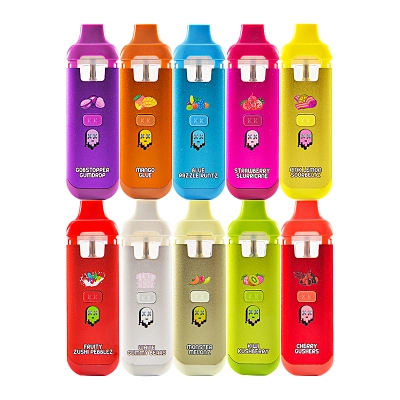
On Lueciga, you will find multiple SKUs that can act as benchmarks for building this architecture. The dedicated dual chamber disposbale category page groups 2g dual tank devices—including joint-brand editions and devices with integrated screens—so you can see how capacities, flavors, and packaging options are already structured for other brands.
Step-by-Step Sourcing Workflow for 2025
A clean sourcing workflow prevents surprises later in the project. Below is a simple 2025-ready process focused on Packwoods-style dual chamber empty hardware:
- Define the SKU role. Decide whether the device will be a premium flagship, a limited-edition collab, or a utility SKU in your core lineup. This determines how much budget you can allocate to screens, custom colors, and packaging extras.
- Shortlist hardware families. Use the Packwoods section and dual chamber category on Lueciga to shortlist 2–3 chassis families. For instance, benchmark your requirements against Packwoods 2g vape style devices so you know what inlet sizes, coil specs, and artwork real-world brands are already using.
- Request empty samples only. Make it explicit that you want empty shells (no oil, no nicotine, no THC) for engineering and compatibility testing. Ensure the factory understands that filling will happen in licensed facilities under your control.
- Run a structured 72-hour evaluation. Serious dual chamber reviews now rely on multi-day testing under repeated heating and cooling, vibration, and storage cycles. Borrowing from established evaluation protocols, a 72-hour window is an effective minimum to surface clog, leak, or condensation problems before a mass order.
- Lock in compliance-ready packaging. Before confirming your PO, align carton dimensions, artwork zones, and label areas with your legal team. Make sure the device’s physical layout leaves space for regulatory icons, batch codes, QR verification, and warning text.
- Plan reorders and line extensions. If the device performs well, you may later extend the same shell into other collabs (for example, Sluggers, Cookies, or Blackcraft variants) without changing the underlying mechanical platform.
QC Checklist for Dual Chamber Empty Devices
For dual chamber hardware, QC is not just “pass or fail.” You need a structured acceptance band so that your team and the factory agree on what counts as an acceptable unit. A practical QC checklist for Packwoods-style dual chamber shells should include:
- Dimensional checks: body height, width, mouthpiece fit, and chamber symmetry.
- Electrical checks: battery capacity sampling, resistance checks, and short-circuit protection tests.
- Functional checks: air-flow smoothness in both chambers, flavor switching mechanism, and LED/screen behavior.
- Leak and stress testing: static storage, inverted storage, and temperature cycling with filled samples from your licensed partners.
- Cosmetic checks: printing alignment, logo placement, and color consistency across batches.
Many factories that specialize in dual chamber hardware—including suppliers that serve premium AIO devices—highlight their leak rate, DOA rate, and clog performance as key selling points. Treat those numbers as starting points, and negotiate your own acceptance bands based on your market and warranty strategy.
Comparing Packwoods Dual Chamber to Other Dual Tank Systems
When you compare a Packwoods-inspired dual chamber shell with other platforms on the market, you should look at three layers: core engineering, brand fit, and logistics. Compact dual-tank AIO vapes like the Noble series, and dual-chamber disposables from other cannabis hardware manufacturers, typically emphasize twin-tank design, clog-resistant airflow, and multi-flavor flexibility.
Inside the Lueciga ecosystem, you also have other dual tank references that help you benchmark your choices. One example is the Big Chief dual chamber vape, a 2g dual tank device with screen and 1ml+1ml configuration. Comparing this kind of device against Packwoods-style shells lets you decide whether you prefer vertical or horizontal chamber layouts, center or side air paths, and screen vs no-screen options for your own brand.
MOQs, Warehouse Strategy, and Reorder Planning
Finally, dual chamber devices should fit cleanly into your MOQ and warehouse strategy. Most factories set MOQs between a few hundred and several thousand units per color or design, with price breaks at 500, 1,000, 2,000, and 5,000 pieces for 2g shells. Joint-brand Packwoods hardware often sits at the higher end of this range due to more complex printing and packaging.
Lueciga’s multi-warehouse model (USA stock, EU stock, and regional hubs) can help reduce lead times once you have validated your shell. For a dual chamber project, many B2B buyers start with one or two pallets as a pilot, then open a standing reorder cadence once DOA rates and sell-through data confirm performance.
FAQ for Packwoods Dual Chamber B2B Buyers
1. Are these Packwoods dual chamber devices shipped empty?
For B2B hardware projects, you should always specify empty shells only. That means no oil, no nicotine, and no THC in the devices you receive. Filling, testing, and compliance statements are handled by your licensed partners.
2. How do Packwoods-style dual chamber shells compare to classic 2g single-tank disposables?
Single-tank 2g disposables are simpler to qualify and may be easier for some filling lines, but they offer only one profile per device. Dual chamber shells add complexity in exchange for flavor switching and bundle-style value. If your brand strategy leans heavily on paired flavors or “two-in-one” storytelling, dual chamber may justify the extra engineering effort.
3. Where can I research more about Packwoods hardware trends?
Beyond Lueciga’s own Packwoods catalog, you can study official brand materials, third-party hardware guides, and industry blogs that review dual chamber and 2g disposable devices. Use these sources to understand how brands position capacity, coil tech, and packaging across regions, and then adapt only the hardware logic to your own empty shell projects.

0 Comments