
runtz disposable 2g wholesale: MOQ, Warehouse Options, and Fast-Reorder Playbook
Scope: This guide focuses on wholesale purchasing operations—MOQ math, warehouse routing, and repeat-order workflows. Specs and labels are discussed as receiving/QC controls for bulk orders.
Why this matters for B2B buyers
In wholesale, “2g” isn’t just a product attribute—it’s a planning constraint. It affects how you select variants, how you write purchase orders, how you confirm warehouse routing, and how you prevent receiving errors that turn into slowdowns, returns, or dead inventory. If your goal is faster turns and fewer disputes, your buying process needs to be repeatable, not improvised.
Start by anchoring your catalog navigation and RFQs around a single hub page for the brand line, then drill down into the exact variant set you want. If you’re sourcing from the Runtz lineup, the cleanest entry point is the runtz category. From there, you can confirm whether your order should be a single-SKU batch or a controlled multi-SKU master case.
Step 1: MOQ math that prevents reorder friction
Think in “lot size” and “case pack,” not just unit price
Many wholesale listings express minimums as a “pcs/lot” requirement, which is effectively a case-pack constraint. Your goal is to convert that into a simple planning model: (1) how many lots per SKU, (2) how many SKUs per PO, and (3) how many weeks of cover you want before the next reorder. This is how you keep reorder cycles predictable—especially when multiple buyers or teams place orders across the same SKU family.
Build a 3-tier MOQ structure for every SKU
Even if you only place one tier today, define all three tiers in your internal sheet: Trial MOQ (initial validation), Standard MOQ (normal replenishment), and Scale MOQ (peak season or promotion). This prevents you from renegotiating fundamentals on every reorder. It also creates a consistent basis for warehouse selection and shipping method decisions.
Use “SKU discipline” to avoid slow-moving inventory
Your fastest path to repeat orders is fewer, clearer SKUs. If you’re buying a dual setup, decide whether your assortment is: (a) one flagship SKU, (b) two primary SKUs with controlled split, or (c) a wider range that requires strict master carton labeling. Buyers lose time when the warehouse receives “almost the same” SKUs that can’t be visually separated in seconds.
Step 2: Choose the right warehouse option for speed and risk
Why routing matters more than you think
For bulk buyers, the same SKU can have very different outcomes depending on the warehouse route: transit time, tracking cadence, customs handling, and what happens when your receiving team needs replacements or a quick top-up. That’s why your first question should be: “Is my exact configuration already positioned in the warehouse I want?”
Use the shipping policy page as your operational baseline
Before you confirm a PO, align expectations around processing time, tracking behavior, and the carrier path for the route you’re choosing. Your internal SOP should reference the site’s policy page so your team uses the same assumptions every time. For Lueciga routing details, see About Shipping.
USA vs. overseas: the decision framework
A practical decision framework looks like this:
- Speed-critical reorder: Choose the nearest warehouse option that matches your configuration and labeling requirements.
- Cost-optimized replenishment: Plan fewer, larger drops with longer lead times and tighter pre-shipment QC.
- Multi-location distribution: Split inventory into two pools (e.g., fast pool + main pool) to reduce stockout risk.
The point isn’t “one route is always better.” The point is that your route should match the business purpose of the order: launch, restock, or scale.
Step 3: Spec controls that reduce leakage risk and returns
Define “leakage” as a QC outcome, not a surprise
In wholesale operations, leakage-related issues often show up as a downstream complaint but start upstream as a spec mismatch (incorrect seals, inconsistent tolerances, or handling/storage issues across transit). You reduce this risk by treating it as a measurable acceptance outcome: you define the receiving checks, the sampling method, and the rejection triggers in writing.
Dual-chamber variants require “version clarity”
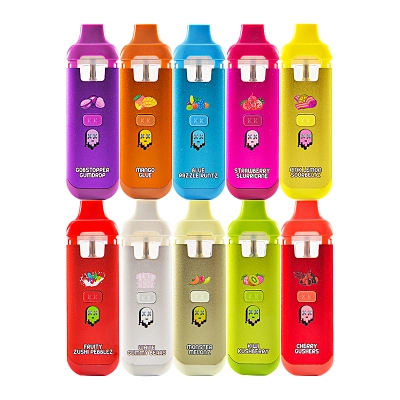
When buying any dual chamber disposable variant, the most common operational failure isn’t the device—it’s the SKU mix-up. If the same family contains multiple chamber layouts, screen versions, or recharge ports, you need unambiguous version labels and a consistent naming convention that is mirrored across: the listing name, the proforma invoice, the outer carton label, and your receiving checklist.
Screen variants need a functional receiving test
If your lineup includes a screen, your receiving SOP should include a minimal power-on test and display check. Screen-enabled SKUs tend to be purchased as “premium” variants, so the tolerance for silent failures is low. For browsing and filtering screen-equipped options in one place, use the LED screen vape category.
Step 4: A fast-reorder playbook you can run every time
Build a one-page reorder sheet (and never reorder from memory)
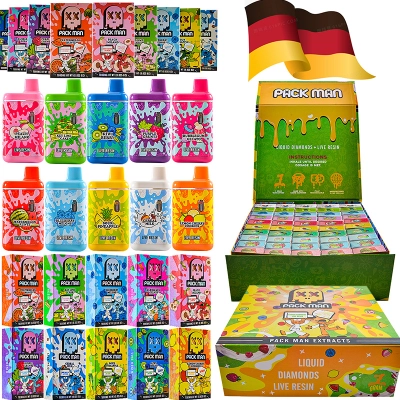
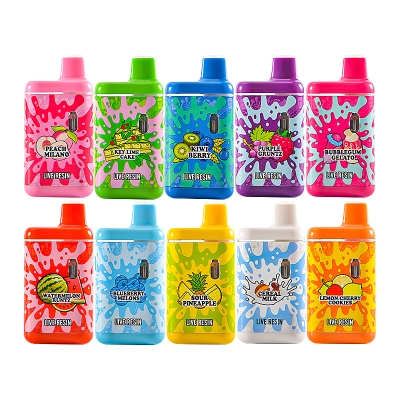
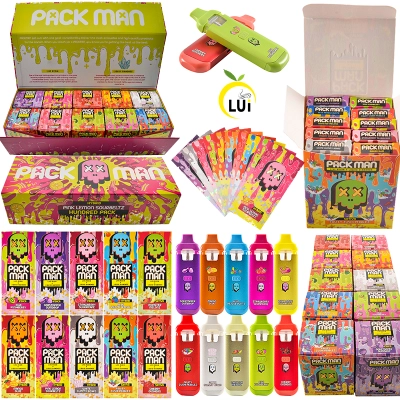
Your reorder sheet should be a single page that any teammate can follow without context. It should include: SKU name, variant code, chamber type, screen/no-screen, recharge port, colorway, packaging style, lot size, and preferred warehouse route. Include one product photo reference per SKU (even a simple screenshot) so receiving can do a 3-second visual match.
Set reorder triggers that prevent stockouts
Fast-reorder programs usually fail because the trigger is subjective (“we feel low”). Replace that with two hard triggers: (1) time-based (weeks of cover remaining), and (2) inventory-based (units remaining). When either trigger hits, you reorder the exact same SKU pack unless your assortment strategy has formally changed.
Standardize your RFQ questions so quotes are comparable
The fastest way to compare quotes is to force the same structure: MOQ, unit tiering, warehouse availability, processing time, packaging options, and shipping terms—listed in one sheet. If you ask different questions each time, you get “apples to oranges” responses and delays. A standardized RFQ also reduces back-and-forth messages and makes approval easier for finance and ops.
Run a “receiving-first” confirmation before payment
Before payment, confirm that the supplier’s SKU naming and your internal SKU naming match exactly. Then confirm your receiving checklist matches the SKU. This is especially important when ordering from a brand family page and then switching into a narrower listing view. For Runtz-specific browsing of bulk-ready listings, use the runtz disposable page as the controlled subset.
Step 5: The “no-dispute” checklist for bulk orders
Before you place the order
- Confirm the exact SKU naming and version label format (what prints on cartons and inner packs).
- Confirm lot size and whether mixed-SKU cases are allowed (and how they’re labeled).
- Confirm the warehouse route you want and whether the SKU is currently positioned there.
- Confirm what “acceptable” means at receiving: cosmetic tolerance, functional check, and packaging integrity.
When the order arrives
- Photograph outer cartons and labels before opening (proof for disputes).
- Spot-check variant labels against your reorder sheet.
- Run a quick functional check for screen variants and basic power behavior.
- Record pass/fail notes in a single shared log so the next reorder benefits from today’s data.
Conclusion: make your next reorder faster than your first order
Wholesale wins come from repeatability: clear MOQ tiers, the right warehouse choice for the job, version labels that prevent SKU mix-ups, and a reorder workflow that your team can run without guesswork. Treat this as an operations system—not a one-time purchase—and you’ll reduce delays, avoid returns, and replenish faster.
If you want the shortest path to clean purchasing, keep your SKU set tight, keep your labels consistent, and keep your RFQ structure standardized. That’s the real “fast-reorder playbook.”
0 Comments