
Runtz dual chamber 2g: How to Compare A/B Chamber Balance for Consistent Fills
Dual-chamber “2g” formats are popular because they let brands offer two profiles in one device. But the same feature also introduces a new failure mode for bulk programs: A/B imbalance. When one chamber consistently runs “ahead” (or lags), you get uneven depletion, higher complaint rates, and messy support tickets (“A tastes burnt first,” “B feels under-delivering,” “switching feels inconsistent”). This guide is written for B2B teams using empty disposable hardware in compliant operations. It focuses on repeatable comparison methods and listing-ready QC language—not consumer claims.
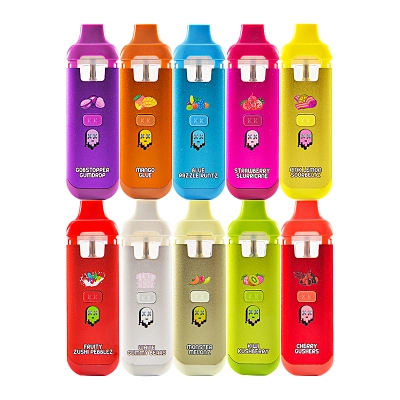
For brand context and catalog routing, start with the runtz hub, then narrow to the disposable lineup at runtz disposable. If your assortment spans multiple dual systems, standardize your taxonomy via dual chamber disposable and keep display-equipped models grouped under LED screen vape.
1) Lock the “platform facts” before you measure balance
Balance comparisons only mean something if you’re testing the same platform build. On the Runtz dual-chamber, the publicly stated platform spec is a 1ml+1ml architecture with a 280mah battery, ceramic coil at 1.4ohm, top-filling design, and bottom Type-C recharge. That baseline matters because chamber geometry, oil-hole dimensions, coil resistance, and fill access points all influence how easily each chamber accepts material and how consistently it performs after sealing.
Use a single canonical product reference in your internal docs so purchasing, QC, and your listing team speak the same language. If your SKU is the “Runtz Dual Chamber 1ml+1ml Disposable Vape With LED Screen,” reference it directly here: Runtz Dual Chamber 1ml+1ml Disposable Vape With LED Screen.
2) What “A/B chamber balance” actually means
In a dual-chamber device, “balance” is not just “both chambers got filled.” It’s a combination of (1) how evenly the chambers accept the intended amount during pack-out, and (2) how consistently both sides deliver over time under the same operating conditions. In B2B QC, you want a measurement that is fast, repeatable, and independent of subjective taste reports.
Recommended metrics for B2B programs
- Fill mass delta (primary): Compare A vs B by mass, not “feel.” Mass is objective and easier to audit across lots.
- Seal/handling stability (secondary): Track whether the delta changes after normal handling, which can indicate internal pressure equalization issues or micro-leaks.
- Switch consistency (support metric): Confirm that the chamber switch mechanism doesn’t bias airflow or delivery perception.
3) A simple, repeatable A/B comparison workflow (QC-friendly)
You don’t need a lab to detect imbalance. You need a consistent workflow. The goal is to build a “balance signature” for each lot—fast enough for receiving, strong enough to justify accept/reject decisions.
Step A: Prepare a controlled comparison set
- Use the same device variant, same packaging run, same lot identifiers where available.
- Use the same measurement tools for the whole lot (scale, fixtures, and caps).
- Record chamber labeling (A/B or left/right) exactly as your receiving team sees it.
Step B: Measure A and B using mass-based targets
Weigh the empty device, then weigh after filling A, then weigh after filling B. The key is consistent technique: same fill posture, same pause time, same sealing routine. Your simplest balance indicator is:
Balance Index (%) = (Mass_A − Mass_B) ÷ Target_Total_Mass × 100
Set an internal threshold that matches your brand’s tolerance and customer expectations. If you don’t have historical data, start conservative, then tighten once you know your platform’s normal variation. Document your threshold in your receiving SOP so the decision is not “operator mood-based.”
4) Why imbalance happens in dual-chamber formats
A/B imbalance usually comes from small manufacturing and assembly differences that compound at scale. The most common contributors are not “one big defect,” but several small tolerances stacking in the same direction.
Common contributors
- Chamber volume tolerance: tiny differences in chamber geometry can change acceptance and headspace behavior.
- Fill-path resistance: if one side’s path is effectively “tighter,” it fills slower or traps more air.
- Coil/wick variation: small differences in wick density or coil seating can bias early delivery on one side.
- Seal compression: uneven sealing pressure can create micro-escape paths that drift mass over time.
- Switch/airflow bias: if the switch changes airflow routing, users perceive one side as “stronger” even when mass is equal.
5) Turn balance into a receiving checklist (what to record)
The fastest way to stop disputes is to log the right fields at receiving. Your worksheet should capture objective measurements, not opinions.
Receiving log fields (minimum viable)
- Lot identifier / carton label / date received
- Device platform reference + packaging run
- Sample size and operator initials
- Empty mass, post-A mass, post-B mass
- Balance Index (%) and pass/fail vs your threshold
- Notes: leaks, cap fit, port alignment, screen behavior (if present)
6) Sampling strategy: don’t inspect 100%—inspect smart
Most B2B hardware teams use acceptance sampling: you test a statistically defined sample and accept or reject lots based on results. The exact plan depends on your risk tolerance, but the operational principle is consistent: sampling reduces time and cost while still controlling lot quality when paired with clear accept/reject criteria.
If your program already uses AQL-based acceptance sampling, keep your balance tests aligned with that same structure so your QC system stays coherent. If you’re new to structured sampling, start with a stable sample size per lot and tighten as you gather baseline data.
7) How to update your listings so “balance expectations” are clear
Listing problems often create “balance problems.” When a buyer expects one thing and receives another, every small variation turns into a claim. Make your listing language unambiguous:
Listing-ready bullet set (example)
- Format: Dual chamber (1ml+1ml architecture)
- Charging: Type-C (bottom recharge)
- Heating: Ceramic coil (platform resistance per spec)
- Fill access: Top filling design (hardware architecture)
- Display family: Use the “LED screen vape” category if your SKU includes a screen; otherwise keep screen claims off
- QC note: A/B chamber balance checked at receiving; lot-based sampling available for bulk orders
- Scope: Empty hardware only; buyer responsible for compliant filling, labeling, and regulatory adherence
8) A/B balance troubleshooting: decision tree for your team
- Is the imbalance mass-based or perception-based? If mass is equal but complaints persist, review airflow/switch bias.
- Does the delta change after handling? If yes, investigate sealing consistency and micro-leak potential.
- Is the delta consistent across units? If yes, suspect systematic tolerance stack; if no, suspect process variation.
- Is one chamber consistently harder to fill? Check fill-path resistance and air escape behavior.
9) What to say to wholesale buyers (copy you can reuse)
“For dual-chamber programs, we standardize A/B chamber balance checks at receiving. Lots are evaluated using mass-based sampling so buyers get consistent depletion behavior across chambers. Listings are organized by format and display family to avoid mismatched expectations.”
10) Final takeaways
- Balance is best measured with mass-based, repeatable checks—not subjective reports.
- Use one canonical platform reference so purchasing, QC, and listings stay aligned.
- Make your listings explicit about format, fill architecture, and whether a screen is present.
- Route buyers through the right hubs: runtz → runtz disposable → dual chamber disposable → LED screen vape.
Trademark & compliance note: Product names and trademarks belong to their respective owners. This article is for B2B catalog/QC discussion of empty hardware only. Always follow local laws and regulatory requirements for any compliant filling, labeling, and distribution.



0 Comments