
Packman Switch: How Dual-Chamber Flavor Switching Works
Dual-chamber devices have become one of the most interesting hardware formats in today’s disposable category because they solve a simple problem in a smarter way: buyers want variety without carrying multiple devices. In the packman lineup, the “switch” concept is attractive because it combines two separate flavor paths inside one body while keeping the experience more organized than a standard single-chamber platform. For distributors, resellers, and private-label buyers, that means a product can look more advanced on the shelf while still staying easy to explain to customers.
At a basic level, dual-chamber flavor switching works by dividing the internal storage and delivery path into two independent sides. Instead of using one reservoir and one flavor profile, the device is built so Chamber A and Chamber B remain physically separated. A switch mechanism then changes which side is active during a draw. Depending on the hardware design, the selection may happen through a slider, a small button, or a screen-assisted control logic that makes the active mode visible at a glance.
This is why the concept gets attention around platforms like the Packman v7 disppsable. Buyers are not only looking at appearance; they are also looking at how clearly the hardware communicates mode selection. A good dual-chamber design should make it obvious whether the user is drawing from the left chamber, the right chamber, or—if supported by the platform—a combined mode. That clarity matters for product confidence, after-sale support, and lower confusion during repeat orders.
What “dual-chamber” really means in hardware terms
Not every device marketed as dual chamber is engineered the same way. In a stronger design, the two chambers are isolated so that flavor remains distinct and the airflow path can be directed with precision. In a weaker design, separation may exist in theory, but tolerances, sealing, or selector quality can make mode switching feel vague. That is why serious buyers should always think about dual chamber as a hardware architecture, not just a product label.
From a construction standpoint, a well-designed dual-chamber unit usually has four critical elements: separate storage zones, a selector system, an airflow-routing structure, and output feedback. The first two determine whether the product is truly capable of switching cleanly. The airflow structure determines whether the draw feels stable after the switch. The feedback layer—especially on screen-enabled products—helps users understand the selected mode without guessing.
How the switch changes the active flavor path
The easiest way to understand the mechanism is to imagine two lanes feeding into one final output path. When the switch is moved or activated, the device redirects airflow so the draw is associated with one chamber instead of the other. In practical terms, the selector is not merely changing a label; it is changing which internal route becomes active. That is the heart of flavor switching.
On some devices, this action is purely mechanical. A slider physically repositions the selection point so one side opens while the other remains closed. On other devices, the platform combines a control input with a more integrated internal structure, which is why categories like packman disposable have become useful for buyers comparing how different product families approach the same idea. The external shell may look similar across SKUs, but the selector feel, tolerance consistency, and screen logic can be very different.
In better-built units, flavor switching should feel deliberate rather than loose. The selector should not wobble, the active mode should not be ambiguous, and repeated switching should not reduce confidence in the product. This matters because a switch feature is one of the first things customers notice. If it feels weak, the entire device feels less premium even if the outer design looks attractive.
Why chamber separation matters so much
The value of dual-chamber hardware depends on separation. If the two sides are not effectively isolated, users can experience flavor bleed, inconsistent draw behavior, or a “mixed” result when they expected a clean single-side selection. For sellers, that becomes a support problem. For buyers managing a larger catalog, it becomes a consistency problem that affects product reviews, reorder confidence, and brand perception.
This is one reason the broader Dual Chamber Vape category has become strategically important. It is no longer just a novelty format. It gives brands a way to present two experiences in one device, create a more premium merchandising story, and reduce the need for multiple separate SKUs serving nearly the same audience. When executed correctly, dual-chamber hardware lets one body do more work across sales, display, and customer education.
For many B2B buyers, the commercial appeal is obvious. A switch-enabled product can help a lineup look more advanced, more giftable, and more differentiated in crowded categories. But the underlying hardware still has to do the real job: maintain distinct chambers, preserve selector reliability, and keep the draw intuitive after multiple mode changes.
How screen-assisted switching improves usability
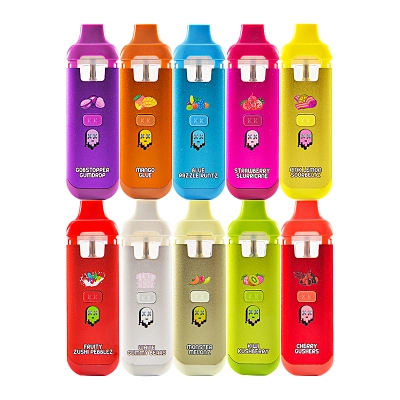
When a device includes a screen, flavor switching becomes easier to explain and easier to verify. A screen can show which side is active, whether the unit has entered a different mode, and whether the user should expect a left-channel, right-channel, or dual-channel draw. This feedback is especially useful in first-time interactions because it reduces the guesswork that often comes with compact selector hardware.
That is also why the LED Screen Vape category matters in content planning. Screen-equipped products give you more to talk about from a merchandising and UX perspective: clarity, mode visibility, status cues, and a more premium retail impression. In blog content, this creates stronger educational angles than simply listing dimensions or shell colors. It lets you explain not only what the device is, but how the interface supports the switching concept.
A good screen does not make weak hardware better, but it can make strong hardware easier to trust. Buyers can see the device state, customer support teams can explain the switching logic more quickly, and product pages become more convincing because the visible interface supports the dual-chamber claim. In other words, the screen is not the main innovation; it is the communication layer that makes the innovation easier to understand.
What buyers should verify before approving a switch platform
If you are evaluating a switch-style device for sourcing or wholesale, there are a few practical checks that matter more than marketing language. First, test selector consistency across a sample group. The movement should feel controlled and repeatable, not random. Second, confirm that the device clearly indicates the active side. Third, inspect seam quality and general shell integrity, because loose construction often shows up first around moving parts.
Next, pay attention to the transition between modes. A strong platform should not make switching feel disruptive. The draw should remain predictable, the selected state should remain stable, and the product should not create confusion after several changes back and forth. This is especially important for catalogs built around repeat reorders, because a switch feature is only valuable when it stays reliable over time.
For merchandising teams, it also helps to think about storytelling. Dual-chamber devices work best when the product page and blog content explain the benefit in plain language: two independent flavor paths, one device body, cleaner selection, clearer mode feedback, and a more flexible shelf story. That messaging is much stronger than vague claims about being “innovative” or “advanced.”
Why this topic works well as a blog on Lueciga
This subject fits Lueciga’s catalog structure because it bridges product education and commercial intent without sounding like a hard sell. It gives readers a reason to understand the mechanism behind the format while naturally supporting internal navigation toward Packman family pages, disposable assortments, dual-chamber categories, and screen-based device collections. That makes it useful for both SEO and on-site engagement.
It also supports buyers at different stages. New visitors can learn what makes a switch platform different from a standard disposable. Returning buyers can compare design logic across product families. And customers already browsing Packman-related listings can better understand why dual-chamber flavor switching is more than a cosmetic feature. It is a structural choice that affects user experience, product positioning, and reorder confidence.
Final takeaway
Packman Switch dual-chamber flavor switching works because the device is built to separate two flavor paths and then let the user choose between them through a selector system. The better the isolation, selector precision, and visual feedback, the better the overall product experience. For buyers and sellers, that means the real value of a switch platform is not just having two chambers—it is making those two chambers easy to understand, easy to select, and reliable enough to support long-term catalog growth.
If you are creating content around this topic, keep the explanation grounded in hardware logic: separate chambers, controlled selection, clear mode indication, and user-friendly switching. That positioning is more durable, more credible, and far more useful than simply repeating product buzzwords. In a crowded category, the brands and pages that explain the mechanism clearly are usually the ones that earn more trust.






0 Comments