
Muha X BTC 2g Disposable: What Buyers Should Check Before Placing Bulk Orders
Bulk purchasing succeeds or fails on details: the exact hardware spec, the paperwork that follows the shipment, and the QC routines that prevent silent loss (leaks, dead-on-arrival units, weak vapor, packaging mix-ups). This checklist is written for B2B buyers—wholesalers, retailers, and brand operators—who want to source the Muha-style “Muha X BTC” 2g format as hardware-only / empty devices, then fill and package according to local rules. If you’re comparing styles across a brand family, start with the broader muha meds catalog view, then narrow down by capacity and finish.
1) Lock the SKU definition (so you don’t buy “almost the same” hardware)
The biggest bulk-order mistake is treating “2g disposable” as a single spec. In practice, a 2g class device can vary by charging port type, battery size, coil resistance, airflow geometry, and oil inlet design—each affecting real-world performance and return rate. Before you negotiate price, freeze a one-page SKU sheet that includes:
- Nominal oil capacity (2 ml / “2g class” format) and fill-head compatibility.
- Charging interface (prefer Type-C for supply-chain consistency).
- Battery capacity (mAh) and whether the protection circuit is documented.
- Coil / core type (ceramic or alternative), and resistance target (ohms).
- Shell + mouthpiece materials and whether any parts are coated/painted near the air path.
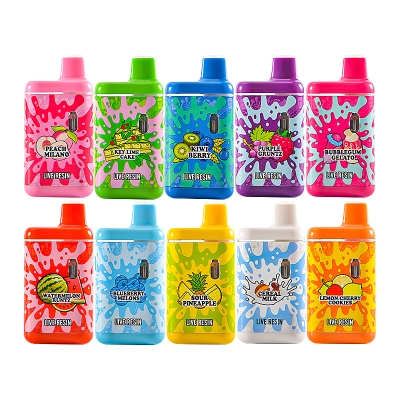
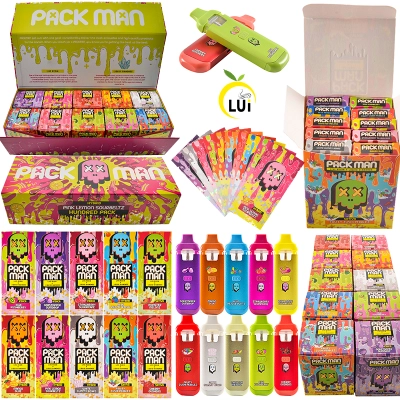
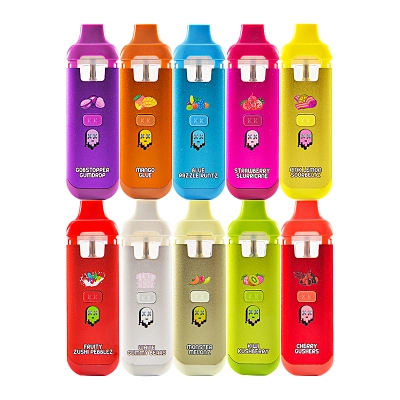
- Packaging variant logic (how “flavor” labels map to empty hardware packaging options).
For “Muha X BTC” style listings, pay attention to “2g” versus “2ml” wording: many catalogs describe the same size in ml while marketing calls it 2g class. Decide which notation you will use internally for purchasing and receiving, then keep it consistent on cartons, invoices, and inbound inspection forms.
2) Confirm it is truly hardware-only (empty) and document it
If you operate in regulated markets, you need clear separation between hardware procurement and any finished inhalable product. Your PO and invoice language should state “empty devices / hardware-only,” with no implied contents. Ask the supplier to confirm in writing that the SKU is sold empty and that packaging variations are cosmetic/label options rather than filled formulations.
3) Battery transport compliance: request the right documents up front
Disposables are battery-powered devices, so logistics risk is not theoretical—it’s where shipments get delayed, returned, or reclassified. At minimum, ask for the UN 38.3 test documentation for the cell or battery configuration used in the device. In many supply chains, downstream shippers need access to a standardized lithium battery test summary to confirm UN 38.3 testing was completed. This is emphasized in U.S. hazmat guidance and is widely used in airline/cargo handling workflows.
- Request: UN 38.3 test report reference + lithium battery test summary (TS) for the battery model.
- Verify: the TS identifies the battery/cell model that matches your production batch.
- Operational tip: store TS PDFs in your receiving system and link them to the SKU and lot number.
4) Electrical safety and charging: reduce fire/DOA risk with standards-based checks
A 2g class disposable is often used until the battery is depleted—so a weak protection circuit or unstable charging design can create safety risk and customer complaints. Build a vendor approval gate around recognized battery and vaping-device electrical safety expectations:
- Device electrical system safety: ask whether the design targets UL 8139-type requirements (electrical system, protection circuits, charger interface, overheating protection) even if your market doesn’t require certification.
- Battery safety: ask whether the cell testing aligns with IEC 62133-2-type safety testing for portable lithium cells.
- Inbound charging test: sample-charge devices on a controlled station, log heat rise and charge time consistency.
Practical acceptance criteria for bulk buyers: (1) no abnormal heating during charge, (2) stable power delivery at lower voltages, and (3) consistent cut-off behavior. These checks won’t replace certification, but they catch the “cheap batch” problem early.
5) Performance/QC checklist that actually predicts return rates
Many buyers only test a few pulls and call it “good.” That’s not enough. Returns usually come from repeatable failure modes: micro-leaks, inconsistent airflow, clogging, weak vapor near end-of-life, or packaging mismatch. Use a structured QC plan:
A) Incoming inspection (carton-level)
- Carton count, seal integrity, and label correctness (SKU, batch/lot, packaging variant).
- Drop/handling tolerance: random cartons inspected for crushed packaging and device movement.
- Barcoding or receiving ID: enforce one internal SKU code per hardware configuration.
B) Device functional sampling (unit-level)
- Visual: mouthpiece seal, oil window alignment, charging port alignment.
- Electrical: activation, indicator behavior, charge acceptance.
- Airflow: draw resistance consistency across the sample.
- Leak screen: short warm-hold test and re-check for seepage at seals.
C) Compatibility checks (for your oil profile)
If you fill these devices, your oil viscosity and terpene profile can expose hardware weaknesses. Require a small pre-production run and test for clogging and flavor carry. If you operate in a regulated cannabis environment, remember that product testing programs frequently look at contaminants (e.g., heavy metals, residual solvents) and labeling accuracy—so your hardware material choices and your filling SOPs should be designed to avoid contamination pathways and mislabeling risk.
6) Packaging, IP, and “brand-style” risk control
“Brand-style” hardware moves fast, but it also creates IP and channel-risk exposure. Your goal is to avoid stock that can’t be listed, shipped, or advertised due to trademark or platform restrictions. Bulk buyers should:
- Confirm what marks appear on the device vs. only on outer packaging.
- Ask for neutral packaging options if your channels are sensitive.
- Decide whether you need anti-counterfeit elements (scratch code, QR workflow, tamper seals).
Treat packaging “flavor” variants as labeling SKUs for inventory control. If you don’t map each package variant to a distinct internal SKU, you will eventually mis-ship.
7) Logistics strategy: match lead time to your sales reality
Bulk buyers often optimize unit price and ignore time-to-shelf. If you need faster turns, consider domestic inventory routes where available. Lueciga’s USA warehouse stock pages illustrate a common strategy: hold inventory closer to customers to shorten delivery windows and reduce cross-border complexity.
For cross-border orders, clarify Incoterms, destination duties, and what happens during carrier exceptions. For returns, define who pays freight on DOA and what evidence is required (video, serial/batch photo, carton label).
8) Pricing tiers and how to negotiate without losing quality
Tiered pricing is normal in hardware. But if you squeeze price without locking spec and QC gates, you’ll “win” the negotiation and lose margin on returns. Negotiate in this order:
- Freeze hardware spec sheet + packaging variant rules.
- Agree on sampling plan and acceptance thresholds (DOA %, leak rate, charge performance).
- Then negotiate pricing tiers, deposits, and production schedule.
If your supplier offers multiple factories or “versions,” insist that the invoice and carton labels carry a version code so you can trace performance by batch.
9) A simple pre-PO checklist (copy/paste for your team)
- Confirmed: hardware-only / empty devices (documented on PO & invoice).
- Received: spec sheet (capacity, Type-C, mAh, resistance, materials).
- Received: UN 38.3 test summary / battery documentation for logistics.
- Defined: packaging variants and internal SKU mapping.
- Passed: incoming inspection + functional sample tests.
- Agreed: returns/DOA policy and evidence requirements.
- Planned: lead time vs. sales forecast and replenishment cadence.
Where to browse next on Lueciga
If you’re still comparing options, browse the muha meds disposable collection to see adjacent shells and packaging styles, then apply the same compliance and QC gates to each candidate.
References (authoritative, for buyer due diligence)
- Google: how Search generates page titles
- PHMSA: Lithium Battery Test Summaries (rev. July 2024)
- IATA: Lithium Battery Guidance (2025)
- UNECE: UN Manual of Tests and Criteria (Rev.8 files, incl. 38.3 updates)
- UL: UL 8139 overview (e-cig electrical safety)
- EUR-Lex: EU Batteries Regulation (EU) 2023/1542
- Peer-reviewed review: regulation/composition risks in cannabinoid vaping products (2025)

0 Comments