
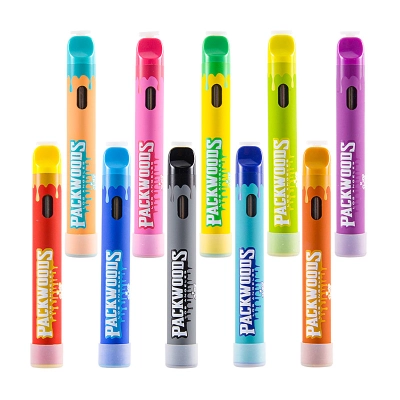
Muha Meds Master Case Strategy: Pack-Out, Labeling & Palletizing Empty Disposables for Export
Export pack-outs fail for boring reasons: inconsistent inner packs, missing battery paperwork, unreadable marks, and pallets that don’t survive handling. This guide is a practical master-case playbook for shipping empty, battery-powered disposable hardware—focused on repeatable pack-out, compliant labeling/marking, and palletizing that reduces claims and customs friction.
Quick navigation for product context: muha meds / muha meds disposable / muha meds master box.
1) Start with the export reality: your “empty disposable” is still a battery shipment
Even when the device is empty (no oil or liquid), many disposables contain a lithium cell. That makes the shipment subject to lithium battery transport requirements (classification, tests, marks/labels, documentation and carrier-specific limits). The fastest way to lose time is to treat a battery device like generic consumer goods.
Your goal is not to memorize every regulation—it’s to build a repeatable pack-out system that generates the evidence a forwarder or carrier will request, and keeps outer packaging consistent enough to pass warehouse handling without rework.
2) Define a master case “stack” that never changes unless you issue a revision
Packaging levels (write these on a one-page spec)
- Unit protection: device protection (scratch, button press, activation prevention), plus battery safety basics (no loose metal contact).
- Inner pack: a small, countable bundle (e.g., 5/10/20 units) that becomes your inventory control unit.
- Master case: the export-controlled box with fixed count, fixed gross weight range, fixed label positions.
- Pallet load: the repeating pattern that controls crush risk, stability, and handling speed.
Change control rules that reduce mistakes
- Freeze: inner-pack count, master-case count, and box dimensions for a defined period (e.g., a quarter).
- Only revise with a version tag (Rev A/B/C) and a date. Retire old labels so they cannot be reused.
- Any change triggers new pack-out photos and an updated carton mark map (see Section 8).
3) Pack-out: build for counting speed, crush resistance, and activation prevention
Unit protection (minimal, but consistent)
- Activation control: ensure the device can’t turn on during transport (button lock features, protective insert, or physical isolation where applicable).
- Anti-scuff: sleeves or dividers prevent cosmetic damage that becomes “defect” claims.
- No metal-to-metal contact: keep terminals protected to reduce short risk in damaged scenarios.
Inner pack rules (the “warehouse truth”)
Choose an inner pack that warehouse staff can count fast and audit fast. If inner packs are inconsistent, master cases will drift. Good inner packs have: (1) fixed quantity, (2) a simple seal method, and (3) a visible count cue.
Master case build (what to standardize)
| Spec item | Target | Why it matters |
|---|---|---|
| Box strength | Rated for stacking + long transit | Prevents corner crush and label loss during cross-dock handling. |
| Void fill | “No-rattle” standard | Reduces impact damage and carton deformation from vibration. |
| Moisture control | Liner or desiccant when needed | Limits label peeling and carton softening in humid lanes. |
| Seal method | Consistent tape pattern | Helps identify tampering and keeps cartons intact at edges. |
4) Battery compliance packet: what your forwarder will ask for
Most export delays happen because someone can’t produce battery transport proof quickly. Treat this as a “shipment passport” kept per model/SKU:
Keep these documents ready (per device/battery configuration)
- UN 38.3 evidence: lithium cells/batteries must have passed the UN 38.3 test sequence for transport eligibility.
- Test summary availability: in many supply chains, shippers/distributors are expected to provide or obtain lithium battery test summaries on request.
- Lane-specific notes: air vs ocean vs ground; carrier requirements can differ.
Practical tip: store the latest document set in a single PDF bundle named by model + battery type + revision date, so a logistics partner can validate fast.
5) Carton marking & labeling: design it like a map, not like “art”
Standardize label locations (do not improvise per shipment)
- Two adjacent sides: repeat key marks on two sides so scanners can see at least one face after palletizing.
- Clear zones: keep 1–2 inches of blank space around marks to prevent tape overlap and corner wrap distortion.
- Print durability: use smudge-resistant stock; humid lanes destroy cheap labels.
What to include on a master-case carton mark (baseline)
- Consignee / ship-to
- PO / reference
- Carton number (e.g., 1/20)
- Gross weight + dimensions
- Country of origin (as applicable to your lane and paperwork)
Lithium battery marks/labels: don’t guess—align to shipment classification
The exact marks/labels depend on how the battery is shipped (contained in equipment vs packed with equipment) and the mode (air/ocean/ground). Treat this section as a workflow: confirm classification → confirm packing instruction → apply the correct marks/labels → document it with photos.
6) Palletizing: stability first, speed second, aesthetics last
Pick a pallet strategy for your export lane
- ISPM 15 wood pallets when required by destination (heat-treated/marked), or use compliant alternatives (plastic/composite) if appropriate.
- Consistent footprint: standardize pallet size per lane so warehouses don’t rebuild loads at the dock.
- Max height rule: set a hard ceiling to reduce tip risk and keep forklift handling safe.
Load pattern (simple rules that prevent damage)
- Use an interlocked pattern when possible to reduce column collapse.
- Add corner boards for strap tension and to protect label faces.
- Top cap (corrugate sheet) before stretch wrap reduces water ingress and strap bite.
- Wrap from base to top with overlap; avoid “pretty wrap” that slides during turns.
7) Mode playbook: air vs ocean vs mixed courier lanes
Air shipments
Air tends to be the strictest for lithium battery shipments, and updates to technical instructions can change practical expectations. Build a lane SOP that specifies who confirms battery status, state of charge where relevant, and the final label check before tender.
Ocean shipments
Ocean can be more forgiving on dimensions but harsher on moisture, compression, and long vibration cycles. Reinforce corners, protect labels, and assume cartons will sit in humid conditions for extended periods.
Courier / express / multi-carrier
Mixed last-mile partners increase “handling events.” If you use this lane, prioritize ISTA-style durability thinking: resist drops, vibration, and stacking. Even if you don’t run formal tests, design the pack-out as if you will be audited.
8) The evidence kit: photos and checklists that prevent disputes
When something goes wrong, the winner is whoever can prove the pack-out condition at tender. Maintain a basic evidence kit:
- 4-angle carton photos (show marks/labels clearly)
- Open-carton photo (shows inner pack method and void fill)
- Pallet photos (front + side, showing wrap and corners)
- Seal/tape pattern photo (top view)
- Revision log (Rev + date + what changed)
Store these per SKU and per revision so you can respond to customs, carriers, or customers without rebuilding the story from memory.
9) Common failure modes (and how to engineer them out)
Failure: cartons collapse in the container
- Cause: over-height loads, weak corners, uneven weight distribution.
- Fix: standardize max height, improve corner protection, and avoid “chimney voids” inside cases.
Failure: labels peel or become unreadable
- Cause: humidity + cheap label stock + wrap abrasion.
- Fix: upgrade label material, keep a clear zone, add top caps, and avoid tape across label edges.
Failure: re-counting and rework at the warehouse
- Cause: inconsistent inner packs and unclear carton numbering.
- Fix: inner-pack standardization and visible carton count marks (e.g., 1/20).
10) Export-ready checklist (copy/paste for your SOP)
- Confirm device configuration is empty hardware and identify battery transport classification for the lane.
- Verify the current compliance packet is attached (UN38.3 evidence and supporting docs as required).
- Pack-out per spec: unit protection → inner pack → master case (no-rattle, fixed count, fixed seal).
- Apply carton marks in fixed positions; verify legibility after wrapping.
- Palletize with your fixed pattern; corner boards + top cap + wrap standard.
- Photo evidence kit completed and saved under PO + revision.
For lane-specific details on fulfillment and service expectations, reference: about shipping and terms of use.







0 Comments