
Muha Meds Bulk Ordering Playbook: MOQs, Pricing Tiers, and Warehouse Strategy for Empty Disposables
- Define your “buy spec” first (so pricing is comparable)
- MOQs: factory MOQ vs warehouse MOQ vs “cash-flow MOQ”
- Pricing tiers: how to read and negotiate tier breaks
- Warehouse strategy: USA vs EU, split orders, and risk control
- Battery & transport compliance: what to demand in writing
- Inbound QC & lot acceptance: keep reorders stable
- Reorder cadence & safety stock: stop stockouts without overbuying
- One-page checklist you can reuse for every PO
1) Define your “buy spec” first (so pricing is comparable)
Before you debate MOQs or bargain on price, lock a one-page “buy spec” that makes suppliers quote the same thing. If you’re sourcing within a brand collection like muha meds, make sure every quote references the same items:
- Device class: postless vs cartridge+device, screen/LED vs no-screen, charging port type, buttonless draw activation.
- Pack-out: unit box, master carton count, insert/tray type, tamper features (if any), barcode/label requirements.
- Operational constraints: your receiving dock rules, pallet height limits, and whether you need mixed-SKU cartons.
Tip: When you can’t standardize the full spec, standardize at least the “landed cost model” (unit + freight + duties/fees + 3PL fees). Otherwise “cheaper” unit prices can cost more after receiving and storage.
2) MOQs: factory MOQ vs warehouse MOQ vs “cash-flow MOQ”
MOQs are not one number. In practice, you’ll manage three layers:
2.1 Factory MOQ (production reality)
Factory MOQ is driven by production batching (plastic color runs, print runs, tooling setup, assembly line scheduling). Your leverage is consolidation: fewer SKUs per PO, standardized packaging, and longer forecast windows.
2.2 Warehouse MOQ (inventory reality)
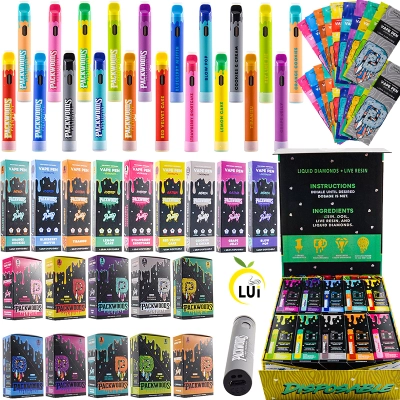
Warehouse MOQ is what’s available “now” in a region. On Lueciga listings, you can see lot sizing patterns like 200pcs/lot and 500pcs/lot for certain warehouse items, which is a classic sign of warehouse MOQ packaging. This is often the fastest path to “trial → reorder” without waiting for production.
2.3 Cash-flow MOQ (your business reality)
Cash-flow MOQ is the maximum you can buy without creating dead stock. It is determined by sell-through velocity, seasonality, and the working-capital you can tolerate tying up for 30–90 days.
3) Pricing tiers: how to read and negotiate tier breaks
Tiered pricing is where most profit is won or lost. Instead of asking “what’s your best price,” ask: “What are the tier breaks, and what changes at each tier?” Sometimes the tier change is not just price—it can include carton optimization, priority pick/pack, or mixed-SKU allowances.
3.1 Example: box-based tier breaks (how to interpret them)
One Lueciga listing shows a clear box-tier ladder (1 Box+, 2 Box+, 4 Box+, 10 Box+) with per-box prices that step down as volume rises. Use this structure to calculate your margin at each tier and set reorder triggers.
| Tier | What you’re optimizing for | Typical buyer behavior | How to negotiate (without “race to the bottom”) |
|---|---|---|---|
| Trial 1–2 boxes |
Speed + validation | Confirm fit, packaging, damage rate, returns | Ask for a documentation bundle (battery compliance docs, packing list format, carton spec) instead of price cuts |
| Standard 4+ boxes |
Balanced landed cost | Restock your top SKUs only | Request consistent master-carton counts and “no substitution” policies to prevent receiving errors |
| Reorder 10+ boxes |
Stability + margin | Forecast-led buying | Trade volume for service-level: faster pick time, better packaging, clearer RMA rules |
If you want to benchmark real tier ladders, see how this listing presents tiers and lot sizing: USA warehouse Muha Meds 2g 2025 Edition.
3.2 Don’t forget “tier friction” (the hidden cost of higher tiers)
- Storage: bigger tiers can push you into higher 3PL storage bands.
- Receiving: more cartons increases labor and damage exposure.
- Cash: margin improves, but cash conversion cycle can worsen if sell-through doesn’t keep up.
4) Warehouse strategy: USA vs EU, split orders, and risk control
A simple rule: use regional warehouses to buy speed and reduce uncertainty; use factory orders to buy margin and customization. Many B2B operators run a “dual lane” strategy:
| Strategy | Best for | Risks | How to de-risk |
|---|---|---|---|
| Single-warehouse (USA or EU) | Simple operations, faster receiving | Regional stockouts, single-point failure | Keep 2–4 weeks safety stock on top SKUs; rotate slow movers out early |
| Split order (USA + EU) | Stable fulfillment across regions | Forecast complexity, SKU fragmentation | Standardize SKU naming + carton labels; use the same QC checklist in both regions |
| Warehouse + factory lane | Scale without losing speed | Spec drift across batches | Lock a “golden sample,” enforce change-control, and reject silent substitutions |
If your buyers browse a category like muha meds disposable, you can map demand by SKU family and decide which SKUs live in warehouse inventory vs factory reorder.
5) Battery & transport compliance: what to demand in writing
Any disposable device with a lithium battery introduces transport obligations. Two practical requirements you should treat as “non-negotiable paperwork”:
- UN 38.3 testing: IATA’s lithium battery guidance notes that lithium cell/battery types must have passed the applicable tests in UN Manual of Tests and Criteria subsection 38.3 to be permitted in transport. (Reference: IATA Lithium Battery Guidance (2025))
- Test summary availability: PHMSA explains the lithium battery test summary requirement and updates guidance for manufacturers/distributors. (Reference: PHMSA Lithium Battery Test Summaries)
Operational takeaway: Put “UN 38.3 + test summary availability” into your PO terms so your warehouse doesn’t get stuck with a shipment that carriers or downstream partners refuse.
6) Inbound QC & lot acceptance: keep reorders stable
Bulk orders fail less often because of “bad units” and more often because of inconsistent lots. Build a lightweight acceptance protocol you can execute in 30 minutes per lot:
- Carton integrity: crush, water exposure, re-tape, label mismatch.
- Sampling plan: pick units across top/middle/bottom cartons; log issues by carton ID.
- Functional checks: charge indicator, port fit, airflow path clear, draw activation consistency.
- Traceability: match SKU name + box count + lot identifiers to the packing list.
6.1 Change-control: stop “silent substitutions”
If you reorder monthly, your supplier can change small components (battery, coil, plastics) without telling you—unless you require a change notice. Add a clause: “No component or packaging changes without written approval and a new golden sample.”
7) Reorder cadence & safety stock: stop stockouts without overbuying
Use a simple cadence:
- Weekly: identify top 20% SKUs that drive most sales; monitor days-of-cover.
- Bi-weekly: trigger a warehouse reorder when you hit your “reorder point” (lead-time demand + buffer).
- Monthly: place a larger PO for stable SKUs to reach the next pricing tier, but only if sell-through supports it.
Practical rule of thumb: if your warehouse lead time is short, keep buffer small; if lead time is volatile, expand buffer and reduce SKU variety.
8) One-page checklist you can reuse for every PO
- Spec locked: device class, pack-out, SKU naming, carton counts.
- MOQ selected: warehouse MOQ for speed; factory MOQ for margin/customization.
- Tier target: choose the tier break that improves margin without creating dead stock.
- Warehouse lane: USA vs EU vs split—document why.
- Compliance docs: UN 38.3 + test summary availability confirmed and referenced in PO terms.
- QC plan: sampling + carton ID logging + acceptance criteria.
- RMA rules: defect window, evidence required, replacement/credit process.
If you implement only two things from this playbook, make it these: (1) always buy against a written spec and (2) always tie tier pricing to reorder triggers. That’s how bulk ordering becomes predictable—and profitable.



0 Comments