
Muha Meds Blinkers Collab: 2026 B2B Hardware Guide
In 2026, vape hardware buyers are no longer choosing disposable devices only by appearance, price, or brand familiarity. Serious B2B buyers now evaluate each device as a complete commercial hardware system: shell design, chamber structure, battery safety, screen functionality, filling compatibility, packaging readiness, traceability, documentation, and compliance fit for the target market. The Muha Meds Blinkers Collab device is a strong example of this shift because it combines a recognizable collaboration style with a dual chamber 1ML+1ML format, a screen-based user interface, Type-C charging, and a compact disposable form factor suitable for adult-only, licensed B2B channels.
This guide is written for wholesalers, licensed retailers, private-label buyers, procurement teams, and vape hardware distributors who need to understand how to assess this type of product before bulk ordering. It does not provide consumer health advice and it does not claim that any device is universally legal, safe, or authorized in every jurisdiction. Instead, it focuses on hardware selection, quality checkpoints, compliance questions, and responsible sourcing standards that should be reviewed before any purchase decision.
1. Why Dual Chamber Hardware Matters in 2026
Dual chamber disposable hardware has become more important because buyers want product differentiation without creating overly complex inventory systems. A dual chamber format can separate two 1ML reservoirs in one device body, allowing a brand or retailer to present two compatible SKUs, blends, or formulation profiles in a single finished hardware unit. For B2B buyers, this can reduce display complexity, improve shelf storytelling, and create a higher perceived value than a standard single-tank disposable.
The main advantage of a dual chamber disposable is not simply that it has two tanks. The advantage is operational: one device can support two separate reservoirs, two airflow experiences, or two product concepts while maintaining one packaging footprint. For wholesale buyers, this means fewer outer carton types, fewer SKU explanation issues, and a cleaner sales pitch for adult customers in licensed environments. However, a dual chamber design also increases the need for tighter QC. Buyers should ask about reservoir separation, leak resistance, mouthpiece sealing, coil consistency, airflow path isolation, and whether the device has been tested with the viscosity range expected in the buyer’s intended formulation.
2. Key Hardware Specifications to Review
A B2B buyer should treat every disposable vape as a technical product, not just a branded shell. For the Muha Meds Blinkers Collab-style hardware, the most visible specifications are the 1ML+1ML chamber format, screen interface, rechargeable battery, and Type-C charging. These features should be reviewed against the buyer’s operating requirements, including filling workflow, storage temperature, shipping route, carton handling, labeling needs, and after-sale support expectations.
- Capacity: A 1ML+1ML dual chamber layout is suitable for buyers who want a 2ML total-positioning device while preserving two separate reservoirs.
- Battery: A 300mAh battery should be evaluated through charging performance, discharge stability, protection circuit design, and real-world shelf-life testing.
- Charging: Type-C charging is now expected by many buyers because it is familiar, compact, and easier to explain than older charging formats.
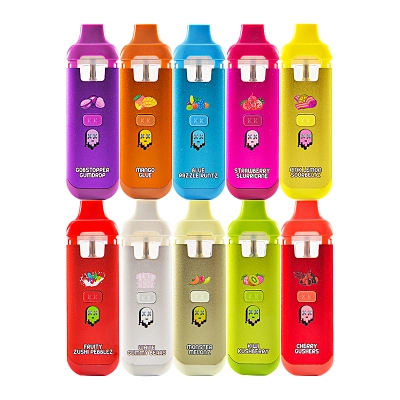
- Screen: A digital or LED screen can help communicate battery level, mode, or usage status, but buyers should confirm the exact display function before ordering.
- Packaging: Packaging should be reviewed for age-gating language, batch labels, tamper evidence, destination-market warnings, and trademark compliance.
3. LED Screen Vape: More Than a Visual Upgrade
The rise of the LED screen vape category shows that buyers increasingly value device feedback. A screen can make a disposable feel more premium, but it also has a practical role in B2B selling. Retail staff can explain battery status more easily. Buyers can position the device as more advanced than a basic disposable. End users can understand remaining power or operating mode without guessing. For wholesalers, these benefits can make screen-based devices easier to merchandise, especially in competitive adult-use markets.
That said, buyers should avoid assuming that every screen has the same function. Some screens show battery level only. Others may show puff count, mode indicators, charging status, or animated branding. Before ordering, request a function sheet or a short product video that clearly shows what the screen displays during charging, activation, low-battery state, and standby. Also confirm whether the display increases battery drain, whether it affects device thickness, and whether the screen window is scratch resistant during shipping.
4. Compliance Comes Before Bulk Pricing
The most important B2B rule for 2026 is simple: do not evaluate vape hardware only by unit price. Every buyer should first ask whether the product can be legally sold, imported, marketed, and distributed in the intended market. Regulations differ by country, state, and product type. Nicotine ENDS products, cannabis vaporizers, CBD hardware, empty devices, and branded packaging may be treated differently depending on the jurisdiction. A product that is acceptable for one buyer may be unsuitable for another buyer because of licensing, labeling, ingredient, trademark, or age-restriction rules.
In the United States, FDA rules for ENDS are highly product-specific. A marketing authorization for one product does not automatically apply to other products, other flavors, other brands, or other configurations. Buyers should not describe hardware as “FDA approved” unless they have verified the exact legal status of that exact product. For adult-only tobacco or nicotine retailing, buyers should also be aware that federal law prohibits sales to anyone under 21, and retailers must verify photo ID for customers under the applicable age-check threshold. For cannabis-related use, buyers must also follow state cannabis rules, licensing requirements, testing rules, packaging restrictions, and track-and-trace requirements where applicable.
5. Battery and Electrical Safety Checklist
Battery performance is one of the most important areas of vape hardware due diligence. A low unit price is not attractive if the device has unstable charging, overheating risk, inconsistent activation, or weak protection circuitry. Buyers should ask suppliers for documentation related to battery cell sourcing, overcharge protection, short-circuit protection, charging-port durability, mechanical stress testing, and storage stability. The UL 8139 framework is useful as a reference point because it focuses on electrical, heating, battery, and charging systems for electronic cigarette and vaping devices.
A professional B2B buyer should request sample testing before placing a large order. Testing should include charging cycles, activation consistency, screen behavior, leakage checks, drop handling, storage at realistic warehouse temperatures, and packaging compression. If the device is intended for thick oil formulations, viscosity testing is especially important. The buyer should confirm that the coil, wick, airflow, and reservoir structure are compatible with the intended filling material and that no unauthorized additives, thinners, or substances are introduced outside the manufacturer’s specifications.
6. Brand, Packaging, and Trademark Risk
Collaboration-style devices are visually powerful, but they also require stronger brand-risk review. Buyers should confirm whether the packaging, marks, artwork, and product names can be used lawfully in the intended sales channel. If a device references a known brand, cartoon-like design, celebrity-style theme, or collaboration concept, the distributor should request written confirmation of authorization or avoid making ownership claims in sales copy. A safer B2B description is to focus on hardware form, capacity, screen, and chamber structure rather than implying official brand affiliation that has not been documented.
For example, a product listing can describe “1ML+1ML dual chamber disposable hardware with screen” without making unsupported claims about brand ownership or licensing. The same principle applies to SEO content. Blog copy should not overstate authenticity, official partnership status, medical benefit, or regulatory approval. Instead, use accurate hardware language and include a compliance reminder that buyers must verify local laws, licensing obligations, and brand permissions before resale.
7. How to Compare Muha Meds-Style Hardware
Buyers looking across the broader muha meds category should compare devices by more than appearance. A practical B2B comparison table should include chamber capacity, total device size, screen function, battery capacity, charging format, minimum order quantity, warehouse location, packaging type, sample availability, lead time, and after-sale replacement policy. This helps procurement teams avoid choosing a device simply because it looks popular.
For a 2026 buying team, the strongest device is the one that matches the buyer’s legal market, filling workflow, price band, packaging requirements, and expected retail positioning. If the target retailer wants a premium screen device, a screen-based dual chamber disposable may be appropriate. If the target market prioritizes low-cost single-use hardware, a screen device may be unnecessary. If the market requires strict packaging warnings or plain-packaging rules, branded artwork may become a liability. The right decision depends on the buyer’s channel, not just the product photo.
8. Procurement Questions to Ask Before Ordering
Before placing a bulk order for 1ML+1ML dual chamber vape hardware with screen, buyers should ask clear questions and keep written records. What is the exact chamber capacity? What is the battery capacity? What does the screen display? Is the device empty or pre-filled? What packaging is included? Can the supplier provide product photos, carton dimensions, sample units, and QC records? Is the item currently in stock, presell, or sold out? What is the replacement policy for defects? What shipping methods are available for the buyer’s destination?
Buyers should also ask whether the supplier can support batch-level tracking, neutral packaging, custom packaging, or destination-market labeling. For regulated channels, procurement teams should avoid informal sourcing, unclear product origins, and undocumented formulations. If the hardware will be used with cannabis or nicotine products, the buyer should work only through legal, licensed, adult-only channels and should never market products to minors.
9. SEO and Merchandising Notes for B2B Sellers
From an SEO perspective, this type of blog should avoid keyword stuffing. The title should include the main topic once, the H1 should be clear, and internal links should be placed where they help the reader. Good internal links should point to the exact product page, the brand category, the dual chamber collection, and the LED screen collection. A fifth link can point back to the main product page using a different but still natural anchor phrase. This structure helps readers move from education to product comparison without forcing unnatural link blocks.
For merchandising, use product copy that is specific but careful: “dual chamber,” “1ML+1ML,” “screen,” “Type-C,” “empty device,” and “B2B hardware” are clearer than vague claims like “the best vape of 2026.” Buyers also appreciate transparent status language. If a product is sold out, do not write “ready to ship.” Instead, say “check current availability,” “request restock information,” or “compare similar dual chamber screen devices.”
10. Final Takeaway
The Muha Meds Blinkers Collab-style disposable vape reflects where adult B2B vape hardware is heading in 2026: more compact, more visual, more differentiated, and more dependent on documentation. Dual chamber construction gives buyers a strong product story. LED screen functionality adds premium appeal. Type-C charging and rechargeable battery design meet modern hardware expectations. But the real value comes from responsible sourcing, legal review, clear packaging, battery safety checks, and accurate product descriptions.
For wholesalers and licensed buyers, the best approach is to treat this device as a technical hardware decision, not just a trend purchase. Review samples, confirm specifications, verify legal requirements, check brand permissions, and build SEO content around facts rather than hype. When used responsibly in adult-only, compliant channels, dual chamber screen hardware can become a strong part of a 2026 B2B vape product strategy.
0 Comments