
Muha Meds 3.5 Gram Disposable 2025 B2B Empty Disposable Vape Hardware Guide
Scope: This is a B2B guide for empty disposable vape hardware (unfilled devices/shells). Always follow your local laws and use appropriately licensed partners for any filling operations.
Why “3.5 gram” formats raise wholesale risk
High-capacity formats magnify small design and process issues. A gasket tolerance shift that’s “fine” on a 1g device can become a visible leak rate on a 3.5g-style device. Longer oil paths and tighter inlets can also increase clog risk—especially with higher-viscosity formulations. In B2B, these failures quickly turn into returns, credits, and lost accounts.
The fix is boring (and profitable): treat the device as a system—shell + tank + heater + electronics + packaging—and lock the variables you can control.
Use the right internal anchors on Lueciga
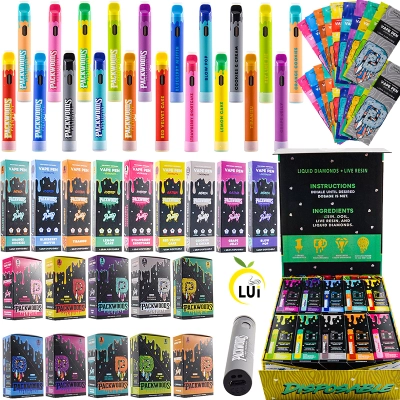
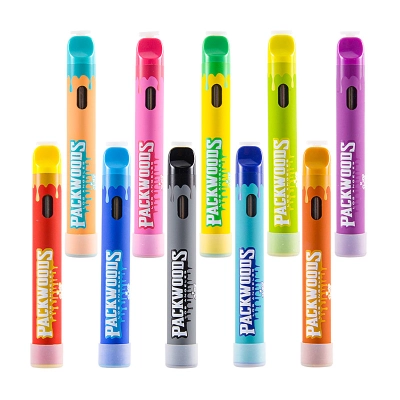
Help buyers move from education to SKU selection without losing context by linking the brand collection and the capacity lineup: muha meds and muha meds 3.5 gram disposable. For factory-level planning (BOM locking, change control, documentation), reference OEM/ODM empty vape projects.
Translate “3.5g” into measurable hardware specifications
Retail language often uses “3.5g” as shorthand for a high-capacity format. Procurement and QC need measurable terms—tank volume (mL), fill tolerance, oil path geometry, heater spec, and battery/charging limits. If a supplier can’t provide these, repeatability will be guesswork.
RFQ spec checklist (copy/paste)
- Reservoir: tank volume (mL), max fill line tolerance, leak test method.
- Heater: type (ceramic / mesh / other), target resistance range, incoming resistance QC limits.
- Airflow: inlet count/size, target draw range (pressure drop at defined flow).
- Electronics: PCB revision control, protections (short/OCP/OVP/UVP), standby drain target.
- Power: battery capacity (mAh), charge interface, charge current, thermal behavior expectations.
- Materials: wetted materials list (tank, gaskets, mouthpiece) + compatibility notes.
- Traceability: lot/date code format, placement on unit + box, retention sample policy.
Tip: Keep marketing-friendly “3.5g” language for storefronts, but run operations in mL + tolerance. That one change prevents many disputes.
Three-step buying workflow that reduces returns
Step 1: Lock a traceable SKU set
Select 1–2 hero SKUs and freeze the BOM. Cosmetic changes (paint/coatings, screen windows, mouthpiece plastic) can change seal stacks and crack behavior. Put “no substitution without written approval” into your PO for gaskets, tank material, heater vendor, battery cell, and PCB revision.
Step 2: Test samples like production
A single “golden sample” proves nothing. Ask for multiple samples (different cavities/molds if possible) and the exact packaging you’ll ship. Then test the real return drivers:
- Leak & seal: pressure decay + a heat cycle (hot-car simulation), then re-check.
- Clog risk: run your thickest formulation (with licensed fillers) and document clog rate across 10+ units.
- Draw stability: measure draw variance across a batch; wide variance signals drift.
- Charging behavior: confirm stable current, no abnormal heat, and protection behavior.
Step 3: Pilot order before scale
Run a pilot in your real logistics lane (factory → warehouse → retailer). Many failures appear only after vibration, compression, and repeated handling. A pilot also validates barcode/QR scanning and case-pack accuracy.
QC gates that stop “pretty shell + generic electronics” failures
Gate A: Incoming parts audit (supplier side)
Require incoming inspection records (even a basic AQL plan) for gaskets, tanks, heaters, PCBs, and batteries. If there’s no critical-to-quality control, assume drift will happen.
Gate B: In-line functional checks (assembly)
- Heater resistance check with pass/fail limits.
- Airtightness check (pressure decay) on tank assemblies.
- Short/overcurrent protection verification (sampling) + charge port functional check.
- Screen/LED/button function check (if applicable) + standby drain target verification.
Gate C: Final inspection + retention samples
Keep boxed retention samples from every lot and record lot ID/date code and key measurements. Retention samples resolve disputes fast and prevent repeat mistakes.
Documentation and compliance buyers should demand
Even “empty hardware” often contains a lithium battery, so transport paperwork can become the bottleneck. Build a compliance packet once, then enforce it on every PO:
- UN 38.3 evidence for the battery type/configuration (as applicable).
- Lithium battery test summary availability for downstream shipping and carrier acceptance.
- Device safety pathway appropriate for your market (UL/IEC strategy for electrical/heating/battery safety).
- Packaging validation matched to your distribution lane (parcel vs pallet wholesale).
In the U.S., PHMSA publishes guidance on lithium battery test summary requirements (updated July 2024). UN 38.3 is the baseline transport test series, UL 8139 covers electrical/heating/battery/charging safety for vaping devices, and IEC 62133-2 is widely referenced for portable lithium battery safety.
Packaging and master-case reality check
Heavier, taller devices increase drop energy and mouthpiece cracking risk. Packaging is a QC control, not just “artwork.” Require:
- Inner tray fit that prevents rattling and tip impacts.
- Clear case-pack spec sheets and master carton strength for corner/edge crush.
- Lot/traceability labels on unit boxes and master cartons.
- Clear “empty hardware only” wording where needed for compliance-lite marketing.
If your lane is parcel-heavy, consider ISTA-style distribution testing (drops, vibration, compression) before you scale.
Receiving checklist for warehouse teams
- Cartons: crushed corners, wet cartons, re-taping, mismatched labels.
- Case-pack: count accuracy and consistent inner trays.
- Traceability: lot/date codes present and scannable.
- Sampling: quick functional sample (screen/LED/button), charge port fit, visible seal defects.
- Escalation: quarantine questionable lots early; document with photos + lot IDs.
Commercial terms that protect your margin
Unit price is easy to negotiate; stability is not. Add clear terms for what counts as a functional defect vs a cosmetic issue, what evidence is required for claims, and whether the remedy is credit, replacement, or rework. Most importantly, enforce change control: no gasket/heater/battery/PCB substitution without written approval and a new sample sign-off.
Bottom line
For 2025 B2B buying, the winning play is simple: lock specs, test like production, pilot before scale, and treat documentation + packaging as part of the device system. Do that, and 3.5g-style hardware becomes a repeatable line instead of a return-risk headache.




0 Comments