
Muha Dual Chamber vs. Ace Dual Chamber: 2026 Comparison (Specs, UX, and a Buyer’s Checklist)
Dual-chamber disposables have moved from “novelty” to a practical 2026 format for brands and bulk buyers who want variety in one device: two flavors/variants, one body, one battery, and a single SKU that can differentiate on the shelf. But “dual chamber” on a listing can still mean different internal designs—true chamber isolation, dual-coil architecture, different switching mechanisms, and very different QC risk profiles.
This comparison is written for buyers evaluating dual-chamber hardware configurations commonly marketed under Muha and Ace-style lines. It focuses on what you can verify: published specs, observable UX traits, and the documents you should request before you approve sampling, pilot, and mass production.
What “Dual Chamber” Means in 2026 (and Why It Matters)
In most commercial listings, dual chamber refers to a single device containing two separate reservoirs and two corresponding vaporization paths (often dual coils or dual internal channels). The goal is to let the user switch between two options without carrying two devices. In practice, the engineering challenge is preventing cross-contamination, keeping draw resistance consistent across both sides, and maintaining leak resistance under temperature swings and shipping vibration.
Quick Spec Snapshot (Based on Typical Listing Information)
Below is an “at-a-glance” snapshot using commonly published listing fields. Treat this as a starting point—final specifications must be confirmed on your PO and incoming QC checklist.
| Attribute | Muha Dual Chamber (common listing) | Ace Dual Chamber (common listing) |
|---|---|---|
| Chamber format | Often shown as 1ML + 1ML (2ml total) | Often shown as 0.5ml + 0.5ml (1ml total) |
| Charging | USB Type-C | USB Type-C |
| Battery capacity | ~240 mAh | ~260 mAh |
| Display | Commonly listed with LED screen | Commonly listed with LED screen |
| Resistance (when disclosed) | Varies by build; must be confirmed | Commonly listed around 1.4 ohm |
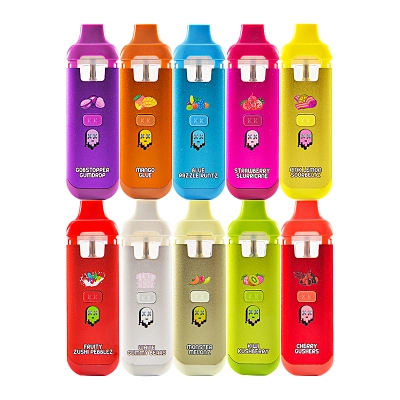
If you want to explore the broader catalog context first, start with dual chamber products, then narrow down to your target brand family and version.
Muha vs. Ace: Where Differences Usually Show Up
1) Chamber isolation and flavor “bleed”
The number one complaint dual-chamber devices get is “the two sides taste too similar after a while.” That’s usually not a flavor issue—it’s a sealing and airflow isolation issue. When evaluating samples, run a simple protocol: 10 pulls Side A, 10 pulls Side B, repeat for 3 cycles, then let the device rest for 30 minutes and repeat. If Side A quickly takes on Side B’s profile, you likely have imperfect isolation (valve design, gasket tolerance, or internal condensation paths).
2) Switching mechanism and user error tolerance
Many dual-chamber devices rely on a mechanical selector, airflow slider, or internal routing that can be partially engaged. That creates “half-switch” states that feel weak and can increase clogging risk. For QC, you want a switch mechanism that is (a) obvious, (b) has strong tactile end-stops, and (c) can’t sit halfway without noticeably blocking airflow.
3) Coil consistency across both chambers
Dual systems increase variability because you now have two heating elements (or two wick paths) inside one housing. Ask for resistance tolerance bands per chamber (not just an average). In incoming QC, spot-check resistance by chamber and trackF (rate of failure) if your lab setup allows it.
Leakage, Clogging, and “End-of-Use” Performance
Dual-chamber devices are more sensitive to viscosity differences and temperature. If one chamber runs a thicker formulation (or simply has a tighter wick), you can see one side finish cleanly while the other side clogs late. Your sampling plan should include:
- Orientation tests: store devices upright, sideways, and inverted for 24 hours, then check for seepage at mouthpiece and charge port.
- Heat/cold cycling: mild temperature swings to mimic warehouse and delivery conditions, then re-check leakage and screen function.
- Late-stage pulls: evaluate the last 15–20% of each chamber; that’s where weak seals and poor wicking show up.
Battery, Charging, and Screen: The 2026 Safety-First Checklist
Dual-chamber adds complexity, but the largest operational risk is still battery-related. In 2026, bulk buyers should treat battery and charging documentation as non-negotiable, especially when devices are transported internationally.
- Battery transport compliance: request evidence that the cell design meets UN 38.3 testing and that the supplier can provide required test summaries when shipping.
- Electrical system safety: for battery-powered vaping devices, ask what safety evaluations are performed on charging, protection circuits, and heating system controls (the same areas that UL 8139-type programs focus on).
- Charge-port QC: check Type-C connector fit, solder integrity, and charging cutoff behavior across a sample set.
- LED screen QA: confirm the screen doesn’t flicker under vibration, doesn’t freeze at low charge, and reflects realistic battery levels.
Procurement Notes: How to Choose Between Muha-Style and Ace-Style Dual Chamber
Choose Muha-leaning dual chamber when:
- You prioritize longer runtime and larger total reservoir (often listed as 1ml+1ml / 2ml).
- You want a stronger “premium device” feel with screen-driven UX and clearer differentiation in marketing.
- You can enforce a tighter incoming QC protocol to manage dual-system variability.
Choose Ace-leaning dual chamber when:
- You prioritize compactness and lighter total fill (often listed as 0.5ml+0.5ml), which can reduce late-stage clogging in some builds.
- You want a simpler inventory play (smaller unit, potentially better per-carton logistics).
- You have strong supplier control over resistance tolerance and switching mechanism quality.
Where to Start on Lueciga
For brand/category discovery, start at muha meds and narrow by version and capacity. If your customer base is specifically asking for disposable formats under that family, use muha meds disposable to compare housing styles, screen layouts, and capacity tiers before you commit to samples.
Final Recommendation: A Practical 3-Step Buyer Workflow
- Shortlist by verified specs: lock chamber size, battery capacity, charging type, and screen requirements on paper before sampling.
- Sample with a dual-chamber protocol: isolation test, switching test, orientation test, and late-stage pulls per chamber.
- Gate mass production by documents + QC thresholds: require battery transport documentation, define AQL, and write chamber-specific checks into your incoming inspection sheet.
In 2026, the best dual-chamber choice is rarely “Muha vs Ace” in name alone—it’s the specific internal architecture and the supplier’s consistency. If you enforce a chamber-by-chamber QC mindset and require the right compliance paperwork up front, dual chamber can be a reliable, high-conversion format rather than a returns headache.



0 Comments