
Khalifa Kush Disposable (2025): What to Expect From Flavor to Finish
“Khalifa Kush Disposable” has become shorthand for a specific 2025 buyer expectation: a strain-led presentation paired with modern disposable hardware—especially digital-screen bodies— that feels consistent from the first draw to the last. This guide is written in a hardware-first way (packaging/compatibility/QC), so you can evaluate what matters before you scale a program.
Quick note on naming: brand references can be used to indicate compatibility or packaging identity. Always follow local rules and verify documentation with your own compliance process.
What “Khalifa Kush Disposable” typically means in 2025
In most catalogs, “Khalifa Kush Disposable” is less about a single universal device and more about a recognizable, strain-forward presentation built on a modern disposable shell. On Khalifa kush pages you’ll often see multiple form factors, while the dedicated Khalifa Kush Disposable category narrows to the disposable hardware lineup.
The key 2025 shift is that buyers expect “premium cues” by default: cleaner airflow, fewer spitback complaints, tighter tolerances on mouthpiece fit, and (increasingly) screen-based UX that reduces “is it dead?” support tickets. That’s why screen-led categories like LED Screen Vape and SCreen vape are now common navigation hubs.
From flavor to finish: what users notice (and what hardware controls)
1) “Flavor” is partly oil, but hardware still decides delivery
Consumers talk about flavor, but hardware determines how that flavor is delivered: coil heat profile, airflow restriction, and condensation management define whether a device tastes “clean,” “muted,” or “overcooked.” Even when “flavor” names are used as SKU labels, your hardware choices influence how consistent those labels feel in the real world.
2) First-draw feel: airflow + preheat behavior
Most negative first impressions come from either overly tight airflow (hard pull, weak vapor) or over-open airflow (thin vapor, harshness). For bulk programs, standardize: (a) intake geometry, (b) mouthpiece pathway length, and (c) acceptable draw resistance range. If you mix multiple shells under one “Khalifa Kush” label, reviews will read inconsistent even if the oil is identical.
3) The finish: leaks, clogs, and the “last 10% problem”
The end-of-life experience is where returns happen: clogging, leaking during warm storage, or sudden burnt notes. These are often tolerance/QC issues (seals, center-post alignment, mouthpiece snap fit) rather than “flavor” issues. If your goal is fewer support tickets, design your QC around the finish—not just the first 20 puffs.
Why screen disposables changed buyer expectations
Screens don’t magically improve oil, but they do improve confidence: users can see battery status and usage indicators (depending on model), which reduces “device is defective” reports that are actually “device needs charging.” For wholesalers and retailers, that can translate into fewer replacements and fewer negative reviews.
If you’re positioning a Khalifa Kush line as “premium,” matching it to a screen-body shell is a straightforward way to make the premium claim visually obvious—without writing exaggerated copy.
Baseline spec reality: what to confirm before ordering
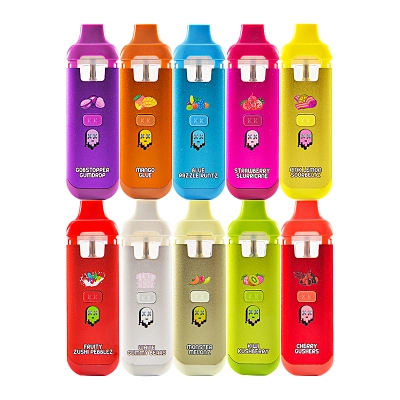
Before you scale, document what your catalog is actually promising. For example, a typical Khalifa Kush 2g screen model may list: 2ml capacity, a 300mAh battery, Type-C charging, and 3.6V working voltage—plus a 10-option “flavor/strain label” set. Treat these as procurement fields: confirm them on samples, then lock them for repeat orders.
| Spec item | What to record | Why it matters |
|---|---|---|
| Capacity class | 2ml / “2g-style” body size | Sets expectations for size, weight, and packaging |
| Charging | USB-C (Type-C) | Reduces customer friction vs older connectors |
| Screen presence | Digital screen window + readability | Premium cue + fewer “dead device” complaints |
| Flavor/label set | Number of SKU labels (e.g., 10) | Catalog clarity and reorder consistency |
If you also carry other strain-led lines such as Raw Garden, keep spec tables consistent across posts so buyers can compare quickly (capacity class, charging, UX features, and QC gates).
QC checkpoints that prevent returns
Gate A: Incoming sample verification
- Visual tolerance check: mouthpiece seam, tank window alignment, screen window flushness.
- Airflow consistency: compare 10 units, look for “tight outliers.”
- Charge/indicator sanity: screen turns on reliably and is readable under indoor lighting.
Gate B: Packaging & identity controls
- SKU label clarity: “Khalifa Kush” naming must match the exact SKU list you sell.
- Batch separation: avoid mixing shells that look similar but have different airflow cores.
- Documentation: retain supplier spec sheets and your own acceptance checklist.
Gate C: “Finish-focused” stress checks
- Warm storage simulation (short, controlled): watch for seepage around seals.
- Condensation behavior: check mouthpiece for spitback signs after repeated pulls.
- End-of-life behavior on test units: clogs and burnt notes usually show up late.
If you want fewer disputes, publish your QC approach clearly and keep it consistent across screen-based categories like LED Screen Vape. The goal is not to sound “hyped”—it’s to sound operationally reliable.
How to write a credible “review” without guessing
The fastest way to lose trust is to over-claim: “strongest,” “cleanest,” “best ever,” or medical-style promises. A credible review reads like a checklist:
- What you tested: number of units, what variants, what conditions.
- What you observed: draw resistance range, screen readability, build consistency.
- What you did NOT claim: no health claims, no unrealistic potency statements.
- What buyers should verify: COAs and licensed sourcing where applicable.
For health context around THC vaping risks—especially products from informal sources—use public health references (e.g., CDC EVALI investigations and NIDA cannabis research) and encourage compliant, documented supply chains: CDC (EVALI investigation summary), NIDA (Cannabis overview), NIDA (Vaping devices DrugFacts).
FAQ
Is “Khalifa Kush Disposable” always a screen device in 2025?
Not always. Screen bodies are common in premium positioning, but some lineups mix multiple shells. If consistency matters, keep one primary shell for the whole program.
What do buyers mean by “flavor to finish”?
It’s the full experience curve: how it tastes/smells early, how it draws mid-way, and whether it clogs or leaks late. Most returns happen near the finish.
How should I handle “near me” searches on a brand-led page?
Treat “near me” as an intent signal. Provide a safety-first checklist (documentation, authenticity signals, compliant channels), not a step-by-step to source from informal sellers.
Where should I send users who want to compare categories?
Link them to your structured hubs: Khalifa Kush Disposable for the lineup, and SCreen vape for screen-based shells.
0 Comments