
Crybaby 2G Disposable Baby Bottle: A Complete Guide to Potency, Performance & Safety
Reader note: This article is written for responsible buyers and compliance-minded teams. “Potency” is treated as a labeling and documentation topic (claims verification), while “performance” is treated as hardware quality (build and QC). Always follow the rules of your destination market.
1) What “2G” and “Baby Bottle” Mean in Practice
The phrase “2G” is often used in listings to indicate an intended capacity class, not a promise about experience, strength, or outcomes. For hardware buyers, that distinction matters: capacity labeling should be interpreted as a design target that must be supported by seals, airflow geometry, and a stable electrical system. The “Baby Bottle” descriptor is primarily a form factor and branding cue—helpful for merchandising and SKU recognition, but not a substitute for verification.
If you are mapping your internal taxonomy, start with the collection hub crybaby to keep naming consistent across related variants. Then review the broader category crybaby disposable so your product titles, carton labels, and inbound receiving rules use the same model family language.
2) Potency: Treat It as Claims Verification, Not a Promise
In regulated environments, “potency” should be handled like any other controlled claim: it must be tied to traceable documentation (e.g., a COA) and to a specific batch or lot. Even when a listing contains flavor names or product-style descriptors, buyers should avoid treating marketing language as evidence. The highest-signal approach is to build a repeatable verification routine that checks documents, labeling consistency, and traceability fields.
2.1 A buyer’s checklist for potency-claim due diligence
- COA presence and scope: Confirm a third-party Certificate of Analysis exists for the specific batch and product type you are distributing, and that it covers the relevant analytes required in your market.
- Batch/lot traceability: Require a batch/lot identifier that connects the COA to the unit label or carton label. If the label cannot be linked to the COA, treat the claim as unverified.
- Label alignment: Check that the unit label, inner-pack label, and master carton label all use consistent naming (model, version, capacity class) to reduce mis-picks and returns.
- QR discipline: If QR codes are used, standardize what they resolve to (e.g., COA landing page, batch record). Avoid “floating” QR destinations that change without version control.
- Claims restraint: Avoid absolute language (“highest potency,” “guaranteed effects”) in your downstream content unless it is explicitly allowed and supported by documentation.
2.2 Why documentation quality is a safety issue
Documentation quality affects safety because it influences where and how products circulate. When claims are unverifiable, products can slip into informal channels where storage, charging, and handling practices are less controlled. A documentation-first workflow supports safer distribution, clearer accountability, and fewer disputes during audits or customer escalations.
3) Performance: What to Inspect on the Hardware
“Performance” for a disposable-format device should be judged through measurable hardware indicators: airflow consistency, clog/leak risk, mouthpiece fit, seal integrity, charging stability (if rechargeable), and packaging protection during transit. The goal is not to “optimize usage,” but to reduce returns, DOA claims, and inconsistent customer experiences caused by avoidable hardware variance.
3.1 Confirm the listing’s core spec fields (and keep them in your SKU master)
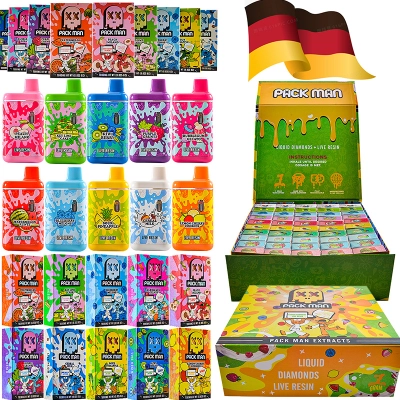
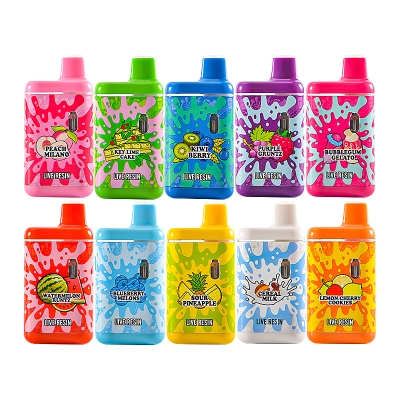
Use the specific product page crybaby 2g disposable baby bottle as the canonical reference for your internal SKU record. Capture the capacity class and any published build notes, then freeze those fields in your ERP/PIM so that sales listings, carton labels, and receiving SOPs stay synchronized across time.
3.2 Incoming inspection: a practical, low-friction SOP
- Carton integrity: Check for crushing, punctures, moisture exposure, and tamper signs. Photograph exceptions immediately.
- Random sampling: Pull a statistically reasonable sample by carton (your QA team can set AQL thresholds). Record variance in mouthpiece fit, draw resistance, and visible seal alignment.
- Fit & finish scoring: Standardize a simple 1–5 scorecard for seams, mouthpiece seating, port alignment, and cosmetic consistency. Small cosmetic drift can indicate tooling changes or supplier switching.
- Charging port verification (if applicable): Confirm port type and that the port is unobstructed and clean. Reject lots with debris, bent contacts, or irregular port cutouts.
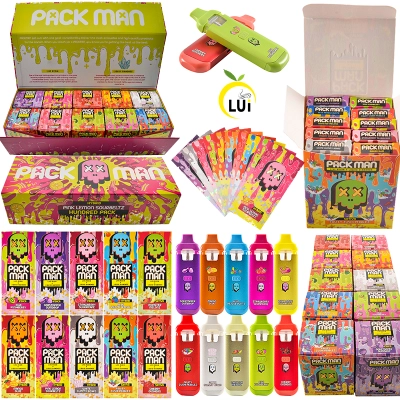
- Packaging completeness: Confirm all promised components (e.g., individual boxes, display boxes, stickers) are present and match your receiving checklist.
3.3 Performance risk drivers to watch
- Clogging risk: Often driven by inconsistent airflow paths, residue ingress, or mouthpiece geometry variance. Mitigate via tighter inbound inspection and tighter packaging protection.
- Leak risk: Commonly linked to seal inconsistency and mechanical stress during shipping. Prioritize cartons with good corner protection and internal separators.
- DOA and early failure: Frequently linked to charging system variance, damaged ports, or control-board drift. Require consistent electrical safety expectations and conservative charging guidance.
4) Safety: Battery, Charging, Storage, and Handling
Safety for disposable-format devices is largely an electrical and handling topic. Even when products are marketed as convenient, lithium-ion components can fail if exposed to heat, physical damage, incompatible chargers, or unsafe charging environments. Your role as a responsible seller or distributor is to keep safety guidance consistent, conservative, and aligned with public safety recommendations.
4.1 Charging and fire-risk controls (simple rules that reduce incidents)
- Charge on a clean, flat, nonflammable surface where the device is visible—avoid couches, beds, and pillows.
- Avoid extreme temperatures (hot cars, freezing conditions) and do not charge in extreme heat or cold.
- Do not charge overnight or unattended; stop charging if the device becomes unusually hot or behaves irregularly.
- Use the correct power source recommended for the device; avoid improvised or mismatched chargers.
4.2 Why UL 8139 matters (even if you do not quote it in marketing)
UL 8139 is widely referenced as a safety framework for evaluating the electrical systems of vaping devices, including batteries and charging systems. For buyers and distributors, the practical takeaway is to treat electrical-system maturity as a sourcing criterion: stable protection circuits, predictable charging behavior, and clear documentation reduce the likelihood of battery-related adverse events.
4.3 Storage, transport, and disposal hygiene
- Storage: Keep inventory in a cool, dry environment and protect units from crushing forces that can damage the battery or port.
- Transport: Use protective inner packaging to prevent port abrasion and to reduce shock during cross-docking.
- Returns quarantine: Treat swollen, damaged, or overheated units as safety exceptions; quarantine and follow appropriate battery disposal processes.
- Disposal: Encourage responsible recycling where available; do not allow loose lithium devices to be crushed in general waste streams.
5) Putting It Together: A Responsible Buyer Workflow
A clean workflow reduces both commercial and safety risk. The most effective approach is to separate (1) claims verification, (2) hardware QC, and (3) safety guidance into distinct checklists that can be audited.
5.1 The “three file” rule for every SKU
- Claims file: COA, batch mapping, label templates, and a record of what your listings are allowed to state.
- Hardware file: Specs, packaging map, inbound inspection scorecards, and a change-log for any supplier/tooling revisions.
- Safety file: Charging/storage guidance aligned with public safety recommendations, plus a returns quarantine SOP.
5.2 Common red flags (and how to respond)
- Red flag: Labels and cartons drift in naming or capacity terms.
Response: Freeze a canonical naming template and reject lots that do not match. - Red flag: Batch identifiers cannot be reconciled to documentation.
Response: Treat claims as unverified and restrict distribution until traceability is restored. - Red flag: Ports arrive damaged or clogged with debris.
Response: Tighten packaging requirements and increase inbound sampling until stability is proven. - Red flag: Heat, swelling, or abnormal charging behavior in returns.
Response: Quarantine immediately and review charging guidance and sourcing controls.
6) FAQ (Short, Compliance-Minded Answers)
Is “2G” the same as potency?
No. Capacity-class language should be treated as a design label for the device format. Potency is a separate topic that requires verification through documentation and traceability.
What should I emphasize in product content?
Emphasize verifiable fields: model naming, packaging components, documentation discipline, and conservative safety guidance. Avoid absolute strength promises or unverifiable outcomes.
What’s the simplest way to reduce safety issues?
Standardize conservative charging guidance, quarantine damaged returns, and source hardware with mature electrical-system expectations. Many incidents are associated with unsafe charging environments and damaged lithium components.
0 Comments