
Big Chief Wholesale — 2025 B2B Empty Disposable Vape Hardware Guide
Scope note (hardware-only): This guide is written for B2B sourcing of empty disposable vape hardware (unfilled devices/shells + packaging). It does not provide instructions for filling or producing regulated consumables. Buyers and licensed operators are responsible for local compliance, lawful use, labeling, and distribution.
What “Big Chief wholesale” should mean in 2025
For B2B buyers, “wholesale” isn’t just a lower unit price. It’s a repeatable supply system: stable specs, predictable lead times, traceable lots, and packaging that survives your real shipping lane. In 2025, the fastest way to lose margin on empty disposables is not a single defect—it’s variation: silent part substitutions, inconsistent airflow, cosmetic drift, and packaging damage that triggers returns.
On Lueciga, buyers typically navigate from brand collection to device-line selection. Use the brand hub as the naming “source of truth,” then route buyers into the disposable assortment page, and finally into an engineering/procurement workflow page for custom programs:
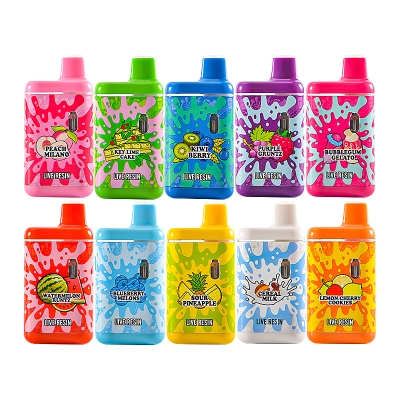
- big chief (brand collection and baseline assortment)
- big chief disposable (disposable lineup and variants)
- OEM/ODM empty vape projects (program control: specs, samples, change management)
Bottom line: the “winning” wholesale program is the one that can ship the same experience month after month—not the one that looks cheapest on day one.
A SKU map that prevents reorder drift
Most wholesale disputes start with a vague SKU definition. Two shipments may be called “the same model,” but differ in gasket material, window cut-out geometry, heater vendor, or PCB revision. That drift creates leak complaints, draw inconsistency, and “looks different than last time” returns.
Use a 3-layer SKU structure
- Platform SKU (frozen): shell + tank + seals + heater type + airflow geometry + PCB revision + battery class.
- Variant SKU (controlled): finish/paint, screen window, mouthpiece color, box artwork, inserts.
- Logistics SKU (lane-specific): case pack, master carton spec, warehouse location, lead time.
When procurement, QC, and sales all reference the same SKU map, you can trace issues to a specific lot and eliminate repeat failure modes quickly.
Shell specs that reduce returns
1) Seal stack-up and tolerance control
Leak-related returns are frequently “stack-up” problems: a small dimensional drift changes gasket compression and turns an acceptable seal into sweating or seepage after temperature cycles. Require a controlled drawing set and freeze critical parts (gaskets, tank resin, mouthpiece interface). Add a purchase-order clause: no substitutions without written approval for seals, tank resin, heater vendor, PCB revision, and battery type.
2) Airflow must be measured (not argued)
“Hard pull” versus “too airy” is usually variance, not design. Define a pressure-drop target range at a specified flow rate and sample each lot. This turns subjective disputes into pass/fail decisions and keeps your customer experience stable across reorders.
3) Electronics and charging expectations
Even empty hardware includes a battery and charging circuit. Many distributors align their safety approach with recognized standards such as UL 8139, which evaluates the safety of the electrical, heating, battery, and charging systems of vaping devices. In procurement terms, that means you should demand controlled PCB revisions, protection functions, stable charging behavior, and clear traceability for which battery/PCB shipped in each lot.
External references: UL 8139 certification overview | What UL 8139 covers
Oil windows & box design (the silent return drivers)
Wholesale buyers often focus on “device specs” and forget that cosmetics + packaging drive a large share of returns. A premium device that arrives with a scratched window or crushed corners will be treated as “low quality” even if it functions perfectly.
Window durability checklist
- Haze tolerance: define pass/fail photos under a standardized lighting setup.
- Scratch control: require protective film or inserts that prevent rubbing in transit.
- Edge strength: window cut-outs create stress risers—validate with drop/vibration tests using the final box.
- Cosmetic AQL limits: document what counts as sellable vs rejectable.
Box design that survives parcel delivery
For small parcel lanes, ISTA Procedure 3A is a widely used general simulation test for individual packaged-products shipped through a parcel delivery system (drops, vibration, compression, and optional low-pressure vibration). Validate the final packaging configuration (real inserts, real closure, real master carton), not a prototype dieline.
External references: ISTA test procedures (Procedure 3A) | Procedure 3A description
Battery shipping paperwork and transit validation
Inventory delays often come from paperwork gaps, not production. If your empty hardware contains lithium batteries, U.S. rules tie back to UN Manual of Tests and Criteria subsection 38.3 and require downstream access to standardized lithium battery test summaries (with PHMSA publishing updated guidance revised July 2024 and revised effective May 10, 2024). Operationally, B2B buyers should keep a “shipping packet” per battery design and ensure every lot is traceable to the correct documents.
External references: PHMSA test summary requirement | PHMSA Test Summary guide (PDF) | 49 CFR 173.185 (UN 38.3 requirement)
QC workflow: sample → pilot → scale
To keep a Big Chief-style empty disposable program stable, run QC as a workflow, not a one-time inspection. Your goal is to prevent lot-to-lot drift and close the loop when any KPI slips.
Step 1: Multi-sample qualification (not one “golden sample”)
Request multiple samples produced under normal conditions and packaged exactly as shipped. Evaluate the return drivers: airtightness/leak behavior, draw variance, cosmetic durability after handling stress, and traceability markings on unit + box.
Step 2: Pilot order in your real logistics lane
Run a pilot through your actual route: factory → forwarder → warehouse → reseller. Many issues only appear after vibration and repeated handling. The pilot also validates case-pack accuracy and how quickly your team can spot and quarantine anomalies.
Step 3: Mass production with gates + retention samples
- Incoming gate: gaskets, tanks, heaters, PCBs, batteries checked against frozen specs.
- In-line gate: airtightness sampling, resistance sampling, and functional checks (sampling-based).
- Final gate: cosmetic AQL checks (window clarity, corner crush risk) + traceability verification.
Retention samples are your dispute insurance: keep boxed samples from every lot with lot IDs and key measurements. When a customer complaint arrives, you can diagnose drift with evidence instead of guesswork.
RFQ checklist you can send today
Copy/paste this into your RFQ so suppliers quote the same spec set and you can compare apples-to-apples:
- Platform definition: shell + tank + seals + heater type + airflow geometry + PCB revision + battery class.
- Airflow target: pressure-drop range at defined flow (supplier must disclose method).
- Electrical controls: protection functions, stable charging behavior, PCB revision control.
- Cosmetic limits: window haze/scratch acceptance photos + AQL thresholds.
- Packaging system: insert fit, closure, case-pack, master carton spec; lane-aligned test approach (e.g., 3A-style).
- Traceability: lot/date coding on unit + box + carton; retention sample policy.
- Change control: no substitutions without written approval + re-sampling requirement.
Recap: Big Chief wholesale programs that win in 2025 are built on spec discipline, packaging performance, and document readiness—not price alone. Freeze the platform, validate the box, enforce change control, and you’ll earn stable reorders with fewer returns.

0 Comments