
Big Chief Duo V2 Supplier Comparison Guide: QC Sampling, Payment Terms & After-Sales Support
When distributors, private-label teams, and sourcing managers compare suppliers for Big Chief Duo V2 style hardware, the lowest quote is rarely the best quote. A stronger supplier comparison framework starts with three issues that directly affect margin, delivery stability, and return risk: how the supplier performs quality control sampling, how payment terms are structured, and what kind of after-sales support exists once goods leave the factory. If your goal is to build a dependable purchasing program rather than place a one-off order, those three areas should carry more weight than headline price alone.
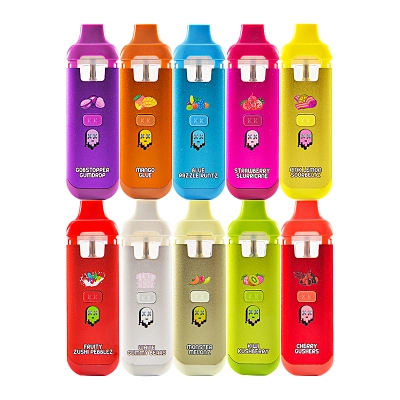
At Lueciga, buyers usually enter this category from different paths. Some begin with the broader big chief collection to understand the available shell styles and packaging direction. Others start inside the high-demand big chief 2g disposable range because 2g capacity is now a common comparison point for wholesalers looking for stronger shelf presence and better value positioning. If your sourcing brief is more capacity-specific, the big chief 2g page gives a tighter view of the 2g lineup, while buyers evaluating switching formats or two-oil configurations often benchmark against the broader dual chamber disposable category before they settle on a final shell architecture.
1) Start with a supplier scorecard, not a product screenshot
A practical comparison should grade each supplier across the same procurement checkpoints. For a Big Chief Duo V2 style program, the minimum scorecard usually includes shell consistency, leak control, battery reliability, charging performance, screen or indicator stability, packaging accuracy, documentation completeness, lead time credibility, payment risk, and response speed when defects appear after delivery. Product photos and chat promises may help shortlist options, but they do not replace a decision framework that can be applied line by line across multiple vendors.
That is why experienced buyers separate “looks correct” from “ships consistently.” One supplier may offer a competitive unit price but provide vague sampling rules, loose carton labeling, and no defined warranty workflow. Another may quote slightly higher but deliver cleaner inspection records, faster claim handling, and clearer remake or replacement rules. Over several purchasing cycles, the second supplier often produces the lower total landed risk.
2) QC sampling should be defined before the order is confirmed
Quality control sampling is not a formality to be discussed after production starts. It should be written into the order workflow before deposit payment, especially for dual-chamber hardware where sealing integrity, activation behavior, and display function can create hidden failure points. Buyers should ask suppliers to define exactly what will be checked during incoming material review, in-process inspection, and pre-shipment inspection. If the answer is only “we check before shipping,” the process is too vague.
For B2B hardware sourcing, a better approach is to request an AQL-based sampling plan, a defect classification system, and a pass/fail standard that both sides can read the same way. Critical defects should be defined conservatively and may include leakage, non-function, charging failure, severe contamination, unsafe battery behavior, or packaging errors that make lots unsellable. Major defects may cover weak draw activation, unstable screen display, seal defects, or inconsistent fit and finish. Minor defects can include cosmetic issues that do not block use but still affect presentation quality.
It is also worth comparing whether a supplier samples only finished goods or samples at multiple stages. A pre-shipment-only system can catch visible issues, but it is weaker than a process that also checks components, assembly consistency, and packaging accuracy before cartons are closed. On a Big Chief Duo V2 style order, ask to see what is recorded for oil-path sealing, mouthpiece fit, charging-port alignment, switch or activation behavior, digital screen readability, and dual-chamber separation integrity. The more clearly a supplier can document these checkpoints, the easier it becomes to trust repeat orders.
If you need a model-specific reference point, review the Big Chief Duo V2 product page and then use that specification sheet as the baseline for your inspection checklist. This keeps negotiations grounded in measurable details instead of generic promises.
3) Compare payment terms by risk allocation, not just convenience
Payment terms tell you how much confidence each side has in the transaction. They also reveal how much risk the buyer must absorb before performance has been proven. Many sourcing teams focus only on whether the supplier accepts deposit plus balance, but the more useful question is how payment milestones line up with evidence: approved samples, finished-goods inspection, shipping documents, and post-arrival claims procedures.
For new suppliers, safer structures usually connect money to verification. A common example is a deposit after sample approval, followed by balance against a passed inspection or shipping document package. For higher-risk deals, trade-finance tools such as letters of credit may be appropriate because they impose documentary discipline and reduce uncertainty about payment release conditions. Documentary collection structures can make sense once the relationship is proven and both sides already trust the documentation flow and delivery rhythm.
When comparing suppliers, ask these questions directly: What percentage deposit is required? When is the balance due? Which documents trigger balance payment? Can the payment schedule be tied to pre-shipment inspection? What happens if the inspected lot fails? Is there a credit note, remake, rework, or replacement path? Are bank charges, amendment fees, and transfer fees clearly assigned in writing? A serious supplier will answer these questions without hesitation because the commercial process is already standardized.
Payment clarity matters even more when you are buying across several linked categories. For example, buyers who move between Big Chief wholesale planning and broader dual-format sourcing need comparable payment language from each vendor so that purchase approvals are not delayed by avoidable ambiguity. The simpler your internal approval process, the faster you can scale reorder volume with confidence.
4) After-sales support is where supplier quality becomes visible
Many vendors sound responsive before payment and become difficult once cartons are delivered. That is why after-sales support should be scored before the PO is issued. Good after-sales support is not just a promise to “solve problems.” It is a defined process that explains who receives complaints, what evidence is needed, how quickly the supplier responds, what root-cause review is performed, and what commercial remedy applies.
In real purchasing operations, the best suppliers do four things well. First, they define a reporting window so buyers know how quickly issues must be logged after receipt. Second, they specify evidence requirements such as carton labels, lot codes, defect photos, video proof, and count summaries. Third, they classify whether the remedy is replacement in the next order, partial credit, full remake, or spare-unit allowance. Fourth, they close the loop by identifying root cause and preventive action so the same defect does not return on the next batch.
This matters because after-sales support directly affects margin protection. A vendor with a lower purchase price but a weak claims process can create larger losses than a slightly higher-priced supplier that handles defects quickly and transparently. In categories where presentation quality, activation reliability, and dual-chamber integrity influence customer satisfaction, post-shipment support is part of the product itself.
5) What a strong comparison meeting should look like
By the time you are ready to choose a Big Chief Duo V2 supplier, you should be able to place competing offers into one table with the same columns: product specification match, sample approval status, AQL or inspection plan, packaging confirmation, unit price, tooling or customization fees, production lead time, shipping method, payment milestones, warranty or claim terms, and named after-sales contact. If one supplier cannot provide comparable information, that supplier is not actually comparable yet.
It is also wise to compare how suppliers communicate under pressure. Send a technical clarification, a packaging correction, and a mock claim scenario. Then measure response quality, not just response speed. Did they answer the question directly? Did they attach evidence? Did they propose a measurable fix? A supplier that communicates clearly before the order usually performs better after the order.
6) A simple decision rule for buyers
If two suppliers are close on price, choose the one with clearer QC sampling language, cleaner document control, and a real after-sales workflow. If one supplier is cheaper but vague on inspection and complaints handling, treat that price difference as hidden risk rather than savings. The goal is not to buy the cheapest Big Chief Duo V2 style unit on paper; it is to buy a repeatable supply outcome that protects sell-through, customer satisfaction, and reorder confidence.
In practice, the most resilient sourcing decisions come from combining category fit with process discipline. Use the big chief family pages to map style direction, compare the commercial logic of the big chief 2g disposable and big chief 2g segments, and benchmark format decisions against the wider dual chamber disposable range. Then finalize supplier selection only after QC, payment, and support terms are fully documented.
Conclusion
A strong Big Chief Duo V2 supplier comparison is not built around marketing claims. It is built around evidence. Buyers who define QC sampling before production, align payment terms with verification, and demand a real after-sales process usually reduce disputes, shorten recovery time, and improve reorder stability. In other words, supplier comparison works best when the commercial agreement is treated as part of product quality. For distributors and private-label teams that want stable growth, that is the standard worth buying against.



0 Comments