
Ace x Packman Empty Disposables: Design, Compliance and Wholesale Strategy for 2025
This guide is written for wholesale buyers who source hardware-only (empty) disposable shells and want fewer returns, cleaner documentation, and repeat-order stability in 2025.
1) Scope: what “empty Ace x Packman” means
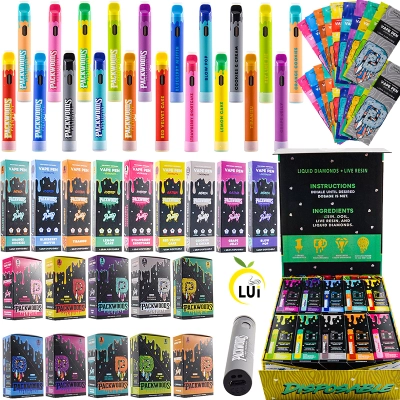
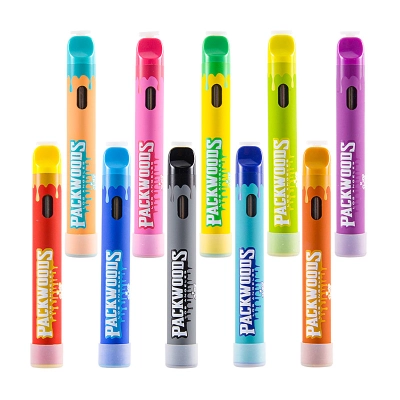
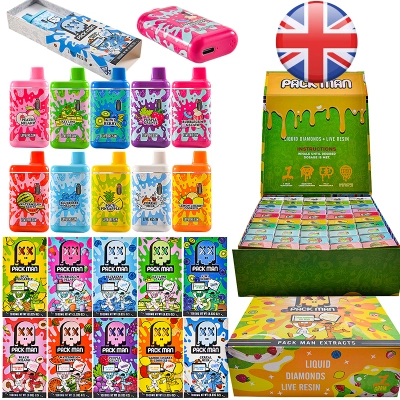
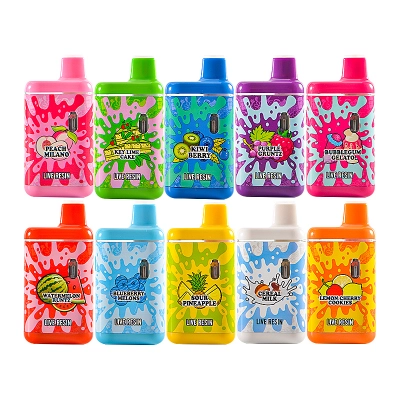
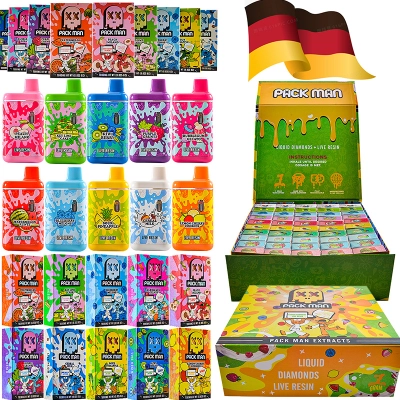
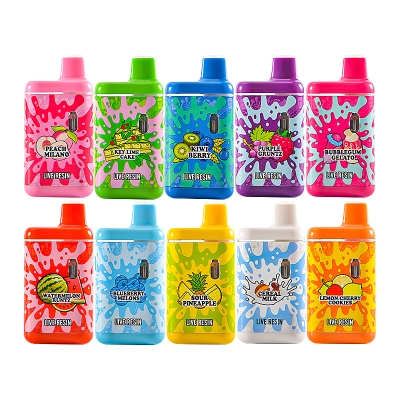
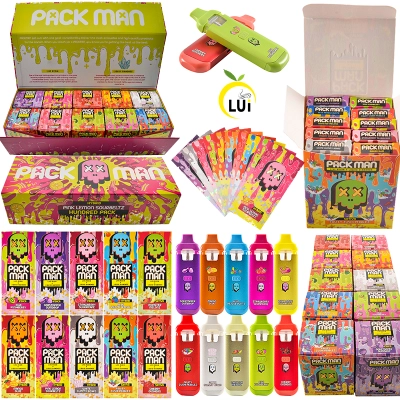
On Lueciga, Ace x Packman listings are presented as empty device pods / hardware-only options rather than filled consumables. The most practical way to navigate the assortment is to start with the brand collection page for ace packman, then filter down through the dedicated ace packman disposable collection when you’re comparing formats, screen options, and warehouse availability.
In 2025, B2B buyers tend to judge “good” empty disposables by three measurable outcomes: (1) fewer clogs/leaks, (2) stable draw, and (3) fewer batch-to-batch surprises. Everything else—screens, finishes, packaging—should support those outcomes, not distract from them.
2) Design priorities for 2025 shells
Airflow + condensation management (real-world carry)
“Leak-proof” is rarely a single feature; it’s a system: mouthpiece pathway, condensation traps, seal geometry, and how the internal chimney tolerates temperature swings (pocket carry, cold shipping lanes, short sessions).
- Prefer predictable draw resistance over “super airy” claims.
- Look for simple airflow paths that are easy to inspect during incoming QC.
- Ask for internal seal drawings or at least a seal-material statement in the spec sheet.
Materials that don’t mute flavor (and don’t warp)
Shell plastics and gaskets should tolerate terpene-rich environments and temperature cycling without adding off-notes. In practice, buyers reduce risk by requiring: material declaration, COA where applicable, and consistency checks across lots.
- Confirm tank/body material and gasket material (not just “premium plastic”).
- Require a simple lot code and carton label so you can trace issues back to a shipment.
Capacity as an ops decision (not just marketing)
If your buyers concentrate demand around 2g formats, standardize around a single “2g shell class” and then create variants only where the conversion lift is real (screen, finish, packaging). Lueciga’s category page for 2g Disposable Vape Pen is useful for benchmarking what the market clusters around (price bands, configurations, and the sheer number of comparable SKUs).
3) Screen vs no-screen: when it helps (and when it doesn’t)
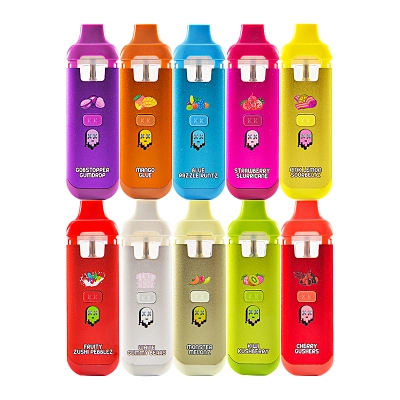
A screen can improve perceived value (battery visibility, usage confidence), but it adds failure modes: display QC, flex connections, and additional assembly steps. If you sell into buyers who strongly prefer visible battery status, screen SKUs can be worth it— but only if your QC gates catch “dead-on-arrival display” and “phantom battery readouts.”
When screen SKUs make sense
- Your buyers ask for battery-level visibility and consider it a “must-have” feature.
- You have an incoming inspection protocol for screen function + button/auto-draw behavior.
- Your supplier can provide stable assembly documentation and lot-level traceability.
When no-screen SKUs are the smarter default
- You optimize for lowest return rate and simplest supply chain.
- You want fewer SKU branches and faster repeat orders.
- Your customers care more about draw consistency than visual features.
If you do carry screens, treat it as a dedicated “family” rather than mixing one-off models. A clean way to organize is to keep screen SKUs inside a single filterable hub like LED Screen Vape, so buyers can compare apples-to-apples.
4) Compliance stack: batteries, documentation, shipping
“Compliance” for empty disposables is often less about the shell and more about the power system and transport documentation. In 2025, the fastest way to de-risk shipments is to require a documentation pack at RFQ stage (not after you’ve paid).
| Area | What to ask suppliers for | Why buyers care |
|---|---|---|
| UN 38.3 + Test Summary | UN 38.3 evidence + lithium battery test summary (traceable model/Wh rating) | Supports compliant transport and reduces carrier delays/holds |
| Electrical system safety | Testing approach aligned to UL 8139 (or equivalent safety evaluation) | Helps address battery/charging hazard risks |
| Portable battery safety | IEC 62133-2 alignment for cells/batteries (where applicable) | Commonly referenced for portable lithium battery safety expectations |
| Air transport readiness | Shipper classification & packing instruction awareness (battery contained in equipment) | Prevents last-minute rework of labels/paperwork |
5) QC gates that actually reduce returns
If you only do one thing in 2025: move QC upstream. Most wholesale “quality problems” are really process problems—buyers discover them too late.
Gate A — Pre-production sample (PP sample)
- Verify draw feel on multiple units (not a single “golden sample”).
- Confirm charging behavior (port fit, indicator logic, no overheating during normal charge).
- Check mechanical fit and finish: mouthpiece seal, thread/plug fit, and any screen window bonding.
Gate B — Pre-ship inspection (PSI)
- AQL plan with functional tests (draw activation, screen function if applicable, charge-in test on a sample set).
- Packaging checks: carton strength, inner tray fit, and label correctness.
- Photo/video evidence mapped to lot codes.
Gate C — Receiving inspection (inbound)
- Random carton sampling and quick functional checks (10–20 units per lot, scaled to your volume).
- Quarantine process for anomalies (don’t mix lots before verification).
- Document issues with lot ID + carton label so the supplier can’t dispute traceability.
6) Wholesale strategy: SKUs, pricing tiers, and stocking
The winning wholesale strategy for 2025 is simple: fewer SKUs, clearer tiers, faster replenishment. A clean framework looks like this:
SKU architecture (example)
- Base: 2g shell, no-screen, standard finish
- Upgrade: 2g shell with screen (single family)
- Packaging variants: retail-ready vs bulk-pack (avoid “in-between”)
Your goal is to prevent “SKU sprawl” where every new customer request becomes a permanent SKU.
Fulfillment strategy
- Use local stock programs when speed matters (launches, promos, high-velocity SKUs).
- Use overseas replenishment for stable base SKUs with predictable demand.
- Keep one backup substitute SKU for supply shocks (but don’t advertise it as primary).
For buyers optimizing lead time, Lueciga’s Disposable Vape Stock In USA section is a useful hub to separate “fast ship” options from standard lead-time orders.
Pricing tiers that don’t confuse buyers
Keep tiers tied to meaningful thresholds (e.g., 100 / 500 / 1000 units) and align the tier to your QC and packaging workflow. If a supplier gives you many tiny tiers, you’ll burn time negotiating pennies while missing the real cost drivers: returns, delays, and rework.
7) RFQ template + reorder checklist
RFQ template (copy/paste)
Product: Ace x Packman empty disposable (hardware-only)
Target format: 2g shell class (screen: yes/no)
MOQ / price tiers: 100 / 500 / 1000 / 5000
Documentation required before deposit: UN 38.3 evidence + test summary; battery/cell spec; packaging spec; lot coding method
QC plan: PP sample + PSI AQL + inbound receiving checklist
Shipping: DDP/DDU options; carton configuration; lead time; warehouse availability if offered
After-sales: DOA policy, claim window, photo/video proof rules, replacement timeline
Reorder checklist (what to lock for repeat stability)
- Same BOM and same critical suppliers (coil, gaskets, cell) unless you approve a change.
- Same lot coding scheme and carton labels.
- Same functional QC steps (don’t allow “we skipped because rush”).
- Same packaging inserts and inner-tray fit (prevents transit damage).
- Same “screen family” (avoid mixing display modules across batches).
FAQ
Is it better to buy from a category page or a single product page?
Start from the collection pages (ace packman, ace packman disposable) to compare configurations, then lock a specific item only after you’ve finalized your QC and documentation requirements.
What causes most “returns” in empty disposables?
In wholesale reality, returns spike from three areas: inconsistent draw, clog/leak behavior after carry, and charge/screen failures in screen SKUs. Your QC gates should be designed to catch exactly those.
What’s the fastest “low-effort” improvement for 2025?
Require the documentation pack (especially battery transport documentation) before you pay, and enforce a simple inbound receiving inspection so bad lots don’t get mixed into sellable stock.
References (authoritative reading)
- PHMSA: Lithium Battery Test Summaries (Revised July 2024)
- IATA: Battery Guidance Document (2025 regulations)
- UL: UL 8139 testing overview for e-cig/vape electrical systems
- IEC: IEC 62133-2:2017 standard overview
- Google Search Central: Influencing title links
Disclaimer: This article is informational and focused on empty hardware procurement and safety documentation. Follow local laws, age restrictions, and carrier requirements in your destination markets.
0 Comments