
Postless AIO Devices: Reducing Leaks & Burnt Hits in All-in-One Projects
In all-in-one (AIO) projects, two failure modes dominate returns and bad reviews: leaks (messy, inconsistent, expensive) and burnt hits (harsh taste, low repeat purchase, and “brand damage” that outlasts the batch). The good news: both are usually predictable if you treat the AIO as a system—air path, heater, wick, seals, and tolerances—rather than a list of independent parts.
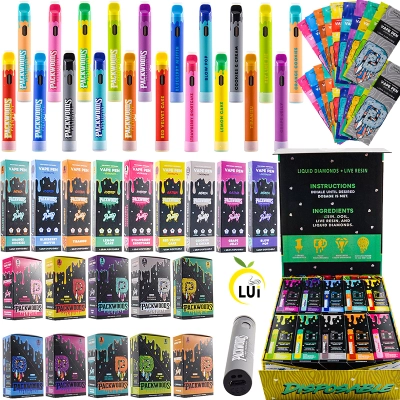
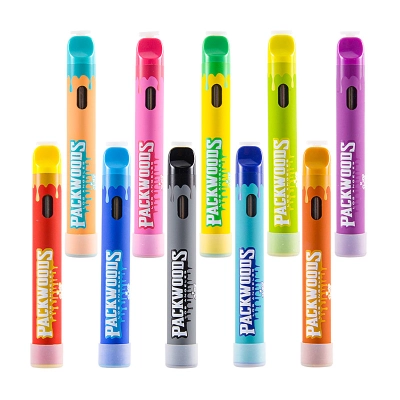
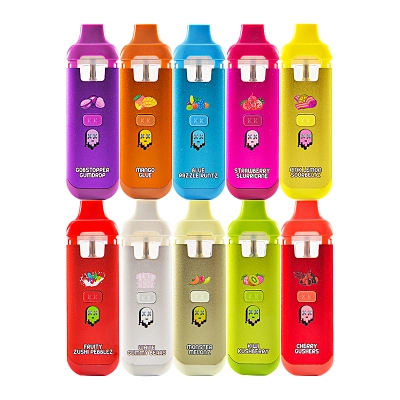
“Postless” AIO designs are popular in modern sourcing because they reduce junction points and simplify assembly. When executed well, they can improve consistency and reduce leak pathways; when executed poorly, they can concentrate heat, starve wicking, and amplify burnt-hit complaints. If your team is comparing platforms, start with the Postless disposable category, then validate the design levers outlined below.
What “postless” changes in AIO architecture
In sourcing language, “postless” typically refers to an integrated heater/air path approach that avoids traditional center-post style junctions and reduces the number of interfaces that must be sealed. Fewer interfaces can mean fewer leak opportunities—but only if the remaining seals are dimensioned correctly and the heater/wick system stays fully fed during real-world puffing and temperature cycles.
Typical upside
- Fewer interface joints to seal and fewer assembly steps.
- More consistent airflow geometry when tolerances are controlled.
- Lower probability of “micro-gaps” caused by stacked tolerances.
Typical risk
- Heat concentration if heater geometry and power are not balanced.
- Wicking starvation under fast/continuous puff patterns.
- More sensitive to seal material choice and thermal expansion.
Leak root causes (and the controls that matter)
Most leak complaints can be mapped to one of four buckets: pressure, temperature, seal geometry, or handling. During shipping and everyday storage, pressure and temperature can move liquid through micro-gaps that were “fine” in a stable lab environment.
Leak-control priorities (in plain English)
- Seal stack stability: fewer seals is good only if each seal has reliable compression and a tolerance window that holds up in mass production.
- Air path isolation: reduce opportunities for liquid to reach the airflow channel via capillary creep or splash during drop/impact.
- Thermal cycling readiness: plastics, silicone, and metal expand differently; your seal must survive that mismatch.
- Shipping orientation reality: assume devices will spend time horizontal, inverted, and vibration-exposed.
Burnt hits: why they happen in AIO projects
“Burnt hit” is commonly associated with dry-heater conditions—when the heater runs hotter than the liquid supply can support. In research contexts, “dry puff” conditions are linked to unpleasant sensory perception and can correlate with elevated thermal decomposition byproducts under those overheated states. The key engineering takeaway for OEM/ODM: burnt hits are usually a feed-rate vs. heat-rate mismatch, not a mystery defect.
In AIO hardware, the mismatch is often triggered by
- Wick bottlenecks: insufficient porosity/capillary flow for the intended viscosity range.
- Heater hot spots: uneven coil/film geometry or inconsistent contact with the wick.
- Power variability: batch-to-batch resistance spread leading to higher-than-intended wattage on some units.
- Airflow imbalance: restricted airflow can raise heater temperature and reduce cooling.
Design levers: airflow, heater, wick, and seals
1) Airflow: design for stability, not “maximum pull”
For distributors, the goal is not the strongest airflow—it’s repeatability across thousands of units. A stable airflow path reduces random hot spots and helps keep heater temperature consistent. In postless architectures, pay attention to how the air channel is routed around the heater area and how tolerant the geometry is to manufacturing drift.
2) Heater geometry: reduce hot spots and variability
Heater-to-wick contact uniformity is one of the highest-leverage variables. Even small manufacturing differences can change coil temperature behavior and therefore the risk of overheated events. In sourcing, ask for resistance distribution data (not just “nominal ohms”) and request a process control plan for the heater step (winding/sintering/assembly).
3) Wick system: capillarity is your “anti-burnt-hit” engine
The wick’s job is heat and mass transfer: deliver liquid to the heater fast enough, consistently enough, and with minimal sensitivity to orientation or vibration. If a supplier can’t explain their wick material and porosity choices—or can’t provide a validation method—expect inconsistent batches.
4) Seals and tolerances: fewer parts, tighter windows
Postless designs can reduce the number of potential leak interfaces, but they increase reliance on the remaining seals. Make sure the supplier can show: (a) dimensional critical-to-quality (CTQ) drawings, (b) incoming material inspection for elastomers, and (c) end-of-line leak screening that catches “silent leakers” before shipment.
DFM & QC gates your supplier should pass
If you want fewer recalls during a busy season, don’t just ask “Do you have QC?” Ask for test gates that map to leak and burnt-hit root causes. Here are high-impact gates that good OEM/ODM teams commonly implement:
Leak-focused gates
- Pressure / vacuum leak screening (end-of-line).
- Thermal cycling + re-check for seepage.
- Vibration + multi-orientation soak checks.
- Drop/impact sampling focused on seal integrity.
Burnt-hit focused gates
- Resistance distribution & power consistency checks.
- Heater-to-wick contact inspection (process-based, not random).
- Airflow draw range testing (batch sampling).
- Long-puff stress sampling to reveal starvation edge cases.
When you build a product page or sourcing shortlist, keep an “anchor” category in your internal workflow—e.g. empty disposable vape—and only promote models that have documented DFM/QC gates. This is how distributors keep performance predictable even when volume spikes.
A launch checklist for distributors
- Lock the platform: choose one postless architecture and avoid mixing heater variants mid-batch.
- Demand the data: resistance spread, airflow draw range, leak screening method, and CTQ drawings.
- Validate packaging: damage creates leaks; test vibration and drops in the intended shipping pack-out.
- Choose capacity pages deliberately: keep a clear funnel to the relevant category (for example, 2g disposable vape pen options) so buyers don’t bounce between mismatched specs.
- Set acceptance criteria: define fail thresholds for seepage, airflow outliers, and heater inconsistency before you pay the balance.
Want fewer returns on your next postless AIO batch?
Build your RFQ around leak screening, resistance distribution, and thermal-cycle validation—not just unit price. Start with the Postless disposable lineup, then request the QC gates listed above.
References (technical background)
The links below provide background on wick heat/mass transfer and “dry puff/burnt” condition detection in emissions research. They’re included for engineering context and validation thinking.
- Farsalinos et al. (2015) — aldehydes and “dry puff” conditions (PubMed)
- Visser et al. (2021) — detecting dry puff flavor via carbonyl signatures
- Gao et al. (2021) — porous wick capillary/evaporation modeling (PMC)
- ACS Chem. Res. Toxicol. (2023) — carbonyl emissions vs. heater temperature variability



0 Comments