
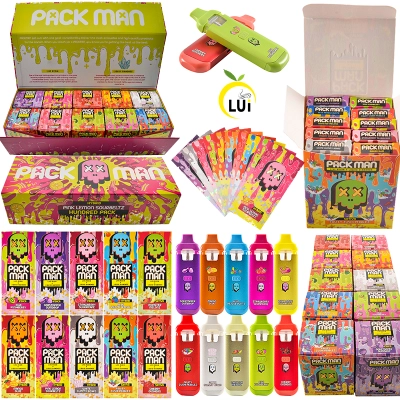
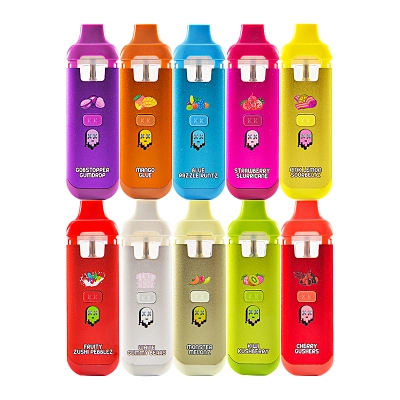
Packman V6 2g Empty with LED Screen: Why Display Features Sell in B2B
This article focuses on empty hardware only. Packman V6 2g units discussed here are unfilled shells supplied for legal, compliant filling by licensed operators in their own markets.
Table of Contents
- Why LED screens belong on Packman V6 2g empty hardware
- What a Packman-style LED display actually shows
- B2B benefits: how display features support sales and margin
- QC and compliance: where screens help (and where they do not)
- Positioning Packman V6 2g in your hardware lineup
- FAQ: Packman V6 2g LED screen empty devices
Why LED screens belong on Packman V6 2g empty hardware
In consumer electronics, displays are no longer a luxury—they are how users understand what a device is doing. The same logic is now moving into 2g disposable-style hardware. For brands working with packman silhouettes, adding an LED screen on a V6 2g empty device is not just a cosmetic upgrade. It fundamentally changes how the product can be explained, tested and supported in B2B channels.
Without a screen, buyers and end users are guessing about:
- Battery status – is the device underpowered or simply empty?
- Puff count – how much life is left compared with what was promised on the box?
- Error states – is a failure caused by the coil, the battery, or user behavior?
With a well-integrated LED display, Packman V6 2g empty hardware can expose this information in a simple, visual way, making it easier for B2B buyers to demo the device and for support teams to diagnose issues once the hardware is filled and in market.
What a Packman-style LED display actually shows
Different V6-style designs vary, but most LED or mini-OLED screens built into 2g hardware focus on three information layers:
- Battery indicator – a bar or numerical icon showing remaining charge, making it easy to see if a device has been stored or shipped for too long without a top-up.
- Draw or puff count – a counter that approximates how many activations have occurred, helping B2B teams compare different devices under similar conditions.
- Status / error icons – simple codes to distinguish normal draw, short-circuit protection, over-time protection, and low-voltage lockout.
For an empty device like Packman V6 2g, these data points are valuable long before any filling happens. They enable:
- More structured incoming QC on hardware batches.
- Better test records when integrating new oils or viscosities.
- Clearer support scripts when retailers report issues back to the brand.
The display itself does not make a device safe or compliant—but it is an important window into how the cell and PCB are behaving, especially when combined with robust electrical design referenced to frameworks like UL 8139 and UN 38.3 transport testing for lithium batteries.
B2B benefits: how display features support sales and margin
From a B2B perspective, LED screens on Packman V6 2g empties are all about making the commercial story easier to tell and the cost of support easier to control.
1. Stronger in-store demos and online storytelling
When sales reps or retailers feature a packman V6 2g style device, the LED screen gives them more talking points than just “big battery” or “nice colors.” They can demonstrate:
- How the battery indicator gives confidence that the device is ready to go.
- How the puff counter aligns with expected life under typical usage patterns.
- How simple error icons can prevent confusion and returns.
For online B2B catalogs and sell sheets, static photos of the screen in different states make the product feel more like a serious electronics platform and less like a generic, opaque disposable.
2. Reduced “guesswork” in support and warranty handling
Hardware failures are expensive. When an end user claims “it doesn’t work,” the first question is whether the device is truly defective or simply depleted. LED displays help cut the ambiguity:
- Retail staff can visually check battery and error icons before exchanging a unit.
- Support teams can ask structured questions: “What icon do you see on the screen?”
- Brands can design return policies that depend on documented device states rather than guesses.
Over large volumes, fewer unnecessary exchanges and clearer triage translate directly into protected margins—one of the core reasons why B2B buyers increasingly favor LED-equipped formats over blind devices.
3. Justifying a premium price tier in your lineup
Within a packman disposable portfolio, always-on display devices sit naturally in a higher tier than basic designs. They look more advanced on the shelf, and they offer clear functional advantages that help close B2B deals:
- Better perceived value at first glance.
- More “tech” storytelling for collaboration launches and limited editions.
- Higher willingness to pay from retailers who understand the support savings.
Importantly, the LED screen is not an isolated feature. It works best when paired with robust cells and PCBs tested against recognized references for electrical systems and transport, so that the visual promise of “smart hardware” matches what happens in the field.
QC and compliance: where screens help (and where they do not)
A Packman V6 2g LED screen does not replace good engineering, but it does make that engineering more visible.
- Electrical design – serious manufacturers benchmark their electronics against standards such as UL 8139, which focuses on the safety of electrical, heating and battery systems in e-vapor devices.
- Lithium cell transport – nearly all lithium batteries shipped internationally are expected to pass UN 38.3 tests, which simulate vibration, temperature extremes and altitude changes during transport.
- Packaging and distribution – many hardware programs also look to ISTA 3A-style packaging tests to reduce damage in courier and pallet networks.
The LED display supports these efforts indirectly by making it easier to:
- Spot over-discharge or low-voltage states during storage checks.
- Run structured QC sampling on incoming batches and record results.
- Verify that protective cut-offs trigger correctly under stress testing.
For B2B buyers, the key is to treat the display as a diagnostic window into a properly engineered system, not as a cosmetic add-on that compensates for weak internals.
Positioning Packman V6 2g in your hardware lineup
Many brands now run a tiered hardware strategy, where a familiar packman silhouette without a screen serves as the entry point, and LED-equipped Packman V6 2g devices act as the “flagship” tier.
A typical structure might look like:
- Tier 1 – Core packman disposable: standard housing, no display, aggressive price point, strong fit for price-sensitive markets.
- Tier 2 – Enhanced packman disposable: upgraded coil and battery, more sophisticated finish, still no display but marketed as “plus” hardware.
- Tier 3 – Packman V6 2g with LED screen: premium shell, LED screen, best cells and QC data, positioned for flagship SKUs and collaboration drops.
For distributors, this structure makes it easy to tell a step-up story. Retailers who start with core packman disposable devices can later trade up to V6 LED-screen variants as they see the benefits in customer satisfaction and reduced returns.
FAQ: Packman V6 2g LED screen empty devices
Are Packman V6 2g LED screen units supplied as finished, filled products?
No. In this context, Packman V6 2g refers to empty hardware shells only. Units leave the factory without oil, nicotine, THC or any other filling. Licensed operators are responsible for any filling, testing and compliance in their own markets.
Does the LED screen itself make a device compliant?
The screen is an interface, not a safety standard. Compliance depends on overall electrical design, battery testing, and transport documentation. However, the display helps you see how the electronics behave—for example, how low-voltage cut-off works or whether error protections trigger correctly.
Is Packman V6 2g with LED screen only for “premium” brands?
LED-screen hardware fits best where brands want to tell a technology-forward story and support higher price points. That said, even value-focused brands can benefit if they operate across long supply chains or regions where support and returns are expensive. The key is to align the configuration with your margin structure and distribution model.
What should B2B buyers ask suppliers before choosing LED-screen hardware?
Ask for sample devices, coil resistance and airflow data, basic drop and vibration testing results, battery transport documentation, and a clear statement that the units are shipped empty. You should also confirm how the LED behaves under typical fault conditions to ensure it can support your support scripts.
How does Packman V6 2g compare with other LED-equipped silhouettes?
The specifics depend on each design, but in general, Packman-style LED devices combine a familiar outline with extra information on the screen, making them easier to explain and support across multiple markets. When evaluated as empty hardware platforms rather than short-term novelties, they can play a central role in a long-term, scalable product roadmap.


0 Comments