
Packman 2g: Cost, Margin & Audience vs 3g Shells
Over the last two years, high-capacity disposable vapes have gone from niche to mainstream. Search interest for “2 gram disposable vape” has surged, and 3 gram devices are now common in many THC and hemp markets, often marketed as “3,000 mg” or “3G” disposables with triple the oil of a standard 1 g cart. At the same time, brands still love the familiar 2 g Packman format because it hits a sweet spot between cost, performance and shelf appeal.
For B2B buyers who are building or refreshing a Packman-style SKU line-up, the real question is not “2 g or 3 g?” in abstract. It is: at your current volumes and price points, which capacity gives you better cost-per-ml, healthier margins and the right audience fit? In this guide we will look at the economics of Packman 2 g shells versus 3 g shells, and outline when it makes sense to keep your core in 2 g and when to introduce a 3 g “upgrade tier”.
1. Where Packman 2g Fits in Today’s Disposable Market
The modern disposable market has shifted decisively toward larger-capacity devices. Industry analysis on disposables shows that big-puff, higher-capacity vapes are a key growth driver within an overall e-cigarette and vape market that is projected to keep expanding this decade. At the same time, within that growth, 2 g devices have emerged as a “new normal”: they are big enough to feel premium compared with 1 g, but still affordable at the hardware level and easy to position in retail between entry-level and ultra-premium tiers.
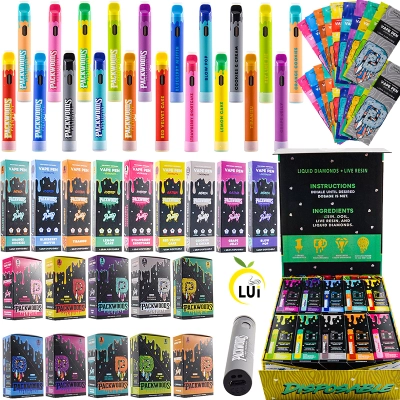
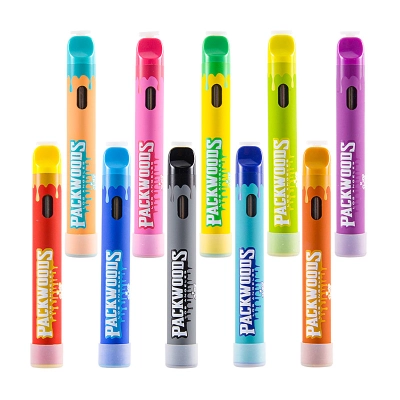
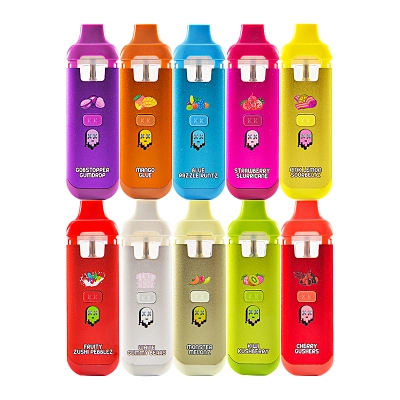
On Lueciga, the packman disposable section brings together multiple Packman SKUs and derivatives that share this design language: bold front panel, clear strain call-outs and a silhouette that has become instantly recognizable in many US and EU markets. For brands, that recognition is a shortcut: customers often know what “Packman 2 g” means in terms of expectations for number of puffs and perceived potency, even before they look at the fine print.
3 g shells build on that same logic but push capacity further. A 3 g disposable typically holds about 3,000 mg of oil, roughly three times the content of a 1 g cart and about 50% more than a 2 g device. With that extra capacity, brands can promise more total puffs and better nominal cost-per-hit for heavy users, especially when paired with rechargeable batteries so customers can actually reach the bottom of the tank.
2. Cost Structure: 2g Packman Shells vs 3g Hardware
When you compare capacities, you have to separate three cost layers:
- Hardware shell cost (empty device + packaging)
- Oil fill cost (distillate, live resin, liquid diamonds, etc.)
- Operational cost (filling, QC, freight, duties, warehousing)
Across the market, 2 g empty disposables generally price only modestly above 1 g shells, while 3 g hardware is typically a further step up but still far below a simple 3× multiple. The same pattern appears on filled product: 3 g devices rarely retail at triple the price of a 1 g cart. This means that as capacity increases, cost-per-ml for the customer usually improves, while your absolute dollar margin per unit can also increase—if you manage your COGS correctly.
2.1 Example: Hardware and Oil Cost Comparison
The exact numbers will depend on your negotiated factory price, shipping lane and oil formulation. But a simplified model helps B2B buyers think about structure. Consider a brand ordering empty 2 g hardware in a Packman format and a 3 g shell of comparable quality:
| Item | Packman 2g Shell | 3g Shell |
|---|---|---|
| Empty hardware + packaging (FOB) | US$3.40 | US$4.10 |
| Oil fill (per gram) | US$5.00 (same formulation) | |
| Total oil cost | 2 × 5 = US$10.00 | 3 × 5 = US$15.00 |
| Assembly, QC, packaging, labeling | US$1.40 | US$1.60 |
| Total COGS per finished unit | US$14.80 | US$20.70 |
In this model, the 3 g unit costs about 40 % more to produce but contains 50 % more oil. On a cost-per-gram basis, the 2 g unit sits at US$7.40/g, while the 3 g unit drops to US$6.90/g. This is why many heavy users migrate to higher capacities over time: they feel that they get “more for their money” even at a higher ticket price, and brands can highlight this value proposition directly on their packaging and marketing materials.
3. Margin Modeling: Retail Price, Mark-Up and Real Profit
For B2B buyers and white-label brands, the key is not just COGS, but how much room you have between COGS and your expected retail price. We can compare two realistic retail positions:
- Packman 2 g positioned around US$35 at retail
- 3 g device positioned around US$45 at retail
Using the cost model above:
- 2 g device: US$35 retail − US$14.80 COGS ≈ US$20.20 gross profit per unit (≈57.7 % margin)
- 3 g device: US$45 retail − US$20.70 COGS ≈ US$24.30 gross profit per unit (≈54.0 % margin)
The 2 g unit actually carries a slightly higher percentage margin in this simple model, which is one reason many brands keep 2 g as their core hero SKU. However, the 3 g device delivers about US$4 more absolute profit per unit, and your customer gets a better cost-per-gram deal. This is a classic trade-off: percentage margin versus total dollar margin and basket size.
The packman 2g disposable format is often ideal for price-sensitive customers and first-time buyers who still want more than 1 g, while a 3 g shell can sit on a higher shelf as a “max value” or “VIP” option for loyal heavy users. Having both tiers allows your sales team to upsell without alienating budget-conscious shoppers.
4. Audience Segmentation: Who Buys 2g vs 3g?
Once you understand the cost and margin side, the next question is: who is actually going to buy each capacity? Across different markets, buyers of 2 g and 3 g disposables tend to fall into distinct segments.
4.1 Core Audience for Packman 2g
Packman 2 g shells are strong in situations where:
- Customers are trading up from 1 g but still testing brands and flavors.
- Average budgets per visit are limited (for example, tourists or casual users).
- Retailers want a mid-tier SKU that sits comfortably between budget devices and ultra-premium 3 g options.
- Regulators or internal policies discourage very large “big puff” single-use devices.
The familiar Packman silhouette and 2 g call-out makes it easy to communicate “more value than 1 g” without overwhelming the customer. For brands building a compact SKU line-up, 2 g Packman often becomes the default hero product that drives the highest velocity.
4.2 Who Prefers 3g Shells?
3 g shells are usually most attractive to:
- Heavy users who go through a 1 g cart in just a few days and hate constant re-purchasing.
- Consumers in mature markets, where price comparisons and cost-per-hit calculations are common.
- Online buyers looking for fewer reorders and lower shipping cost per gram of oil.
- Customers who already trust your brand and are ready to commit to a higher ticket purchase.
Because 3 g devices are still newer than 2 g Packman in many regions, they are also a good way to create buzz around “new high-value drop” campaigns. Just be sure your local regulations allow that capacity and your packaging clearly communicates that the device is rechargeable so customers can fully use all 3 g of oil.
5. Operational Risk: Returns, QC and Scrap Rate
Capacity decisions are not just about customer behavior—they also affect your operations. With 3 g shells, each defective unit represents more lost oil and a higher dollar value. If your filling line, capping process or leak-testing are not yet optimized, a failed 3 g device costs more in scrap than a 2 g Packman.
This is where working with proven hardware designs matters. Lueciga’s Packman disposable vape pens series takes advantage of a long production history and field feedback across different OEM and white-label projects, helping to stabilize leak rates and failure rates. For brands just ramping capacity, starting with a 2 g Packman base and then carefully onboarding 3 g hardware once your line is tuned is often the lower-risk path.
6. How to Position Packman 2g vs 3g in Your Line-Up
If you treat 2 g and 3 g as two rungs of the same ladder, you can design a simple, clear ladder of value for your customers:
- Step 1 – Core hero: Packman 2 g as the default choice on every shelf.
- Step 2 – Upgrade tier: 3 g shells as the “max value” or “long-weekend” option.
- Step 3 – Specialty SKUs: Dual-chamber, live resin only, or limited-edition boxes for superfans.
On the hardware side, connecting your SKU planning with capacity categories on Lueciga helps you keep sourcing consistent. The 2g disposable vape pen category shows the broader 2 g landscape, while the 3g disposable vape section highlights how 3 g devices are typically framed as premium options with strong visual presence and rechargeable batteries. For Packman-style projects, this gives you a good benchmark for where your own SKUs should sit on the spectrum.
7. When Should You Stay with Packman 2g—and When to Add 3g?
Bringing this together, here is a practical decision checklist for B2B buyers:
Stay Focused on Packman 2g If:
- Your market is still price-sensitive and 2 g already feels like an upgrade over 1 g.
- You are in early stages of brand building and want to minimize SKU complexity and inventory risk.
- Your filling line is still being optimized and you want to limit the financial impact of any defects.
- Regulatory changes are on the horizon and you prefer a conservative, proven capacity.
Add a 3g Shell Tier If:
- Your monthly repeat buyers are complaining about going through 2 g too quickly.
- Your competitors are already pushing 3 g and using it as a value-per-gram talking point.
- Your retail partners want a higher ticket item to upsell loyal customers.
- Your operations team has stable, low leak and failure rates on current 2 g production.
In many cases, the best move is not “either/or” but “both/and”. Keep Packman 2 g as the anchor of your line, and introduce a tightly curated 3 g tier above it. This lets you protect your percentage margin on 2 g while capturing higher absolute profits and higher basket values with 3 g for your most engaged users.
8. Conclusion: Use Capacity as a Strategic Lever, Not Just a Spec
Capacity is one of the simplest numbers on your box, but it is also one of the most powerful strategic levers you have as a B2B brand. A smart mix of Packman 2 g shells and well-positioned 3 g hardware allows you to:
- Serve both budget-conscious buyers and high-consumption loyalists.
- Balance percentage margin with absolute dollar profit per unit.
- Reduce operational risk as you scale, starting from familiar Packman 2 g formats.
- Stay flexible as regulations and consumer expectations shift toward rechargeable, higher-capacity devices.
By grounding your decisions in cost-per-gram math, realistic margin modeling and clear audience segmentation, you can make Packman 2 g and 3 g shells work together instead of competing against each other inside your line-up.



0 Comments