
Muha Meds Disposable — What It Is, Who It’s For, and How to Choose
For adults 21+; informational only. This article discusses empty all-in-one (AIO) disposable hardware shells intended for licensed fillers and brands. It does not promote nicotine or THC use.
What is a “Muha Meds disposable” in this context?
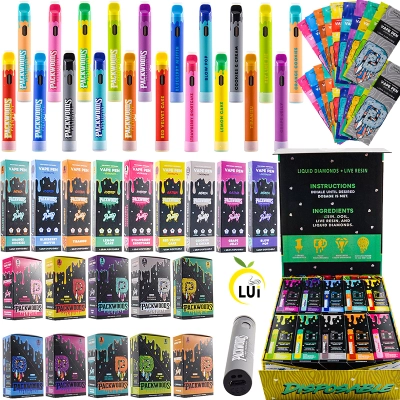
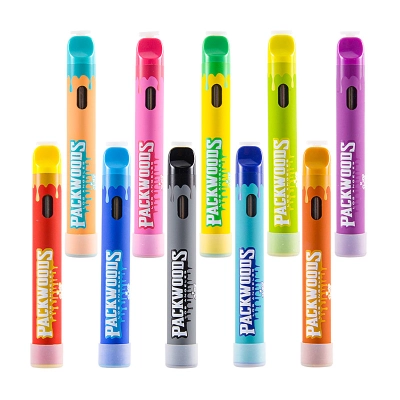
In B2B hardware sourcing, a “muha meds disposable” typically refers to an empty all-in-one vape device (also called an AIO disposable or post-less device) that ships without oil. The shell integrates a sealed tank, a ceramic heating core, airflow pathways, a rechargeable Li-ion cell, and a control PCB within a single, tamper-resistant body—ready for licensed processors to fill, cap, label, and test.
If you’re benchmarking market options or building a line inspired by leading form-factors, see product collections such as Muha Medsand specific model pages like muha meds disposable to understand industrial design, capacity, and user-experience trends.
Core components you should evaluate
-
Reservoir & enclosure: Food-contact plastics like PCTG or glass windows; solvent-resistant gaskets; ultrasonic seals to reduce leak paths.
-
Heating element: Microporous ceramic coil engineered for viscous extracts; even thermal profile to minimize dry hits and caramelization.
-
Power system: Rechargeable Li-ion battery (often 300–650 mAh) with charge-management IC, over-current/over-temperature protections, and Type-C port. Devices should be designed with UL 8139 principles for e-cig electrical safety and batteries compliant with IEC 62133-2 where applicable. UL Solutions+2UL Standards Shop+2
-
Airflow & control: Auto-draw sensors, tuned airflow channels, and anti-condensation geometry to reduce clogging.
Who is it for?
1) Licensed processors & white-label brands
These teams need shells that accept a variety of extract viscosities, withstand post-fill handling, and pass state-required third-party testing (potency, residual solvents, heavy metals, pesticides) after filling. The hardware should be leak-resistant during warm/cold cycles and distribution runs.
2) OEM/ODM buyers
Product managers and sourcing leads who want custom industrial design (ID), window shapes, textures, and finishes; firmware tweaks (puff limiter, pre-heat logic); and packaging ready for compliant labels and universal symbols where required for intoxicating cannabinoids. (For markets that require it, review the ASTM International Intoxicating Cannabinoid Product Symbol (IICPS) specification to understand label iconography when the device is ultimately filled with intoxicating extracts.) ASTM Cannabis
3) Compliance & operations leaders
They’re responsible for verifying vendor certificates (battery test reports, materials declarations, RoHS) and building SOPs for receiving inspection, fill/pack, retention sampling, and end-of-life take-back.
How to choose the right empty AIO disposable shell
1) Prioritize electrical & battery safety
-
Ask for UL 8139-based evaluation (or equivalent): This standard addresses hazards in the electrical, heating, battery, and charging systems of e-cigarette/vape devices and is recognized by ANSI/SCC. UL Solutions+1
-
Request IEC 62133-2 test reports for the embedded rechargeable cell: It specifies requirements and tests for safe operation of portable secondary Li-ion batteries under intended use and foreseeable misuse.
Why it matters: These references don’t “legalize” cannabis devices, but they demonstrate good-faith engineering controls against thermal events and charging faults—key risk factors for AIOs that may be recharged by end users.
2) Verify materials & restricted-substance compliance
For hardware sold into global electronics supply chains, look for vendor declarations to the EU RoHS Directive (2011/65/EU) limiting lead, mercury, cadmium, and other hazardous substances in electrical and electronic equipment. RoHS screening helps reduce the risk of restricted metals in solders, platings, and polymers.
3) Match the device to your oil & user experience
-
Viscosity compatibility: Coil porosity and intake aperture should match your oil’s viscosity at fill temperature.
-
Capacity & ergonomics: Common ranges are 1.0–3.0 mL; choose window geometry that clearly shows fill level.
-
Power profile: Target enough mAh to finish the tank without frequent charging; consider conservative output to reduce thermal stress and off-notes.
-
Anti-clog design: Look for pre-heat modes, wider vapor paths, and condensation traps to mitigate cold-weather clogging.
4) Plan for labeling & packaging
If your finished (filled) product will be sold in regulated cannabis markets, your labeling/packaging must meet state rules (warnings, universal symbols, batch/COA info). Standards like ASTM D8441 (IICPS) help harmonize the intoxicating-cannabinoid symbol across jurisdictions; your packaging supplier should accommodate the required icon and mandatory text blocks.
Note for U.S. nicotine ENDS: FDA regulates the manufacture, import, packaging, labeling, advertising, and sale of ENDS components and parts (excluding “accessories”). Even for empty hardware, ensure your claims and distribution channels conform to applicable federal and state requirements. U.S. Food and Drug Administration
5) Build a vendor due-diligence checklist
-
Certificates & reports: UL 8139 evaluation summary (device); IEC 62133-2 test (cell); RoHS/REACH declarations; biocompatibility for mouthpiece materials if available.
-
Process audits: Evidence of incoming QC, leak/pressure tests, and traceability (lot codes on shells and PCBs).
-
Pilot runs: Small pre-production fill runs to validate leak rate, flavor stability, and clog rate across temperature cycles.
-
After-sales support: RMA terms, DOA thresholds, and engineering response time for firmware or component tweaks.
6) Plan responsible end-of-life (EoL)
AIOs contain Li-ion cells and must not go into household trash or single-stream recycling. Establish a consumer-facing take-back or direct people to local e-waste/HHW programs. The U.S. EPA provides guidance to keep Li-ion batteries out of trash and direct them to proper collection and recycling; terminals should be taped and cells bagged individually to prevent fires in transit. US EPA+1
Example decision flow (quick start)
-
Shortlist 2–3 shells that match your capacity, footprint, and window design.
-
Request documentation: UL 8139 evaluation, IEC 62133-2 battery report, RoHS declaration, and QA inspection plan.
-
Run a 100–500 unit pilot fill, measure DOA/leak rate, clog incidents, and flavor stability after thermal cycling.
-
Confirm labeling real estate for your jurisdiction’s warnings and, if applicable, space for the IICPS. ASTM Cannabis
-
Set EoL instructions and returns/take-back language for downstream partners. U
When “Muha Meds” fits into your research
Many teams evaluate leading-look AIOs while designing their own white-label line. Use these internal resources for comparative research and sourcing dialogs:
-
Explore brand-style collections: Muha Meds
-
Study specific formats: muha meds disposable
(Internal links above are provided for navigation and benchmarking of empty hardware shells—again, no oil included.)
Compliance snapshot (U.S. perspective)
-
Age-restriction reminder: Under federal law, retailers cannot sell tobacco products (including ENDS) to anyone under 21. (If your empty hardware is marketed for nicotine use, make sure retail partners follow this standard.) U.S. Food and Drug Administration
-
Regulatory scope: FDA asserts jurisdiction over ENDS components and parts; avoid unauthorized health/cessation claims and confirm your marketing language is accurate for empty hardware. U.S. Food and Drug Administration
-
State cannabis rules: For intoxicating cannabinoids, finished goods must follow state packaging/labeling rules and universal symbols where adopted; ASTM D8441’s IICPS is increasingly referenced by states. Wikipedia
Final tips for buyers
-
Engineer for the oil you’ll actually sell. Match coil and intake design to viscosity and terpene load.
-
Test like your regulator. Simulate shipping heat/cold, drop, and shelf time; document everything.
-
Choose safer by design. Favor shells with documented UL 8139 electrical risk controls and IEC 62133-2 battery compliance, plus RoHS declarations for restricted substances. UL Solutions+2IEC Webstore+2
-
Close the loop. Publish clear EoL guidance and collection options; Li-ion cells don’t belong in household trash. US EPA
Cited authoritative references (anchor-linked)
-
UL 8139 electrical safety for e-cig/vape devices — UL Services & Standard overview. UL Solutions+1
-
IEC 62133-2 rechargeable Li-ion battery safety — IEC publication. IEC Webstore
-
EU RoHS (2011/65/EU) restricted substances in electronics — European Commission. Environment+1
-
FDA on ENDS components/parts and oversight — Center for Tobacco Products. U.S. Food and Drug Administration
-
EPA guidance on end-of-life lithium-ion batteries — U.S. EPA recycling and safety pages. US EPA+1
-
ASTM D8441 (IICPS) universal cannabis symbol — ASTM overview
0 Comments