
Master Case Strategy: Pack-Out, Labeling & Palletizing for Empty Shell Exports
When you export empty vape hardware, the work does not stop at choosing the right shell. A clear master case strategy for pack-out, labeling, and palletizing is what keeps full containers of empty devices moving through customs, cross-docks, and 3PL networks without damage or chargebacks. For brands already working with lines like muha meds style empty shells, the way you build each master case can decide whether a shipment lands smoothly or becomes a costly problem at the distribution center.
This article focuses on empty, unfilled vape devices only (no oil, no nicotine, no THC or CBD), and on how to design a packaging and pallet plan that fits real B2B export conditions.
1. Why master case strategy matters for empty vape shells
It is easy to underestimate packaging for empty shells: the devices are compact, relatively robust, and lower risk than filled products. But in practice, export supply chains are rough. Vibration, compression, and mis-handling can crush corners, deform trays, and cause scuffs or cosmetic defects that are unacceptable for premium hardware lines.
Industry studies on pallet stability and transport packaging show that a noticeable share of palletized unit loads arriving at distribution centers exhibit some level of case damage, often linked directly to poor packaging design or unstable pallets. For high-volume B2B orders, each damaged master case translates into rework, inspection labor, and potential credit notes or penalties from large retailers and distributors. A defined master case strategy is therefore not “nice to have”, it is part of your cost-of-quality.
2. Pack-out design: from inner tray to master case
A pack-out plan should start from the device and work outward:
- Primary protection: individual device sleeves, blisters, or foam slots to prevent friction marks between empty shells.
- Inner boxes: consistent counts (for example 10–20 units per inner) that are easy to audit and scan.
- Master case: fixed number of inners per case, with minimal void space so the load does not shift during transit.
- Carton strength: board grade and edge-crush strength appropriate for the stacking height and expected humidity.
For a full pallet of muha meds 2g disposable empty devices, for example, you might standardize a pack-out such as:
- 1 inner = 10–20 empty devices, oriented so mouthpieces and LED windows are protected.
- 1 master case = fixed number of inners (e.g. 10, 20, or 24) to give a clean outer carton footprint.
- Void fill only where needed, using recyclable materials; avoid random loose fillers that collapse during transit.
The key is repeatability. Once you lock the configuration, document it with photos and dimension drawings so the factory and 3PL can execute the same pack-out for every lot, every season.
3. Export labeling: cartons, master cases & pallets
Clear, consistent labeling reduces customs queries, warehouse errors, and mis-picks. For empty vape shell exports, consider standardizing the following information on each master case:
- Brand / series (for example “Muha-style 2g empty disposable shell”).
- Explicit content note, such as “EMPTY VAPE DEVICE ONLY – NO OIL, NO NICOTINE, NO THC”.
- SKU or article code, batch or lot number, and production date.
- Unit count per inner and total units per master case.
- Net weight and gross weight in kg.
- Country of origin and destination warehouse code.
- Handling pictograms and orientation arrows where relevant.
For B2B customers with advanced WMS, it is worth adopting scannable barcodes or QR codes aligned with GS1 principles so cases can be tracked through inbound, put-away, and outbound flows. On pallets, add a clear pallet label with the same key data plus the total case count and pallet ID. This makes reconciliation much easier when containers are unloaded at busy cross-docks.
4. Palletizing empty shell exports the right way
Even a perfectly designed master case can fail if you palletize poorly. Typical export pallets should:
- Use standard pallet sizes that match container and warehouse rack dimensions.
- Avoid overhang; cartons should sit fully within the pallet footprint.
- Stack in maintained columns with interlocking or tie layers only where this does not weaken compressive strength.
- Apply corner posts, top caps, and stretch wrap in a consistent pattern to stabilize the load.
If you are using wood pallets across borders, make sure they comply with the ISPM 15 international standard for wood packaging material and carry the correct treatment mark, so pallets are not rejected or destroyed at the border. This standard is recognized by plant health agencies worldwide and is designed to prevent the spread of pests via wood packaging while keeping trade flowing.
For high-volume lanes, consider performing transit testing according to recognized protocols (for example, vibration and drop testing) to confirm that your master case and pallet design can survive the full journey. This kind of pre-shipment validation reduces the risk of systematic failures across multiple containers.
5. Aligning factory, forwarder and 3PL on one standard
A master case strategy only works if all partners follow it. Build a one-page or two-page SOP that includes:
- Pack-out diagram (device → inner → master case) with target weights and dimensions.
- Approved carton specs and suppliers for export orders.
- Standard label layout with mandatory fields and language requirements.
- Pallet pattern diagrams (cases per layer, layers per pallet) and maximum pallet height.
- Checklist for QC: what to verify before a pallet leaves the factory or warehouse.
When you onboard a new 3PL or change freight forwarders, share this SOP together with photos of good and bad examples. That way, everyone in the chain—from line workers to warehouse supervisors—understands what “good” looks like for your empty shell SKUs.
6. How this applies to Lueciga Muha-style empties
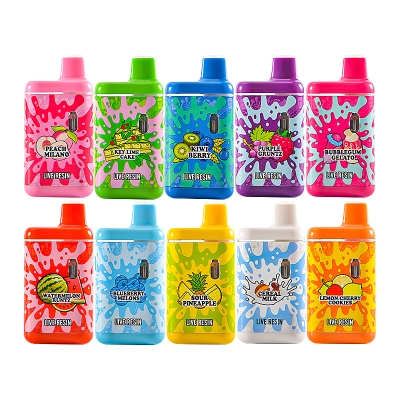
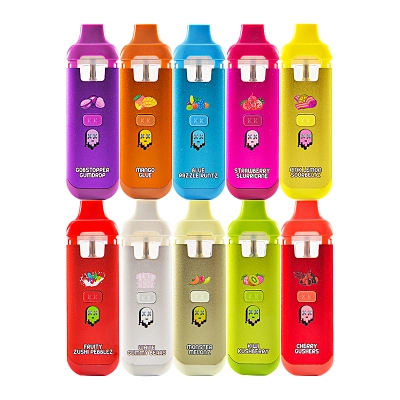
Lueciga’s catalog includes a wide range of branded and style-compatible shells, including muha meds lines and multiple configurations of muha meds 2g disposable empty devices. Many B2B buyers run mixed pallets of several SKUs or replenish from a disposable vape stock in USA warehouse while also importing fresh inventory from production.
By locking in one consistent master case strategy per SKU family—same counts per inner, same master carton size, same pallet pattern—you make it far easier to:
- Estimate real landed cost per device, including packaging.
- Compare quotes from forwarders and 3PLs on an apples-to-apples basis.
- Train warehouse teams at both origin and destination on a single standard.
- Scale volume quickly when demand for a specific Muha-style shell spikes.
7. Quick checklist before you lock the next PO
Before you confirm your next container of empty shells, run through this shortlist:
- Is there a written pack-out diagram for each SKU (especially 2 g AIO devices)?
- Do master cases meet the strength and size you need for your chosen pallet pattern?
- Are labels clear about “EMPTY DEVICE ONLY” and aligned with your WMS or ERP codes?
- Are pallet patterns, wrap specs, and maximum height defined and shared with partners?
- Has transit testing or at least simple drop / vibration checks been performed on a full pallet?
- Are factory, forwarder and destination 3PL all working from the same SOP?
Master case strategy is not just packaging theory—it is a practical way to protect your margin and your brand as you scale empty shell exports. When pack-out, labeling and palletizing are standardized, your team can spend less time firefighting damage and more time planning the next product line.


0 Comments