
LED Screen Vape Empty Devices: 2025 Key Specs, Lifespan & QC Checklist for Brands
The rise of LED display hardware in the vape sector has opened a new frontier for device manufacturers and brands. As more companies introduce the concept of the LED Screen Vape, the attention shifts towards not just the aesthetics, but the underlying durability, performance and quality-control standards. In this article we explore the key specifications of empty devices featuring LED screens, real-world lifespan expectations drawn from LED-display industry data, and a practical QC checklist that every brand should apply before launching.
1. Key Specifications: What to look for in an LED‐equipped empty device
When designing an empty device that incorporates an LED screen (for puff count, battery status, or branding animations), brands should ensure they cover several core parameters:
- Display resolution & brightness: Even for compact vape hardware, the LED or OLED panel should offer at least 192×64 pixels and brightness sufficient for daylight viewing (≥ 450 cd/m²). Poor visibility is a frequent consumer complaint.
- Battery & power management: The inclusion of a screen increases power draw. Brands should specify battery mAh (e.g., 400-750 mAh) and ensure the board supports regulated switching to avoid early drop-off or board failure.
- Enclosure & thermal management: Just as large LED displays need airflow or heat‐dissipation, compact devices must manage internal heat. Overheating shortens component lifespan. The device housing should allow thermal release or incorporate heat conductive paths.
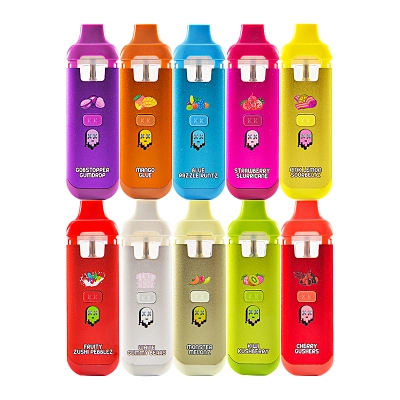
- Structural durability & empty device format: Since we’re discussing empty device units primed for filling or flavour loading (a “Screen Disposable” model), the chassis, screen mount and fill‐port should maintain structural integrity through shipping, shelf-life and filling. See also our article on Screen Disposable design considerations.
- Firmware & user interface: The screen may display puff count, battery bar, or animation. When choosing firmware, brands should consider update capability, error-logging and safe shutdown behaviour (especially for end-of-life / empty state).
2. Lifespan Expectations: What can your LED screen device realistically deliver?
While many large-format LED displays claim up to 100,000 hours of theoretical lifetime (≈11.4 years at 24/7 usage) :contentReference[oaicite:0]{index=0}, the practical lifespan in mass-manufactured compact vape devices will differ. Here’s what the data says:
- Typical LED module lifetime: 50,000-100,000 hours (≈5.7–11.4 years if used continuously) :contentReference[oaicite:1]{index=1}.
- Industrial display providers indicate average lifespan in typical conditions is 6-8 years, and >10 years is “excellent” :contentReference[oaicite:2]{index=2}.
- For our empty-device scenario: given intermittent use, moderate brightness, and ambient temperature control (indoor storage), a realistic target would be **3-5 years shelf-life plus 12–24 months active usage** before performance degradation becomes noticeable. Brands should design to this expectancy margin.
Key take-aways for brands:
- Don’t rely solely on a 100,000-hour quoted figure — it assumes perfect conditions. :contentReference[oaicite:3]{index=3}
- Ensure the weakest component (battery, board, connector) doesn’t reduce full-device lifespan to half the quoted LED lifespan. :contentReference[oaicite:4]{index=4}
- Design for realistic worst-case: 3 years shelf + 1-2 years active use, with minimal loss of display brightness/functionality.
3. QC Checklist for Brands: Pre-launch inspection & lifecycle assurance
Below is a practical checklist every brand should apply when launching an empty device with LED screen functionality:
| Component / Test | Pass Criteria | Notes |
|---|---|---|
| Display brightness uniformity | ±5 % variation across panel at target brightness | Check under controlled lighting. |
| Battery discharge curve | Retains ≥80 % capacity after 500 cycles | Simulate fill-use cycles. |
| Thermal/over‐heat test | Surface temperature < 45 °C during continuous 30 min use | Check coil + screen in enclosed condition. |
| Firmware/animation crash-test | No freeze or blank screen after 1000 actuation cycles | Simulate user habits. |
| Shelf-life accelerated ageing | Functionality maintained after 12 months at 40 °C/70 % RH | Pre-storage condition. |
| Mechanical drop & fill port integrity | No broken screen/frame after 1 m drop (6 faces) | Empty device must survive shipping handling. |
Additional tips for brands:
- Document the screen’s half-brightness point (when LED brightness reduces to 50 %). Communicate realistic lifespan to customers.
- Provide user-guidance for storage (cool, dry place) and usage (avoid chain hits, excessive heat) which align with LED lifespan best practices. :contentReference[oaicite:5]{index=5}
- Offer built-in counters or puff-tracking via the LED screen to signal “end-of-life” for the user, helping prevent dry hits or burnt taste — a common signal in disposables. :contentReference[oaicite:6]{index=6}
Conclusion
For brands developing empty devices with LED screens, success hinges not only on the flame-catchy display gimmick, but on robust engineering: the right specs, realistic lifespan expectations, and thorough QC. Embedding a screen elevates user experience, but it must be backed by power management, thermal design, and quality assurance. By following the recommendations above, you can launch a product that not only looks premium, but also **performs reliably** and **ages gracefully** in market.
0 Comments