
Factory-Direct Empty Disposables: How to Negotiate, Sample and Scale Safely
Scope note: This guide covers empty disposable hardware (no oil, no nicotine, no THC content included). Buyers are responsible for compliance, labeling, and lawful use in their target markets.
1) What “factory-direct” should mean (and what it should not)
“Factory-direct” is not a magic remember-this-one-word discount. For B2B buyers, it should mean you can verify production ownership (or a formal manufacturing contract), lock a written specification, and enforce a repeatable quality system. If a supplier can’t show how specs become production controls, you don’t have “factory-direct”—you have “factory-adjacent.”
Minimum proof you should request
- Traceable SKU definition: a spec sheet with revision number, BOM highlights, and packaging configuration.
- Process ownership: tooling ownership or written authorization to produce (especially for branded shells).
- Quality system signals: incoming checks, in-process checks, and pre-shipment inspection steps.
- Document readiness: battery shipping documentation expectations (see compliance section).
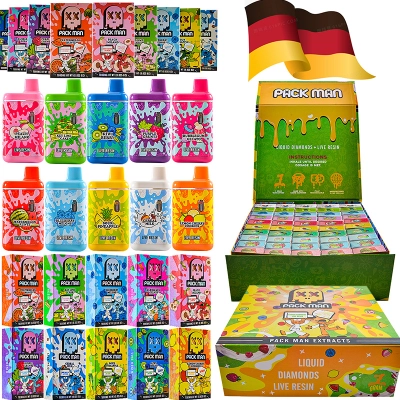
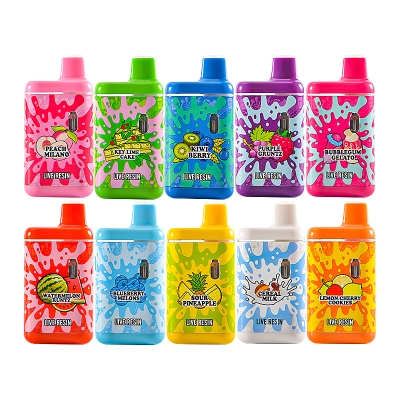
If you’re sourcing a brand line, you’ll also want category context so your RFQ compares like-for-like. For example, if you’re evaluating a brand family under muha meds, confirm whether you’re buying a consistent platform (same internal architecture) or “same-name, different build.”
2) Build an RFQ pack that earns better pricing
Better pricing usually comes from lower uncertainty, not just tougher negotiation. A good RFQ pack makes you look like a buyer who will reorder—and factories price for repeatability.
Your RFQ pack (practical, not theoretical)
- Target spec: size constraints, materials (housing + mouthpiece), charging interface, indicator/LED needs.
- Performance targets: airflow feel band, draw activation sensitivity, and any “no-leak in transit” constraints.
- Packaging requirements: master carton count, inner box, label fields, barcode format, drop-test expectations if relevant.
- Commercial frame: annual volume range, first PO size, target lead time, and acceptable Incoterms (EXW/FOB/DDP, etc.).
If your buying intent is specifically a 2g platform, link the exact target page in your internal brief so everyone aligns on the baseline. Example: muha meds 2g disposable—use it as the scope anchor, then negotiate what changes (packaging, finish, screen, charging, etc.) are truly necessary.
3) Negotiate like a buyer who intends to reorder
Unit price is only one lever. Serious savings (and fewer disasters) come from negotiating the full risk equation: lead time, payment, quality liability, and shipment responsibility.
Terms to negotiate (in priority order)
- Spec lock & change control: no silent substitutions; written approval for any BOM or process change.
- Sampling ladder: sample → pilot lot → first mass PO (with pre-shipment inspection gate).
- Price breaks: tiered pricing with clearly stated MOQ per tier and validity window (e.g., 30–60 days).
- Payment structure: reduce exposure on first PO (milestone-based payments, smaller deposits, or protected methods).
- Incoterms clarity: define who pays what, who controls the forwarder, and who owns customs risk.
A simple negotiation principle that works
Instead of saying “lower your price,” ask: “Which uncertainty is priced in?” Then remove it: provide forecast ranges, accept standardized packaging, or commit to reorder timing—in exchange for a written price tier. This is how you get sustainable cost, not a one-time discount that comes back as quality drift.
4) Sampling that predicts your next 10,000 units
A single “looks good” sample is not predictive. Your goal is to detect variability early—before it becomes a container-sized problem. Use a staged approach:
- Stage A (engineering sample): confirm physical fit, charging behavior, indicator behavior, and basic robustness.
- Stage B (pilot lot): a small run that uses real production conditions (same line, same materials, same packaging).
- Stage C (first mass PO): enforce a pre-shipment inspection with acceptance criteria before final payment release.
Make sampling objective: AQL-style thinking
Many buyers use acceptance sampling concepts (commonly indexed by AQL) to define pass/fail thresholds for shipments. You don’t need to become a statistician—just make sure supplier and inspector share the same definitions of: critical / major / minor defects and the sampling plan used on each lot.
5) QC checkpoints for empty disposables
QC for empty disposables should focus on what fails in the real world: transit stress, charging issues, draw inconsistency, and cosmetic damage that kills retailability. Here’s a practical QC map you can adopt.
Incoming material & assembly checks
- Fit & finish: seam gaps, mouthpiece alignment, buttons/screen seating (if any).
- Charging safety basics: stable port fit, no intermittent charge behavior, no overheating under normal charging.
- Draw consistency: verify activation sensitivity and airflow band across multiple units.
- Packaging survivability: scuff resistance, corner crush, barcode readability.
Pre-shipment inspection (PSI) “must-haves”
- Golden sample match: compare to the signed reference sample, not a fresh “perfect” unit.
- Lot traceability: carton markings, production date codes, and simple batch identifiers.
- Defect photo protocol: photos tied to carton + unit ID to avoid “sample swap” debates.
6) Compliance documents that de-risk shipping
Even when you are buying empty hardware, most disposable devices are battery-powered. That means your shipments can trigger lithium battery transport requirements. In practice, buyers often request documentation aligned with UN 38.3 testing and applicable lithium battery documentation expectations in their lanes.
Document set many B2B buyers request (baseline)
- Battery transport basis: evidence aligned with UN 38.3 expectations (commonly referenced for lithium batteries).
- Lithium battery “test summary” expectation: many logistics flows require clear test-summary style documentation.
- Commercial docs: invoice, packing list, carton/pallet labels, and Incoterms statement on the PO/contract.
The point isn’t paperwork for its own sake. The point is speed: fewer holds, fewer reworks, fewer last-minute surprises when you move from samples to volume.
7) Scaling without quality drift
Scaling safely is mostly about discipline: locking specs, controlling changes, and building a predictable replenishment rhythm. If you plan to sell from domestic inventory, consider whether a warehouse-ready supply path is part of your strategy. For example, some buyers prefer domestic replenishment models advertised as USA warehouse stock to reduce delivery times and simplify small replenishment orders.
Three systems that prevent scale pain
- Change control: every change has a revision, reason, sample approval, and effective date.
- Quality gates: PSI on early POs, then reduced frequency only after stable results.
- Forecast & buffer rules: simple reorder points beat “panic buying” every time.
8) Red flags & practical counter-moves
- “Same as last time” with no revision control: counter with a signed spec sheet + change approval clause.
- Too-good-to-be-true lead times: counter with pilot-lot proof and production photos tied to your PO.
- Refusal to share basic documentation: counter by scaling down risk (smaller PO, independent inspection, safer payment).
- Sample is great, bulk is inconsistent: counter with golden sample sealing and PSI acceptance criteria.
9) Copy/paste: RFQ + negotiation email template
Subject: RFQ – Empty Disposable Hardware (Factory-Direct) – Sample → Pilot → First PO
Hello [Name],
We are sourcing factory-direct empty disposable hardware for B2B distribution. Please quote based on the attached spec and packaging requirements.
Please include:
1) Unit price tiers by MOQ (and validity window)
2) Lead time for samples / pilot lot / mass production
3) Proposed Incoterms options (EXW/FOB/DDP) and what’s included
4) Quality plan: in-line checks + pre-shipment inspection options
5) Documentation you can provide for battery transport/shipping compliance needs
We intend to start with samples, then a pilot lot, then scale to recurring orders if results are stable.
Thanks,
[Your name / company]
10) Final checklist
- Primary spec sheet is written, versioned, and shared.
- Golden sample is signed/dated and stored (buyer + supplier + inspector).
- Sampling ladder is agreed: sample → pilot lot → first mass PO with PSI gate.
- Payment terms match your risk tolerance on first PO.
- Incoterms and logistics responsibilities are explicit on the PO/contract.
- Compliance documentation expectations are stated before the goods ship.
- Change control exists so “discounts” don’t become “silent substitutions.”
References (authoritative starting points)
- Google Search Central: Influencing your title links in Search
- Google Search Central: SEO Starter Guide (titles best practices)
- ICC: Incoterms® 2020 overview
- U.S. International Trade Administration: Know Your Incoterms
- ISO: ISO 2859-1 acceptance sampling (AQL-indexed)
- PHMSA: Lithium battery test summaries (UN 38.3 referenced)
0 Comments