
Buying Muha-Style Hardware in Bulk: Master Case & Margin Strategies
Scope note: This article is written for licensed fillers, brands, and B2B distributors who buy empty Muha-style devices only (no oil, no nicotine, no THC prefilled). All examples below assume you are complying with your local regulations and only filling these devices in legal markets.
Why Master Case Strategy Matters for Muha-Style Hardware
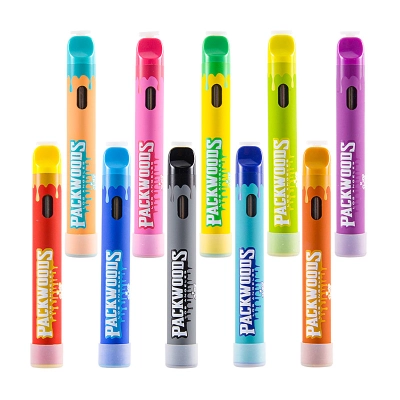
For a growing vape brand, Muha-style all-in-one devices and cartridges are often your hero SKUs: 2 gram capacity, bold flavor art, and packaging that stands out in the display case. But once you move beyond small test runs, your profit is no longer decided by “what’s the unit price?”—it’s decided by how you structure master cases, inner boxes, and margins across the whole supply chain.
On Lueciga, the muha meds line is offered as empty OEM-style hardware. That means:
- You control the oil, cannabinoids, or nicotine content.
- You control which markets the finished products enter.
- You carry the responsibility to stay compliant with local rules.
Because the hardware is empty, your business model looks more like a traditional hardware or packaging play: you buy master cases in bulk, ship them to your lab or co-packer, then layer your own brand, fill, and retail pricing on top. Getting the math right at the master case level is what lets you scale while protecting your margin.
1. Clarify Your Product Scope: Empty Devices Only
Before you run any numbers, lock in the definition of what you are actually buying. For this guide, we are talking about:
- Empty all-in-one (AIO) devices and cartridges with Muha-style industrial design.
- Zero oil, zero nicotine, zero THC when they leave the factory.
- Battery cells, chips, coils, and packaging that must survive international transit and warehouse storage.
Many regulations treat finished, filled vape products very differently from bare hardware and packaging. Your contracts, invoices, and website copy should make it explicit that you are sourcing empty hardware only. This can reduce friction with payment processors, shipping partners, and B2B buyers who are sensitive about compliance language.
On the category side, that clarity should also be reflected in how you structure your website. For instance, a category like muha meds can be clearly framed as “empty hardware for licensed fillers” instead of implying prefilled disposables.
2. How Margins Work Across the Vape Hardware Supply Chain
When you negotiate pricing on Muha-style hardware, it helps to think in terms of the entire value chain, not just your own markup. A typical flow looks like this:
- Factory / OEM manufactures the empty devices and sells by the master case.
- Importer / consolidator handles freight, customs, and local warehousing.
- Brand or licensed filler buys the empty devices, fills them, and adds labels and strain/strength information.
- Distributors and retailers add their own margins on top of your wholesale price.
Recent breakdowns of vape-shop economics show that hardware margins at the retail level commonly sit in the 30–50% gross margin band, while overall vape-shop net margins after expenses land closer to the mid-teens. That means if you push your own wholesale prices too high, you squeeze the last link in the chain and create resistance from retailers who need room to run promotions and cover overhead.
For you as the brand or filler, a practical target is to design your pricing so that:
- You maintain a healthy gross margin after all landed costs (hardware + freight + duties + lab + packaging, etc.).
- Distributors and shops can still hit their expected margin range on the finished product.
That requires you to understand the real per-unit cost of master cases, not just the headline FOB price.
3. Master Case Structure for Muha-Style 2 Gram Devices
A master case is more than just a cardboard box. It drives:
- Your logistics cost per unit (air vs. sea, pallets vs. loose cartons).
- Your inventory risk (how many units you must commit to each flavor or design).
- Your warehouse and production workflow (how easily you can pick, count, and QC).
For popular SKUs like muha meds 2g disposable, you want case quantities that are large enough to unlock factory pricing, but not so large that one slow-moving design traps cash in your warehouse.
A well-structured master case for muha meds 2g hardware usually:
- Contains a round number of units (e.g., 200, 400, 500) that maps cleanly to your retail box quantities.
- Is split into inner boxes or trays (e.g., 10 × 20 pcs) that can be moved separately on the production line.
- Is strong enough to meet common commercial packaging expectations, such as surviving multiple handlings, stacked storage, and at least a year in enclosed facilities without damage.
When you evaluate quotes, always ask for:
- Exact master case pack count per SKU and per mixed flavor case (if any).
- Master case dimensions and weight for freight and pallet planning.
- Packaging compliance information (drop tests, stacking tests, and adherence to commercial packaging best practices).
4. A Simple Margin Model for Muha-Style 2 G Hardware
Let’s walk through a clean, practical way to think about margins when you are buying Muha-style 2 gram empty devices.
Step 1: Calculate your landed cost per unit
Start with the ex-factory price per device, then add:
- International freight per unit (air vs. sea vs. rail).
- Duties, taxes, and customs brokerage.
- Domestic inbound freight into your warehouse.
- Any testing fees (e.g., battery safety, heavy metal screening on metal components, incoming QC sampling).
The result is your true landed hardware cost per piece. For example, if the ex-factory price is $X and all logistics and compliance add $Y per unit, your landed cost is $X + $Y; that’s the number you should plug into your margin model.
Step 2: Layer in lab and packaging costs
Because you’re buying empties, you still need to account for:
- Oil or nicotine cost per gram or per milliliter.
- Filling and capping labor or toll-processing fees.
- Retail packaging (individual boxes, labels, inserts, tamper bands, etc.).
- Final QA, rejection rate, and warranty reserve.
Once you know your total build cost per finished device, you can set a wholesale price that covers those costs and leaves room for your target gross margin.
Step 3: Back into a realistic wholesale and retail ladder
From there, you can build a simple margin ladder:
- Your gross margin = (wholesale price − total build cost) ÷ wholesale price.
- Distributor margin (if you use distributors) = (distributor price − your wholesale price) ÷ distributor price.
- Retail margin = (retail price − distributor price) ÷ retail price.
Brands who succeed with Muha-style hardware usually accept slightly tighter margins on the device itself, knowing that premium hardware helps justify a higher price point on the shelf and supports a more premium positioning overall.
5. Negotiating with Suppliers: Terms That Protect Your Margin
Price per unit is only one lever. When you negotiate for Muha-style empties, focus on the full package:
- MOQ vs. case flexibility. Can you mix designs or flavors within a master case? Can you start with lower MOQs for new SKUs?
- Tiered pricing. Do you get better pricing at 1 master case, 5 cases, 10+ cases? Tiered discounts can help you plan your scaling roadmap.
- Payment terms. Even small improvements (for example, moving from 100% prepayment to a split deposit/balance structure) can relieve cash pressure on large orders.
- Lead times and stock readiness. Short, predictable lead times reduce the amount of safety stock you have to carry in your own warehouse.
- Quality and failure rate commitments. A reliable supplier will discuss realistic defect rates, testing standards, and what happens if a batch underperforms.
For a brand that is testing the market, combining one pilot master case each of your strongest flavor art within the muha meds line keeps your upfront cash commitment manageable while still giving you enough volume to learn from.
6. Operational Tips: Inventory, Testing, and Packaging Standards
Once you’re buying multiple master cases at a time, operational details start to matter just as much as pricing:
- Incoming QC. Always sample-test new batches for cosmetic defects, battery performance, coil consistency, and leakage after simulated shipping conditions.
- Batch tracking. Keep clear records of which master cases were used for which production runs, so you can trace any field issues back to a specific lot.
- Storage conditions. Batteries and seals perform best when stored in controlled conditions; treat master cases as technical equipment, not generic merch.
- Packaging robustness. Commercial packaging standards typically expect boxes to survive multiple handlings, stacking, and at least a year of storage in enclosed facilities without damage. Building your requirements around that kind of benchmark helps prevent transit damage and hidden costs later.
These practices don’t just protect your margin; they also protect your brand reputation by reducing field failures and warranty claims.
7. Connecting Your Online Catalog to Your Case Strategy
Your e-commerce structure should reflect how you actually buy and move master cases in the background. For example:
- Use a top-level category (such as a dedicated page for muha meds 2g) to group devices with the same format (2 g capacity, similar industrial design).
- On individual product pages, clearly state the case quantities you ship in B2B (e.g., 200 pcs/master case, 10 inner boxes × 20 pcs, minimum 1 case per flavor).
- Align your pricing tiers on the site with the real master case break points used in your factory POs.
That way, a B2B buyer reading your catalog can immediately understand how your master case and margin strategy works, instead of having to ask for a custom price sheet every time.
Once your math is clear, you can brief your operations team and then place a structured PO across the muha meds 2g range instead of guessing at random quantities.
8. Helpful External Resources for Planning Margins and Cases
If you want to go deeper into margins and packaging strategy, it’s worth reviewing a few authoritative resources from the wider industry:
- Industry breakdowns of vape-shop profitability and typical product margins, such as this overview of vape store profit models.
- Detailed articles on hardware vs. liquid margins and how they interact in a vape business, like cost and margin breakdowns for vape stores and vape shop revenue and margin analysis.
- Guides on starting and scaling a vape wholesale operation, for example this step-by-step wholesale vape business guide and marketplace overviews like vape wholesale distributor lists and margin tips.
- Commercial packaging best practices for shipping technical equipment, such as the guidelines around ASTM D3951 summarized by ASTM and explained in more detail in packaging compliance articles.
- For your website structure and internal links, Google’s documentation on crawlable links and anchor text plus the title-link best practices is useful when you’re turning your master case strategy into a clear online catalog for B2B buyers.
- Finally, remember that the finished, filled products your customers sell will be evaluated under the regulatory frameworks of their own markets. It’s wise to stay informed about how agencies like the U.S. FDA Center for Tobacco Products treat vapor products, even if you are only supplying empty hardware.
FAQ: Buying Muha-Style Hardware in Bulk
What is a reasonable gross margin target on empty Muha-style hardware?
There’s no single “correct” number, but many brands structure their pricing so that, after all landed and production costs, they still achieve a healthy gross margin on the hardware while leaving enough room for distributors and retailers. The exact target will depend on your scale, positioning, and operating costs, but aiming for a sustainable, repeatable margin is more important than chasing an extreme markup that your partners cannot support.
How big should my first master case order be?
For new SKUs, it’s safer to start with smaller, more diversified orders (for example, several different designs at the minimum master case quantity each) rather than betting everything on one flavor or artwork. Use these pilot batches to measure real sell-through and field performance before locking in larger commitments.
What if my supplier’s case counts don’t line up with my retail packaging?
This is a common issue. Ideally, your master case inner boxes should map cleanly to how you break down units for filling and how you sell them in B2B cartons. If the proposed case configuration doesn’t match your workflow, negotiate alternative pack counts at the quotation stage instead of forcing your warehouse to re-carton every batch.
Is there any advantage to using Muha-style hardware instead of generic blanks?
Muha-style industrial design can support a more premium price point and help your brand stand out visually in the display case, especially when combined with strong strain art and consistent QC. However, it usually requires tighter attention to packaging, logistics, and inventory planning than generic blanks, because you don’t want to discount premium hardware heavily just to clear overstock.







0 Comments