
2g vs 3g Empty Vape Hardware: Cost, Runtime & Return Rate Compared
For OEM brands and wholesale buyers, choosing between 2 gram and 3 gram empty vape hardware is no longer a cosmetic decision – it is a margin decision. Capacity drives runtime, perceived value, logistics costs and even your long-term return rate. In this guide, we compare 2g and 3g empty devices from a strictly hardware perspective, so you can match the right format to your oil, your customers and your risk tolerance.
Throughout this article, “empty hardware” means unfilled disposable shells supplied for legal filling by licensed partners in your own market. Lueciga focuses on the engineering side – shells, batteries, heaters and enclosures – so that brands can plug in their preferred cannabinoid or nicotine formulations while staying compliant with local regulations.
What Do 2g and 3g Empty Hardware Actually Mean?
The “2g” and “3g” labels on empty disposable hardware typically refer to the volume of oil the internal tank is designed to hold – roughly 2 ml and 3 ml. In practical terms:
- 2g empty hardware is built around a 2 ml reservoir, sized for mid-length sessions without making the device feel bulky.
- 3g empty hardware scales the tank and often the battery cell to support approximately 50% more oil and runtime at similar power settings.
The capacity decision affects far more than just “how much oil fits inside.” It also influences device geometry, coil and inlet design, and how hard your quality control team must work to keep leak, clog and burn complaints under control as devices are used for longer periods.
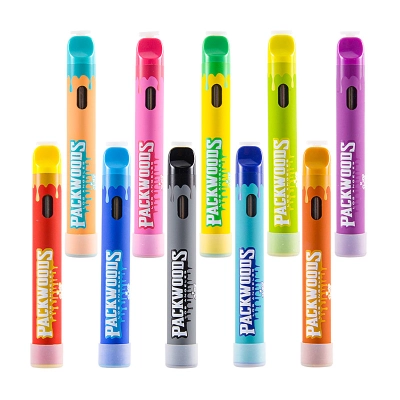
If you want a quick view of how 2g hardware looks across multiple brands and shapes, you can start with the 2g Disposable Vape Pen collection and compare battery sizes, mouthpiece types and form factors before you lock in your next OEM design.
Runtime: How Much Longer Does 3g Really Last?
Runtime is usually discussed in terms of puff count. Industry guides for filled devices suggest that a 1 gram cart often delivers in the range of a few hundred puffs, while 2 gram carts can deliver roughly double that, and 3 gram disposables can add another 30–50% runtime beyond 2 gram formats when used at similar voltage and puff duration. In other words, the capacity scale is roughly:
- 1g hardware → baseline runtime.
- 2g hardware → around 2× the runtime of 1g at similar settings.
- 3g hardware → roughly 1.3–1.5× the runtime of 2g, if the formula and power profile are comparable.
For buyers, the key takeaway is not the exact puff number – that will always depend on viscosity, coil efficiency and end-user behavior – but the ratio. When you choose 3g hardware, you are promising your customers a noticeably longer-lasting device and will need to pair it with a battery cell and coil design that can survive that additional duty cycle without a spike in complaints.
Cost Structure: Unit Price vs Cost per Gram of Oil
On the manufacturing side, 3g empty hardware almost always costs more per unit than 2g. The larger tank, bigger battery, more robust heating core and heavier housing all add material and assembly cost. However, because capacity jumps by about 50% while the hardware cost usually increases by a smaller percentage, the cost of hardware per gram of oil typically improves in 3g formats. That is why many brands treat 3g devices as “value” or “economy” SKUs for heavy users.
The picture changes once you include extract cost, compliance testing, packaging and shipping:
- A 2g device concentrates risk into a smaller amount of oil. If a batch underperforms, you are discounting or replacing fewer grams per unit sold.
- A 3g device ties more oil and packaging into each unit. Any formulation or hardware issue directly affects more product value per returned piece.
- Shipping cartons of 3g hardware are heavier and slightly bulkier, which may add marginal logistics cost on long-haul routes.
This is why many wholesale buyers choose a mixed portfolio: 2g empty hardware for core SKUs where flexibility and risk management matter most, and 3g hardware for “hero” products that reward loyal heavy users with stronger value per gram.
Return Rate and Quality Risk Over the Device Lifetime
Return rate is not just about how the device looks on day one – it is about how it behaves on day thirty. The longer a disposable stays in circulation, the more chances there are for issues to appear: oil migration, clogging, coil degradation or battery under-performance.
In practice, many hardware buyers see roughly the following patterns when process control is solid:
- 2g hardware tends to sit in a “sweet spot” where there is enough oil to justify the device, but not so much that minor coil or seal variances snowball into multiple weeks of use. Return rates are often driven by initial DOA or packaging damage rather than end-of-life failures.
- 3g hardware stretches the duty cycle. Coils are fired more times, wicks stay saturated for longer, and devices may be recharged several times. If the design, materials or assembly are not robust enough, that extra runtime can translate into a higher percentage of late-life complaints (clogs, weak hits, odd flavors).
None of this means 3g hardware is “less reliable” by definition – it simply means that your engineering and QC windows are tighter. More precise coil manufacturing, better gasket materials and cleanroom assembly become non-negotiable if you want 3g return rates to match your 2g benchmarks.
When 2g Empty Hardware Is the Smarter Choice
A 2g format is usually the better first pick if you are:
- Launching a new brand or line and want to limit downside if a flavor or formulation underperforms while you test the market.
- Targeting casual or moderate users who value portability and discretion more than absolute maximum runtime.
- Operating in regions where regulations, potency caps or environmental pressure are starting to push back against oversized single-use devices.
- Working with thicker oils where you prefer to validate long-term clog performance on a mid-capacity device before scaling up.
For mainstream, repeatable SKUs, 2g hardware offers a comfortable balance of runtime, price point and manageable long-term failure risk. That is why many OEM partners standardize on a 2g chassis for their core range and only layer on larger sizes as extensions.
When 3g Empty Hardware Unlocks More Value
A 3g disposable makes more sense when your primary users are heavy consumers or medical patients looking for fewer cartridge changes and stronger value per gram. In that context, the larger capacity becomes a selling point:
- Heavy users can stick with a single device for longer, which creates stronger brand attachment if the experience stays stable across the entire fill.
- You can position 3g SKUs as “economy per gram” options, keeping the retail price below what three 1g purchases would cost while still protecting margin.
- Larger device bodies give you more space for digital screens, battery indicators and advanced safety features, which is why many premium 3g shells carry richer interfaces and branding zones.
However, these upsides only hold if your hardware is genuinely engineered for 3g duty: larger inlets or upgraded ceramic cores to prevent dry hits, stronger battery protection circuits, and consistent factory testing across the full voltage range the device will see in real use.
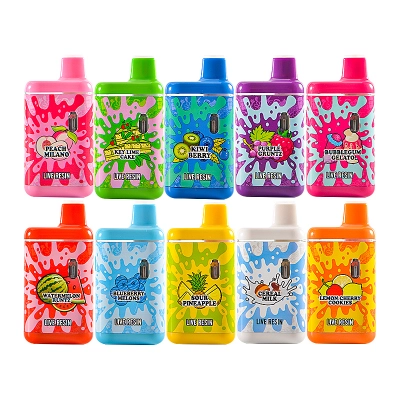
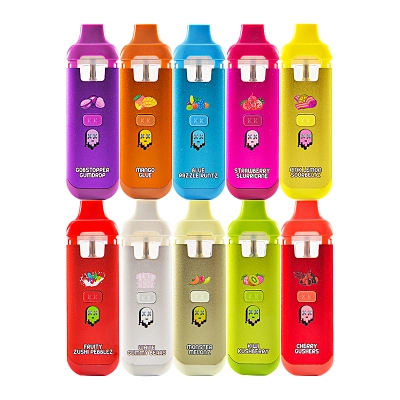
If you want to benchmark these larger formats, the 3g Disposable Vape Pen category is a useful starting point to study shell geometry, screen options and OEM customization paths in the 3 gram segment.
Portfolio Strategy: Mixing 2g and 3g for Different Users
For most wholesale buyers, the best answer is not “2g or 3g” but “2g and 3g with different jobs”:
- Use 2g empties as your workhorse SKUs for new markets, new flavors and value-sensitive customers.
- Reserve 3g empties for loyalty programs, limited editions and channels where heavy users dominate and are willing to pay more up front for fewer device changes.
- Track return reasons by capacity: DOA, leakage, clogging, weak hits, cosmetic defects. If 3g returns cluster late in the device life, that is a signal to revisit coil spec, oil formulation or recommended voltage profiles.
Lueciga’s range makes this kind of portfolio approach easier. You can review 1g, 2g and 3g formats side-by-side under the Disposable Vape Pen Capacity overview, then work with your sales rep to align each shell with your filling, packaging and compliance needs.
Key Takeaways for Hardware Buyers
When you strip away marketing language, the core of the 2g vs 3g decision is simple:
- Runtime: 3g lasts meaningfully longer than 2g, but requires stronger coils and batteries to keep performance stable to the last puff.
- Cost: 3g hardware usually improves hardware cost per gram, but concentrates more oil, packaging and logistics cost into each unit.
- Return Rate: 2g often sits in a forgiving middle zone; 3g can match it, but only if your engineering and QC processes are dialed in.
If you are unsure where to start, a common playbook is to make 2g empty hardware your “default” platform for new SKUs and keep 3g devices as a deliberate, data-driven upgrade once you have proven demand and a stable formulation. From there, iterate based on real numbers: cost per gram sold, average lifetime per device, and the exact return reasons you see by capacity.
Treated this way, capacity is not just a marketing badge on the box – it is a strategic lever for profitability, customer satisfaction and long-term brand trust in a market that is steadily shifting toward higher-capacity, better-engineered disposable hardware.




0 Comments